

Every day, pharmacists make decisions that can change a patient’s life. One of the most common-yet most legally risky-is swapping a brand-name drug for a generic version. It’s quick, it’s cost-effective, and in most cases, it’s perfectly safe. But when things go wrong, the legal fallout can be devastating. And here’s the hard truth: generic substitution isn’t just a clinical choice-it’s a legal minefield.
Why Generic Substitution Is a Legal Tightrope
The U.S. healthcare system saves billions each year because of generic drugs. In 2022, 90% of all prescriptions filled were generics. They cost, on average, 80% less than brand-name versions. For patients on long-term meds like lisinopril or metformin, that’s hundreds of dollars saved annually. But behind those savings is a legal structure that leaves pharmacists exposed. In 2011, the Supreme Court ruled in PLIVA v. Mensing that generic drug manufacturers can’t be sued under state law for failing to update warning labels. Why? Because federal law forces them to use the exact same label as the brand-name drug. They can’t change it-even if new safety data emerges. That means if a patient has a bad reaction, there’s no one legally responsible to answer to. The patient loses. The manufacturer is protected. And the pharmacist? They’re often left holding the bag. States have tried to fill the gap. But with 50 different sets of rules, it’s like navigating a maze with shifting walls. Some states require pharmacists to notify patients before substituting. Others let pharmacists substitute without a word. A few even say pharmacists can be held liable for substitution-even if the law allows it.The Dangerous Gray Zone: Narrow Therapeutic Index Drugs
Not all drugs are created equal. For medications like warfarin, levothyroxine, or antiepileptics, tiny differences in how the body absorbs the drug can mean the difference between control and crisis. These are called narrow therapeutic index (NTI) drugs. The American Epilepsy Society found that switching to a generic antiepileptic drug increased seizure risk by nearly 8%. A 2017 study in Epilepsy & Behavior showed 18.3% of patients had therapeutic failure after a generic switch. And here’s the kicker: patients often don’t know they’ve been switched. A 2021 survey by the Patient Advocacy Foundation found 41% of patients only realized their medication had changed after they started feeling worse. One Reddit user shared how switching from brand-name levothyroxine to a generic caused extreme fatigue, weight gain, and brain fog-symptoms that didn’t clear up for months. The pharmacist didn’t tell them. The doctor didn’t know. The label didn’t say anything different. Pharmacists know this. A 2022 survey of 452 pharmacists found 74% had refused to substitute NTI drugs-even when the law allowed it-because they were scared of liability. That’s not caution. That’s fear.
What the Law Actually Says (State by State)
You can’t manage risk if you don’t know the rules. Here’s what’s really happening across the country:- 27 states require pharmacists to substitute generics when appropriate-no choice.
- 23 states let pharmacists choose whether to substitute.
- 18 states require direct patient notification (not just a label change).
- 32 states let patients refuse substitution.
- 27 states protect pharmacists from being held to a higher standard of liability when substituting.
- 23 states offer no such protection. In Connecticut, pharmacists can be sued even if they followed the law.
How to Reduce Your Risk: A 7-Step Action Plan
You don’t have to wait for lawmakers to fix this. Here’s what works in real pharmacies right now:- Know your state’s laws-and check them every year. The National Association of Boards of Pharmacy updates its compendium annually. Don’t rely on memory. Print it. Post it.
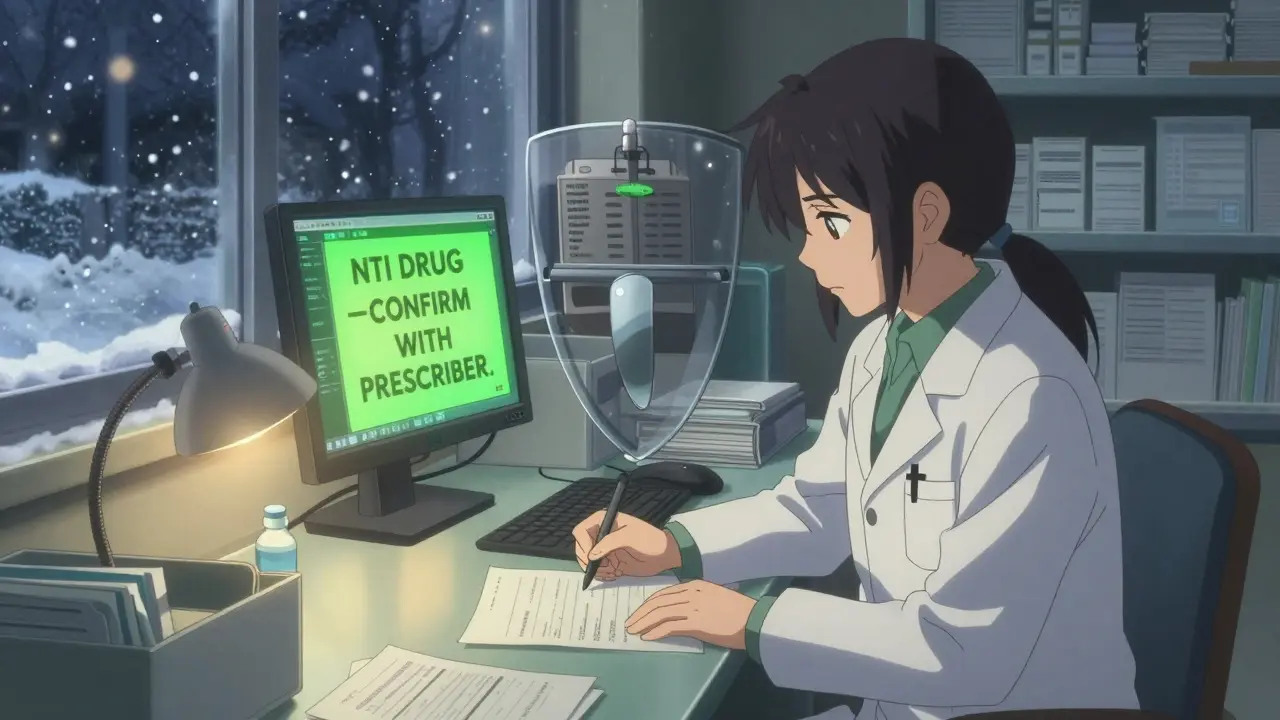
- Use EHR alerts. Set up your electronic health record to flag NTI drugs. When a prescription for levothyroxine or warfarin comes in, the system should pop up: “NTI Drug. Confirm substitution with prescriber.”
- Get written consent. Use a simple, standardized form. “I understand this generic version may differ from my previous brand. I accept this substitution.” Have the patient sign it. Keep a copy.
- Communicate with prescribers. If you’re unsure, call the doctor. Most will appreciate you asking. Some will say, “Don’t substitute.” Others will say, “Go ahead.” Either way, you’ve documented the conversation.
- Track every substitution. Record the brand, generic, lot number, and date. If a patient has a reaction, you’ll need this for your defense.
- Do an annual liability risk assessment. Use the 27-point framework from the Journal of the American Pharmacists Association. It’s not paperwork-it’s protection.
- Get supplemental insurance. Standard malpractice policies often exclude substitution-related claims. Talk to your insurer. Add a rider. It costs $300-$600 a year. Worth it.
What’s Changing-and What’s Coming
In 2023, 11 states introduced the Generic Drug Safety Act. It would require brand-name manufacturers to update labels within 30 days of new safety data-and force generic makers to adopt those updates within 60. That’s a game-changer. It closes the legal loophole that’s been leaving patients unprotected. The FDA is also running a pilot program for label changes. So far, 217 requests have been submitted. But here’s the problem: only 12% came from generic manufacturers. Why? Because they still fear liability. The system isn’t broken because of bad science. It’s broken because of bad law. The future? Biosimilars. By 2025, 45 states have passed laws allowing substitution of biologic drugs-like insulin or rheumatoid arthritis meds. These are even more complex than traditional generics. The liability questions? Even bigger.The Bottom Line
Generic substitution saves money. That’s good. But it shouldn’t cost patients their health-or pharmacists their peace of mind. The system was designed to cut costs. It wasn’t designed to cut corners on safety. The good news? You have control. You can’t change federal law. But you can change your practice. You can document everything. You can ask questions. You can say no when it matters. You can protect your patients-and yourself. The next time a prescription for levothyroxine comes in, don’t just fill it. Think. Ask. Document. Protect. Because in pharmacy, the most dangerous thing isn’t the drug. It’s the silence.Can a pharmacist be sued for substituting a generic drug?
Yes, depending on the state. In 23 states, pharmacists have no legal protection from liability for substitution. Even in states that allow substitution, if a patient suffers harm-especially with narrow therapeutic index drugs like warfarin or levothyroxine-a lawsuit can still be filed. Federal law protects generic manufacturers, but not pharmacists. Documentation, consent, and following state law are your best defenses.
Which drugs are too risky to substitute?
Drugs with a narrow therapeutic index (NTI) are the highest risk. These include levothyroxine, warfarin, phenytoin, carbamazepine, cyclosporine, and lithium. Even small changes in blood levels can cause serious harm-seizures, strokes, organ rejection, or life-threatening bleeding. The American Epilepsy Society and FDA both warn against automatic substitution for these drugs. Always confirm with the prescriber before substituting.
Do patients have the right to refuse a generic substitution?
Yes, in 32 states, patients have the legal right to refuse a generic substitution. Even if the law allows substitution, the patient can say no. Some states require pharmacists to inform patients of this right. Always ask: “Would you like to keep your brand-name medication?” Document their answer. Never assume consent.
Is it legal to substitute without telling the patient?
In 32 states, it’s legal to substitute without direct notification-only requiring a label change. But in 18 states, pharmacists must notify the patient directly. Even where it’s legal, not informing patients is unethical and increases liability risk. Patients who don’t know they were switched are more likely to blame the pharmacist if something goes wrong.
What should I do if a patient has a bad reaction after a generic switch?
First, assess the patient’s condition and provide medical support if needed. Then, document everything: the drug names, lot numbers, date of substitution, any communication with the prescriber, and whether the patient was notified. Review your state’s substitution laws. Contact your liability insurer immediately. Do not discuss the case with the patient beyond medical care-consult your legal advisor before making any statements.
How often should I check my state’s substitution laws?
At least once a year. State laws change frequently. The National Association of Boards of Pharmacy updates its Compendium of State Pharmacy Laws annually. Many states revise their substitution rules after new court rulings or legislative sessions. Relying on outdated information is one of the top causes of pharmacist liability claims.
Can I be held liable if I follow the law but the patient still gets hurt?
Yes. Following the law doesn’t always protect you from liability. Courts can still find negligence if you didn’t exercise reasonable care-especially with high-risk drugs. If you substituted a narrow therapeutic index drug without confirming with the prescriber or documenting patient consent, you may still be found liable-even if your state allows substitution. The law sets the floor, not the ceiling, for professional responsibility.






Moses Odumbe
December 19, 2025 AT 03:54Bro, this is wild 🤯 I work in a pharmacy and we get sued just for doing our job. Generic substitution is like playing Russian roulette with someone’s life. One day you’re saving money, the next you’re explaining to a judge why you didn’t check the NTI flag. I’ve had patients cry because their thyroid meds got switched and they felt like garbage for months. No one told them. Not the doc. Not the pharmacist. Just a label change. 😔
Meenakshi Jaiswal
December 20, 2025 AT 03:30As a pharmacist in India, I see this every day-but the rules here are simpler. We don’t have 50 different state laws, but we do have the same ethical dilemma. I always ask patients: ‘Do you want the same brand you’ve been on?’ If they say yes, I don’t substitute. If they say no, I document it. Simple. Safe. Human. This post? It’s a lifeline for pharmacists everywhere. Thank you for saying what we all think but rarely speak out loud.
bhushan telavane
December 20, 2025 AT 03:39Man, in India we don’t even have brand vs generic labels clearly marked. Sometimes patients don’t even know what they’re taking. I’ve seen people come back angry because their ‘new’ medicine didn’t work-but it was the same drug, just different maker. No one trained them. No one warned them. The system’s broken, but it’s broken differently here. Still, the fear? Same.
Mahammad Muradov
December 20, 2025 AT 07:16Let’s be clear: pharmacists who substitute NTI drugs without explicit consent are negligent. Period. The law may allow it in some states, but ethics don’t follow legislation. If you’re too lazy to call the prescriber or get a signature, you’re not a professional-you’re a liability waiting to happen. And if you think $300 for insurance is expensive, try paying a $500,000 settlement. Your ignorance isn’t a defense.
Connie Zehner
December 20, 2025 AT 13:47OMG I had this happen to me!!! I switched from brand levothyroxine to generic and I was SO tired, gained 20 lbs, couldn’t think straight for 6 months!! I thought I was going crazy!! I didn’t even know I’d been switched until I Googled my symptoms and found this exact post. The pharmacist didn’t say a word. My doctor didn’t know. I’m so mad. 😭 This needs to be illegal!!
holly Sinclair
December 21, 2025 AT 18:49It’s fascinating how we’ve outsourced ethical decision-making to legal frameworks. The system incentivizes cost-cutting while simultaneously absolving manufacturers of responsibility, leaving the frontline clinician-often the only one with direct patient contact-to bear the burden of consequence. Is this justice? Or is it institutionalized moral hazard? We’ve built a machine that optimizes for efficiency, not humanity. And now we’re surprised when people get hurt? The real question isn’t ‘Can pharmacists be sued?’ It’s ‘Why did we let this happen in the first place?’
Monte Pareek
December 23, 2025 AT 05:40Listen up. This isn’t theory. This is daily reality. I’ve been doing this for 22 years. I’ve seen patients crash after a switch. I’ve had families sue. I’ve lost sleep over a pill. The 7-step plan? That’s not advice. That’s survival. Print the damn state laws. Use the EHR alerts. Get the signature. Call the doc. Track the lot number. Don’t be the guy who says ‘I didn’t know.’ You knew. You just didn’t act. And now you’re paying for it. This isn’t about fear. It’s about discipline. Do the work. Protect the patient. Protect yourself. No excuses.
Kelly Mulder
December 23, 2025 AT 14:51One must observe that the current regulatory architecture is not merely inadequate-it is fundamentally incoherent. The federal preemption doctrine, as interpreted in PLIVA v. Mensing, constitutes a perverse inversion of tort liability, wherein accountability is systematically displaced from manufacturers to practitioners. This is not a policy failure. It is a structural betrayal of the fiduciary duty owed to patients. The term 'generic substitution' is a euphemism for institutionalized negligence. One must therefore conclude that the profession is being deliberately exposed to legal peril as a cost-containment mechanism. This is not healthcare. It is commodification with a stethoscope.
Tim Goodfellow
December 25, 2025 AT 11:43Man, I’ve seen pharmacists turn into heroes in this mess. One guy in Manchester refused to swap warfarin for a generic-got roasted by the insurance company, but saved a guy from a stroke. He didn’t have a fancy policy. Just guts and a clipboard. That’s the real MVP. The system’s rigged, but you can still do the right thing. Document. Communicate. Say no. And if you’re lucky? You’ll sleep at night. That’s worth more than any lawsuit settlement.