
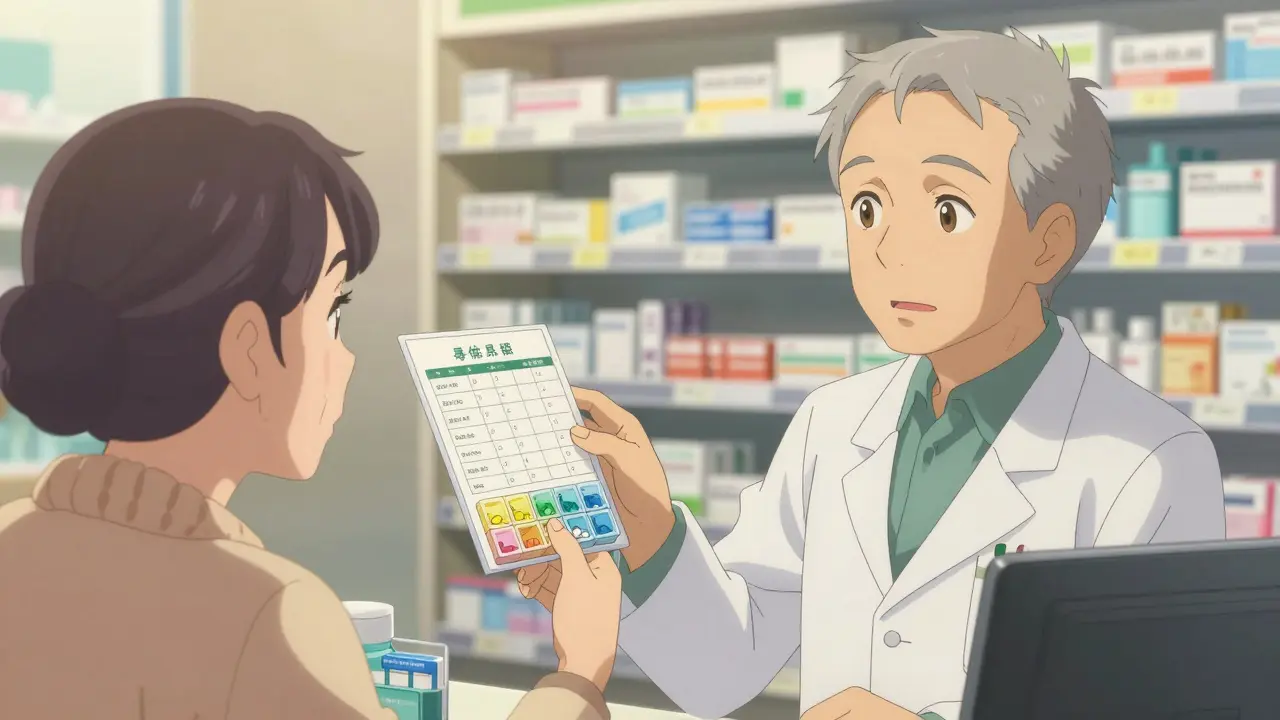
One in two people with chronic illnesses don’t take their medications as directed. That’s not laziness. It’s not forgetfulness alone. It’s cost, confusion, side effects, busy schedules, and fear - all piled up into a wall no one ever taught them how to climb. And when patients fail to stick to their drug regimens, hospitals fill up, emergencies spike, and lives are lost. The good news? Pharmacists are stepping in - not as afterthoughts, but as key players - and they’re making measurable, life-saving differences.
Why Medication Adherence Matters More Than You Think
Non-adherence isn’t just a personal problem. It’s a $300 billion a year crisis in the U.S. alone. People skip pills because they can’t afford them. They stop because they don’t understand why they’re taking them. They mix up their schedules when juggling five or six different drugs. And when they do, outcomes suffer: blood pressure stays high, diabetes spirals out of control, and heart attacks become more likely.
Studies show that patients who take their meds correctly are 30-45% more likely to control their blood pressure. For diabetes, adherence cuts hospital visits by nearly half. But here’s the catch: most patients never get the kind of support that actually works. Doctors are rushed. Nurses are stretched thin. And patients? They leave the clinic with a bag of pills and no real plan.
What Pharmacists Actually Do to Help
Pharmacists aren’t just dispensers. They’re the most accessible healthcare professionals - seeing patients 4 to 6 times more often than a primary care doctor. That’s a huge advantage. And they’re trained to dig deeper than a prescription label.
Here’s what real pharmacist-led adherence programs look like:
- One-on-one counseling - Not a 30-second chat. A 15-20 minute conversation about why the patient stopped taking their statin, or why they’re skipping their blood pressure pill because of dizziness.
- Medication reconciliation - After a hospital stay, pharmacists review every drug the patient is taking, cut out duplicates, and fix dangerous interactions. This alone reduces readmissions by up to 25%.
- Refill reminders - Phone calls, texts, even automated voice messages. But not just to nudge. To ask: “Is something stopping you from picking this up?”
- Cost solutions - 68% of adherence programs include help finding patient assistance programs, coupons, or generic switches. One patient in a VA study had their $50 monthly copay reduced to $0 after their pharmacist connected them with a drug manufacturer’s aid program.
- Depression screening - Mental health and medication adherence are linked. Pharmacists now use simple tools like PHQ-2 to ask: “Have you felt down or hopeless lately?” If yes, they refer - and follow up.
- Medication synchronization - Instead of five trips to the pharmacy each month, patients get all their refills on the same day. One cardiac patient said it cut his pharmacy visits from five to two per month. That’s 60% less time, stress, and cost.
Real Results, Not Just Theory
The numbers don’t lie. A 2024 study in the Journal of Managed Care & Specialty Pharmacy tracked over 1.2 million patients. Those who got pharmacist support saw:
- Diabetes adherence improve by 4.0% - while control groups dropped 1.6%
- Hypertension adherence jump 6.3% - controls barely moved
- Cholesterol medication use rise 6.1% - controls fell 1.4%
All of these differences were statistically significant - meaning they weren’t random. And the savings? For every $1 spent on pharmacist-led programs, $7.43 is saved in avoided hospital stays and ER visits. That’s a return most businesses would kill for.
At Veterans Affairs hospitals, where these programs are nearly universal, adherence rates hit 89.3% - compared to 73.9% without pharmacist help. For critical drugs like statins and ACE inhibitors, the gap was even wider.

Where It Works Best - And Where It Doesn’t
Pharmacist interventions shine in three areas:
- Complex regimens - Patients taking five or more medications? They see a 37% improvement in adherence when pharmacists step in.
- Transitions of care - Right after hospital discharge, when errors are most common, pharmacist follow-ups cut readmissions by 30%.
- Mental health conditions - Patients with depression or anxiety who get pharmacist counseling refill prescriptions 22% more often than those who don’t.
But it’s not magic. In patients with severe dementia or cognitive decline, adherence only improved by 4.2% - compared to 12.7% in those with normal cognition. That’s a red flag: these programs need tailoring. One-size-fits-all doesn’t work.
And some patients feel watched, not helped. A small number (12%) in older studies reported feeling judged by automated refill calls. One patient on Trustpilot wrote: “The pharmacist kept calling about refills but never addressed why I couldn’t afford the medication - just made me feel guilty.” That’s a failure of empathy, not the model itself.
The Hidden Barriers Pharmacists Fix
Most people think adherence is about remembering pills. But the real barriers are hidden:
- Cost - 68% of non-adherence cases trace back to price. Pharmacists can find savings no one else knows about.
- Confusion - 49% of patients don’t understand why they’re taking a drug. Pharmacists explain it in plain language.
- Schedule overload - 57% of people struggle with timing. Pharmacists simplify regimens - like switching from three times a day to once.
- Health literacy - 38% of patients can’t read beyond a 6th-grade level. Pharmacists use pictures, pill boxes, and teach-back methods.
And here’s something few realize: pharmacists are the only providers who can legally adjust dosages under collaborative agreements with doctors. In 28 states, they can even prescribe certain meds for chronic conditions - like switching a patient from a brand-name statin to a cheaper generic, or adjusting a blood thinner dose based on lab results.
How These Programs Are Changing
The landscape is shifting fast. In 2023, CMS expanded Medicare reimbursement for pharmacist services. That’s huge. Now, 92% of Fortune 500 companies offer pharmacist adherence programs as part of employee health plans. Twelve major pharmacy chains have formed the National Pharmacist Adherence Collaborative to standardize best practices.
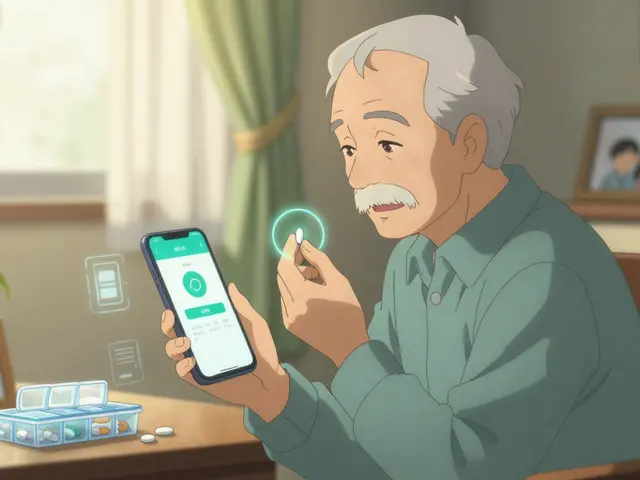
And technology? It’s not replacing pharmacists - it’s helping them. 67% of programs now use apps for reminders, but they pair it with human contact. A digital alert says: “Your pill is due.” A pharmacist calls and asks: “Is the cost still a problem? Are the side effects worse?”
Meanwhile, pharmacy technicians are taking over routine tasks - refill reminders, scheduling, data entry - freeing pharmacists to do what they do best: talk to patients.

What’s Holding Back Wider Adoption?
Despite the evidence, only 38% of pharmacist adherence programs have stable long-term funding. Why?
- Reimbursement gaps - Only 28 states pay pharmacists for medication therapy management (MTM) services. In the rest, it’s a free service - and that’s unsustainable.
- Documentation overload - Pharmacists spend 30% of their time on paperwork. Integrated EHR templates have cut that by 35%, but most clinics still use clunky systems.
- Patient engagement - Only 68% of offered services are taken up. That’s not failure - it’s opportunity. Many patients don’t know these services exist.
Some critics point out that 27% of studies show no significant improvement. But those are often programs with poor training, no follow-up, or no cost help. It’s not the model that fails - it’s the half-hearted implementation.
What Patients Are Saying
One Reddit user wrote: “My CVS pharmacist noticed I wasn’t refilling my blood pressure meds. Sat down with me for 20 minutes. Found out the $50 copay was too much. Got me on a patient assistance program. Blood pressure’s been stable for 8 months.”
Another patient said: “I used to take my pills randomly. Now my pharmacist gives me a pill organizer, checks in every two weeks, and asks if I’m having trouble. I feel like someone actually cares.”
But not all stories are positive. Some elderly patients say they still don’t understand their schedules - even after counseling. Others feel nagged by constant calls. That’s why training matters. Pharmacists need to learn motivational interviewing - not just lecture.
The Bottom Line
Pharmacists are uniquely positioned to fix medication adherence. They’re trusted. They’re accessible. They’re trained to see the whole picture - not just the pill. And the data proves it: when they’re given time, tools, and reimbursement, patients take their meds. Lives improve. Costs drop.
This isn’t about adding another service. It’s about fixing a broken system. Every person with a chronic illness deserves to understand their meds, afford them, and stick with them. Pharmacists aren’t just part of the solution - they’re the missing link.
Why do patients stop taking their medications?
Patients stop taking medications for many reasons - cost is the biggest, followed by confusion about why the drug is needed, side effects, complex dosing schedules, and forgetfulness. Mental health issues like depression also play a major role. Many don’t realize their symptoms are linked to skipping pills. A 2023 CDC review found 68% of non-adherence cases are tied to affordability, and 57% to scheduling difficulties.
Can pharmacists really make a difference in adherence?
Yes - and the evidence is strong. A 2024 study of over 1.2 million patients showed pharmacist-led programs improved adherence by 4-6% across diabetes, hypertension, and high cholesterol - while control groups declined. Patients in these programs are 30-45% more likely to control their conditions. In VA hospitals, adherence rates jumped from 73.9% to 89.3%. Every $1 invested saves $7.43 in avoided healthcare costs.
What services do pharmacists offer to improve adherence?
Pharmacists provide personalized counseling, medication reconciliation after hospital stays, refill reminders, cost-saving assistance (like patient assistance programs), medication synchronization (all refills on one day), depression screening, and education in plain language. Many now use digital tools like apps for reminders, but always pair them with human contact to address root causes like cost or fear.
Are pharmacist-led programs covered by insurance?
Coverage varies. Medicare Part D plans cover medication therapy management (MTM) for high-risk patients. 28 states have laws requiring private insurers to reimburse pharmacists for these services. But in most states, it’s still unpaid work. CMS expanded reimbursement in 2023, and 17 Medicare Advantage plans now use outcome-based payments - paying pharmacists only when patients show improved adherence or lab results.
How can I find a pharmacist who helps with adherence?
Ask your pharmacy if they offer Medication Therapy Management (MTM) or adherence counseling. Community pharmacies like CVS, Walgreens, and independent pharmacies often provide this for free. If you’re on Medicare, you may qualify for MTM if you take multiple chronic medications. You can also ask your doctor for a referral. Veterans can access full services through VA pharmacies. Don’t wait to be offered - ask.




Sabrina Sanches
March 12, 2026 AT 21:26Pharmacists are the unsung heroes of healthcare.
Shruti Chaturvedi
March 13, 2026 AT 18:57Katherine Rodriguez
March 14, 2026 AT 11:28Devin Ersoy
March 14, 2026 AT 14:36Scott Smith
March 16, 2026 AT 14:25Sally Lloyd
March 18, 2026 AT 00:19Emma Deasy
March 18, 2026 AT 22:39tamilan Nadar
March 19, 2026 AT 01:25