
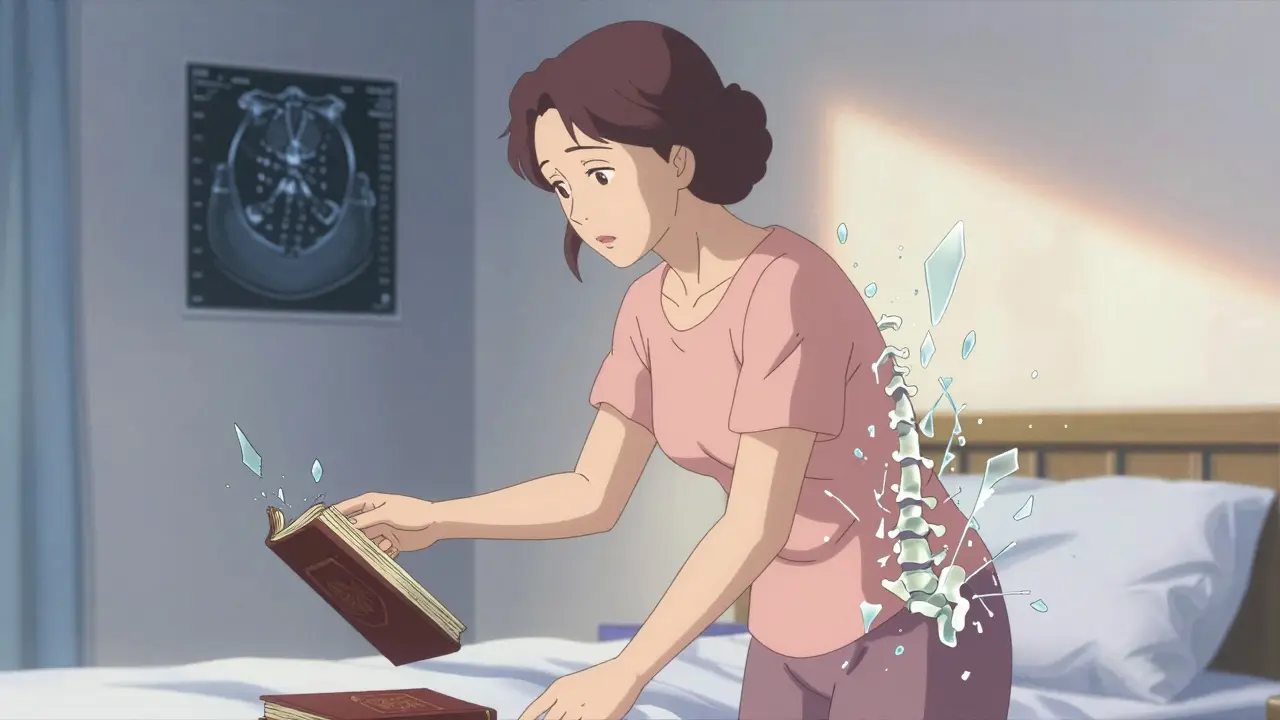
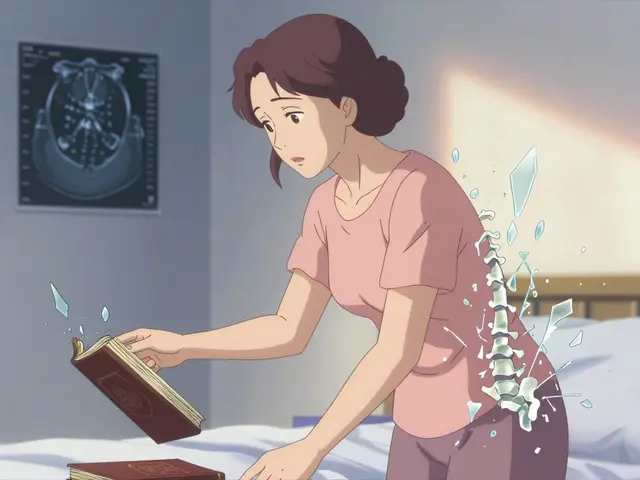
When your bones start to thin out without you noticing, it’s not just about getting older-it’s about risk. A simple stumble, a sneeze, even bending over can lead to a broken hip, spine, or wrist. That’s osteoporosis: a silent disease where bones become weak and brittle. It doesn’t come with pain or warning signs until something breaks. And for millions, especially women after menopause, this isn’t hypothetical-it’s a daily reality.
What Happens When Bones Lose Density?
Your bones aren’t static. They’re alive, constantly being broken down and rebuilt. Osteoporosis happens when the body breaks down bone faster than it can rebuild it. The result? Tiny holes form inside the bone structure, making it porous and fragile. The World Health Organization defines osteoporosis by bone mineral density (BMD) measurements, using a test called DXA scan. If your BMD is 2.5 standard deviations below the average for a healthy young adult, that’s osteoporosis. If it’s between 1 and 2.5 below, it’s osteopenia-early warning.
Why does this happen? Estrogen drops sharply after menopause, and that hormone plays a big role in keeping bone loss in check. About 80% of the 10 million Americans with osteoporosis are women. But men aren’t off the hook-1 in 4 men over 50 will break a bone due to osteoporosis. Risk factors include low body weight, smoking, too much alcohol, long-term steroid use, and family history. The real danger? Fractures. A hip fracture can mean months in rehab-or worse. One in five people who break a hip die within a year.
How Bisphosphonates Stop Bone Loss
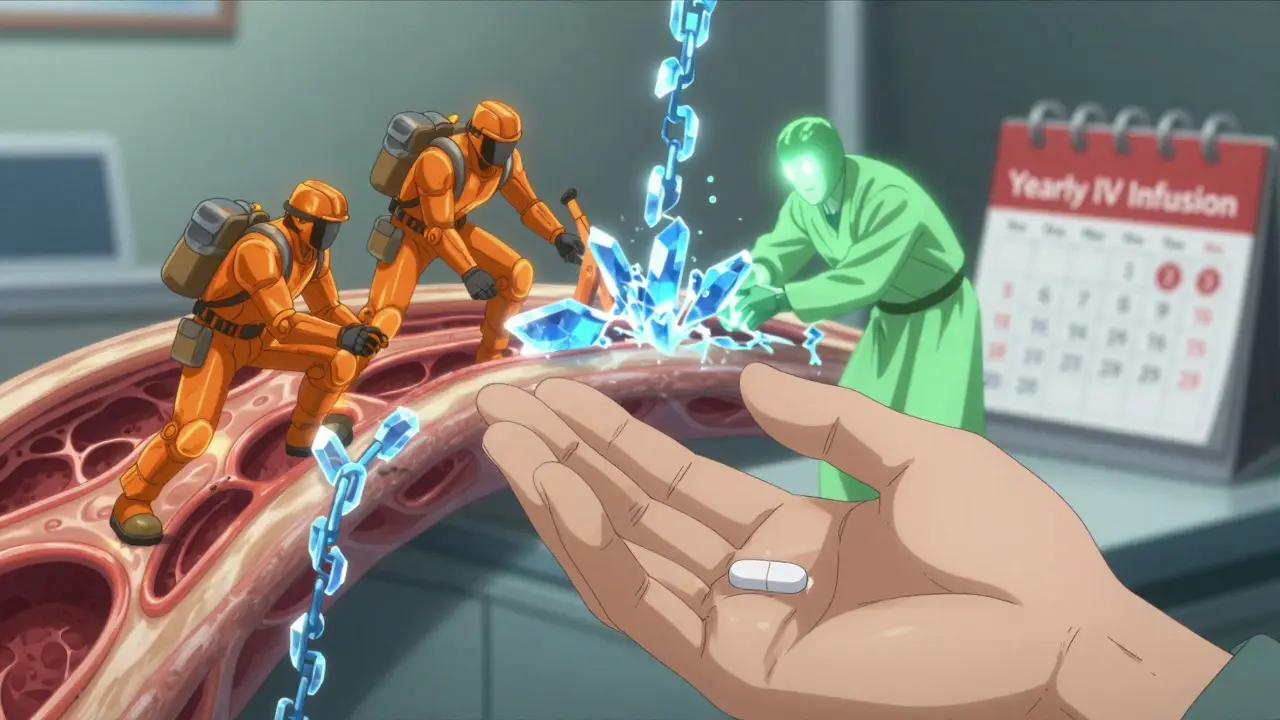
Bisphosphonates are the most commonly prescribed drugs for osteoporosis. They don’t rebuild bone, but they do something just as important: they slow down the cells that break it down. These cells, called osteoclasts, are like demolition crews. Bisphosphonates shut them down, letting the bone-building cells (osteoblasts) catch up.
There are two types: non-nitrogen and nitrogen-containing. The nitrogen ones-like alendronate, risedronate, ibandronate, and zoledronic acid-are the first-line choice. They work by blocking an enzyme called farnesyl pyrophosphate synthase. That stops osteoclasts from working properly and even triggers their death. The effect? Bone density improves, and fractures drop.
Studies show alendronate cuts vertebral fractures by 48% and hip fractures by 51% over three years. Zoledronic acid, given as a yearly IV infusion, reduces hip fractures by 41% and spine fractures by 70%. These aren’t small numbers. They’re life-changing.
How You Take Them Matters
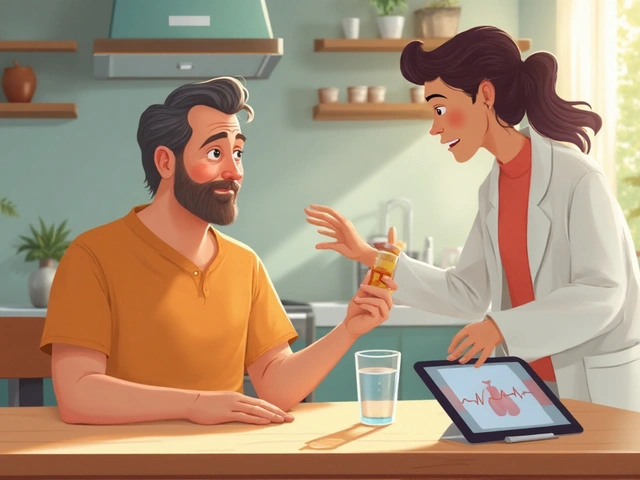
Oral bisphosphonates like alendronate sound simple: take one pill a week. But there’s a catch. You have to take it on an empty stomach, first thing in the morning, with a full glass of plain water. Then, you must stay upright-no lying down-for at least 30 to 60 minutes. No coffee, no food, no other pills. Why? Because if the pill gets stuck in your esophagus, it can cause serious irritation or even ulcers.
That’s why many people switch to the IV version. Zoledronic acid is given once a year in a clinic. No daily pills. No waiting. Just a 15-minute infusion. It’s easier, but not without risks. Some feel flu-like symptoms after the first dose. Others worry about long-term side effects.
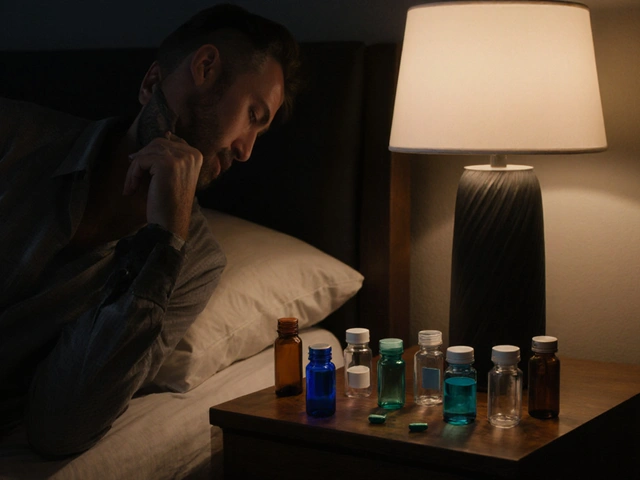
Adherence is a huge problem. Studies show only about half of people still take their oral bisphosphonate after a year. Dosing is tricky. Side effects are real. And if you miss a dose, the protection fades.
Side Effects and Risks
Most people tolerate bisphosphonates fine. But about 10-15% get stomach upset-heartburn, nausea, abdominal pain. Rarely, they cause more serious problems.
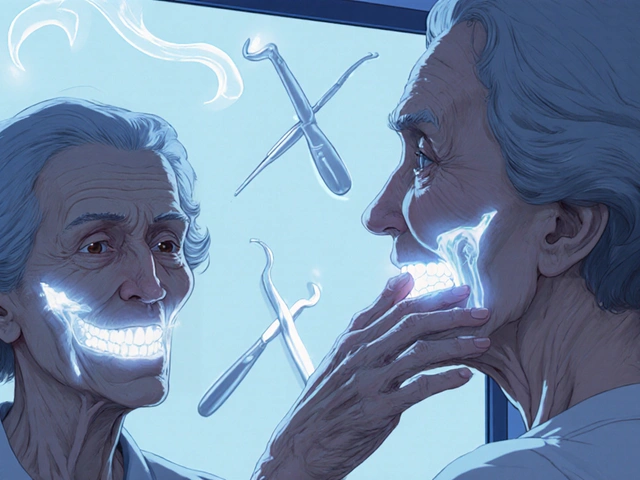
One is atypical femoral fracture-a break in the thigh bone that happens with little or no trauma. It’s extremely rare: about 3 to 5 cases per 10,000 patient-years. Another is osteonecrosis of the jaw (ONJ), where bone in the jaw dies. This mostly happens in cancer patients on high doses, not osteoporosis patients. For someone on standard osteoporosis treatment, the risk is less than 1 in 10,000.
These risks are why doctors now talk about drug holidays. After 3 to 5 years of treatment, if your fracture risk is low and your bone density has stabilized, you might stop the drug for a while. Your bone still remembers the protection. Studies show you can go 1-2 years off without losing much benefit. But if your risk is high-say, you’ve already broken a bone-you keep going.
How Bisphosphonates Compare to Other Treatments
Bisphosphonates aren’t the only option. Denosumab (Prolia) is a monthly or twice-yearly injection that works differently-it blocks a protein that activates osteoclasts. It can be more effective at building bone density than bisphosphonates. But here’s the catch: if you stop denosumab, bone loss can be rapid. Some patients even get multiple spine fractures after stopping.
Then there’s teriparatide (Forteo), which actually builds new bone. It’s an anabolic drug, not an anti-resorptive. It’s great for severe cases, but you can only use it for two years. And it costs around $1,800 a month-10 to 90 times more than generic alendronate.
Romosozumab (Evenity) is newer. It both builds bone and slows breakdown. It cuts vertebral fractures by 73% in a year. But it comes with a black box warning for heart attack and stroke risk. It’s only approved for one year.
Bisphosphonates still dominate. About 65% of prescriptions in the U.S. are for them. Why? They’ve been around for decades. We know how they work. We know the risks. And they’re cheap. Generic alendronate costs as little as $20 a month. For most people, that’s the best balance of safety, effectiveness, and cost.
Who Should Be Treated-and How
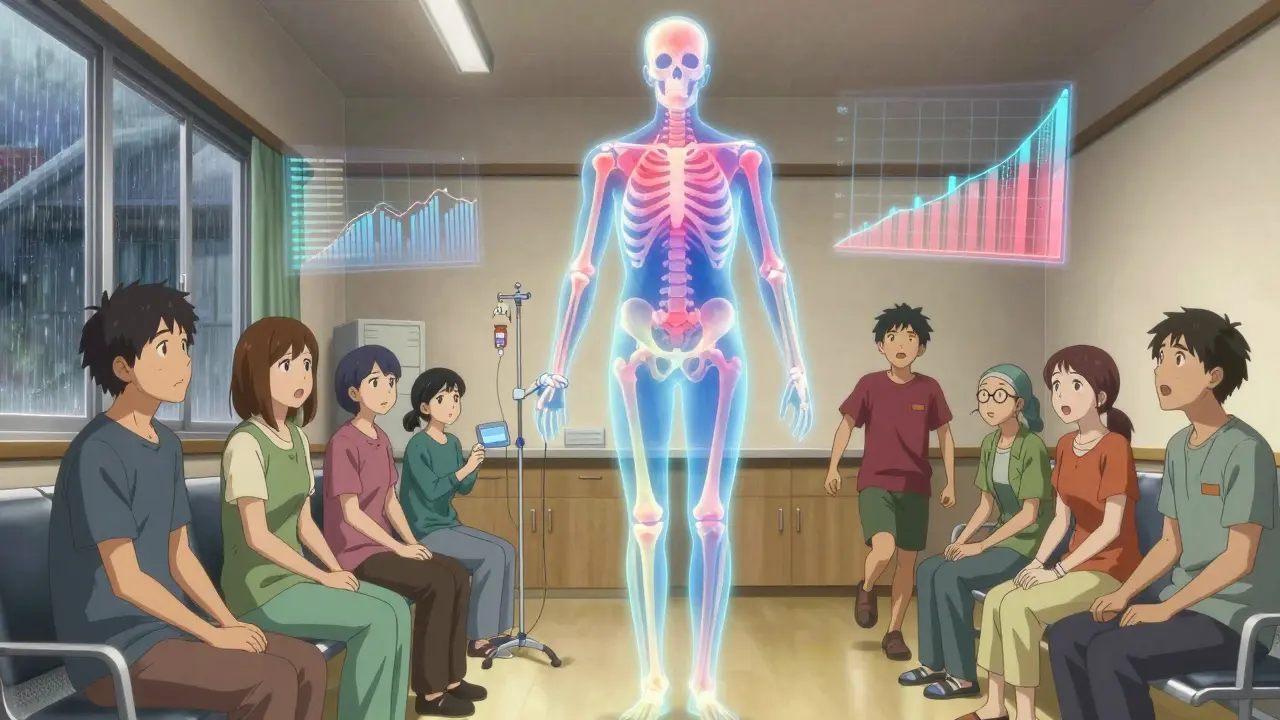
Not everyone with low bone density needs medicine. Doctors use the FRAX tool to estimate your 10-year risk of major fracture. If your risk is over 20% for any major fracture or over 3% for hip fracture, treatment is recommended.
Before starting bisphosphonates, you need a DXA scan. You’ll usually get another one after 1-2 years to check progress. Kidney function matters too. If your creatinine clearance is below 30-35 mL/min, some bisphosphonates aren’t safe.
Patients often ask: How long should I take this? The answer isn’t one-size-fits-all. For someone with a history of fracture and very low BMD, 5-10 years may be right. For someone with mild osteopenia and no fractures, 3-5 years and then a break might be smarter.
What Patients Really Say
On review sites like Drugs.com, alendronate has a 5.4 out of 10 rating. Some users say: “It stopped my bone loss after my hip fracture.” Others say: “I couldn’t handle the stomach pain.”
One Reddit user switched from daily pills to yearly IV infusions: “No more worrying about sitting upright for an hour. It’s been life-changing.”
But the biggest question? When do I stop? Many patients fear stopping will bring back the risk. Doctors now use bone turnover markers and repeat DXA scans to guide that decision. It’s not about time-it’s about your individual risk.
The Future of Osteoporosis Treatment
Research is moving beyond “one drug fits all.” The 2023 DATA-HD study showed that combining teriparatide with alendronate for 10 years still kept bone density high-challenging the idea that long-term bisphosphonate use is always risky.
Scientists are also working on better ways to predict who needs treatment, who can safely pause, and who needs something stronger. New biomarkers may soon tell us if a drug is working before we even do another scan.
For now, bisphosphonates remain the backbone of osteoporosis care. They’re proven, affordable, and effective. But they’re not magic. They work best when paired with lifestyle changes: weight-bearing exercise, enough calcium and vitamin D, quitting smoking, limiting alcohol.
If you’re at risk, don’t wait for a fracture to act. Talk to your doctor. Get tested. Understand your options. Because strong bones aren’t just about age-they’re about choices.
Can bisphosphonates rebuild bone?
No, bisphosphonates don’t rebuild bone. They slow down bone loss by inhibiting osteoclasts, the cells that break down bone. This allows the body’s natural bone-building cells to catch up, leading to improved bone density over time. For actual bone building, drugs like teriparatide or romosozumab are used-they stimulate new bone formation.
How long should I take bisphosphonates?
Most guidelines recommend 3 to 5 years for low-risk patients, followed by a drug holiday. For high-risk patients-like those who’ve had a prior fracture-treatment may continue for 5 to 10 years. After that, your doctor will reassess your fracture risk using bone density scans and other tools to decide if you should restart, switch, or stop.
Are there alternatives to bisphosphonates?
Yes. Denosumab (Prolia) is an injection given every six months and works well, but it requires lifelong use. Teriparatide (Forteo) builds new bone but is limited to two years and is expensive. Romosozumab (Evenity) builds bone and reduces breakdown, but it’s only for one year and has heart risk warnings. Bisphosphonates remain first-line due to cost, safety data, and oral options.
What are the most common side effects of oral bisphosphonates?
The most common side effects are gastrointestinal: heartburn, nausea, abdominal pain, and esophageal irritation. These happen in about 10-15% of users. They’re often caused by improper dosing-lying down too soon after taking the pill or not drinking enough water. Following dosing instructions carefully reduces risk significantly.
Can I take bisphosphonates if I have kidney problems?
It depends. Oral bisphosphonates generally require a creatinine clearance of at least 30-35 mL/min. Zoledronic acid requires at least 35 mL/min. If your kidney function is below that, your doctor may avoid bisphosphonates or choose a different treatment like denosumab, which is cleared by the liver instead of the kidneys.

phyllis bourassa
March 5, 2026 AT 15:46Wow, this post is basically a love letter to bisphosphonates. I get it, they’re cheap and common, but have you talked to anyone who got jaw necrosis? Or had that weird thigh snap with no fall? I’m not saying it’s common, but when it happens, you don’t get a do-over. And don’t even get me started on the ‘drug holiday’ myth-my aunt stopped for ‘a year’ and ended up with three compression fractures. Thanks for the info, but I’m sticking with walking 10k steps and vitamin D. No pills, no IVs, no risks.
Pranay Roy
March 5, 2026 AT 17:52Did you know the FDA approved bisphosphonates after a 3-month trial with 200 people? That’s it. And now millions are on them for a decade? The pharmaceutical industry has been funding every single study on this since 1998. The real question: who owns the bone density scan machines? Who profits when you need a repeat scan every 2 years? And why do they never mention that calcium supplements alone can reduce fracture risk by 20%? No one wants to talk about the money. Just take the pill.
Joe Prism
March 6, 2026 AT 06:47Simple truth: bisphosphonates work. Not perfectly. Not without caveats. But they reduce hip fractures. That’s not a statistic. That’s your grandma not dying in a rehab bed. Skip the drama. Do the scan. Take the pill. Walk. Eat protein. That’s the whole program.
Bridget Verwey
March 6, 2026 AT 16:47Oh honey, you just described my entire 2023. ‘Take it on an empty stomach. Stay upright. No coffee. No lying down.’ Like I’m a 1950s housewife following a nuclear fallout protocol. I switched to the IV. Now I get to sit in a comfy chair, sip tea, and let science do the heavy lifting. And yes, I felt like I’d been hit by a truck the next day. But I’d rather feel like that once a year than live like a human pretzel every morning. #IVLife
Andrew Poulin
March 8, 2026 AT 06:29Stop overcomplicating this. If you’re over 65 and broke a wrist, take the damn pill. If you’re healthy and have good BMD, don’t be an idiot and start one. The rest is noise. Your bones don’t care about your blog posts. They care about gravity, protein, and whether you stood up from a chair today. Take the pill. Move your body. Stop reading.
Weston Potgieter
March 9, 2026 AT 12:45Drug holiday? More like drug hula hoop. You think your bones remember the drug? Nah. They remember the fear. And the fear is what keeps you alive. But hey, if you wanna gamble your spine on a ‘maybe’-go ahead. I’ll be over here, sipping bone broth and doing squats with my grandkids. And no, I don’t need a scan. I know my body. You don’t.
Vikas Verma
March 11, 2026 AT 09:01From a clinical perspective, the pharmacokinetic profile of nitrogen-containing bisphosphonates demonstrates sustained suppression of bone turnover markers over 12-month cycles, supporting extended dosing intervals. The FRAX algorithm remains the gold standard for risk stratification. However, adherence is suboptimal due to gastrointestinal tolerability and improper administration protocols. I recommend patient education via video modules and pharmacy-based counseling to improve compliance and reduce esophageal events.
Sean Callahan
March 12, 2026 AT 21:20so i took alendronate for 2 years and then stopped because i was scared of the jaw thing and then my doc said its fine but now im not sure if i should go back on it or just do yoga and hope for the best?? help
Ferdinand Aton
March 14, 2026 AT 01:09Wait, so you’re saying the drug works? That’s wild. I thought it was all just a scam to sell more scans. I mean, if your bones are weak, shouldn’t you just eat more milk? Or maybe lie on the floor more? I read somewhere that gravity is the best osteoporosis treatment. Who even invented this science?
William Minks
March 14, 2026 AT 20:16My mom’s on the yearly IV and she says it’s the best thing since sliced bread 🙌 No more worrying about coffee or posture. Just one day a year she gets to chill in a clinic with snacks. I’m switching next year. Also, she’s 78 and still hikes. So yeah, science works. 💪
Jeff Mirisola
March 15, 2026 AT 09:14I’m 71, had a spine fracture at 68, took alendronate for 5 years, did the drug holiday, and got my scan last month. BMD improved. I’m back on it. No regrets. This isn’t about fear. It’s about being able to hold your grandkid without thinking about your spine. If you’ve got risk factors? Do the work. It’s not glamorous. But it’s worth it.
Susan Purney Mark
March 16, 2026 AT 19:29I’m a nurse and I’ve seen too many people skip their pills because they’re ‘too inconvenient.’ But here’s the thing: bone loss doesn’t care how busy you are. I always tell my patients: take it before you brush your teeth. Drink a full glass. Sit up. Wait 30 minutes. Do it like a ritual. It’s not a chore-it’s self-care. And if you can’t do it? Talk to your doctor about the IV. No shame. Your bones will thank you ❤️
Ian Kiplagat
March 17, 2026 AT 04:17Interesting read. I’ve been on alendronate for 7 years. No side effects. My last scan showed improvement. I don’t take it because I’m scared. I take it because I want to be able to carry my own groceries at 80. Simple as that. 🇬🇧