
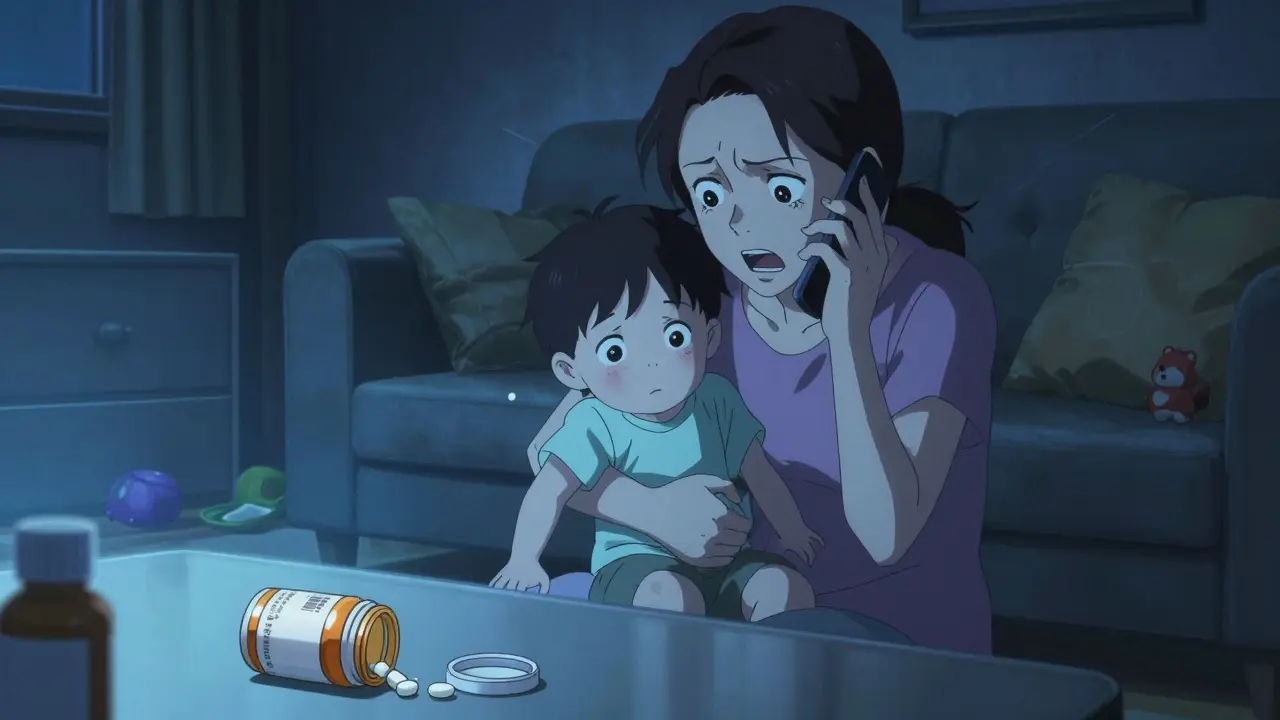
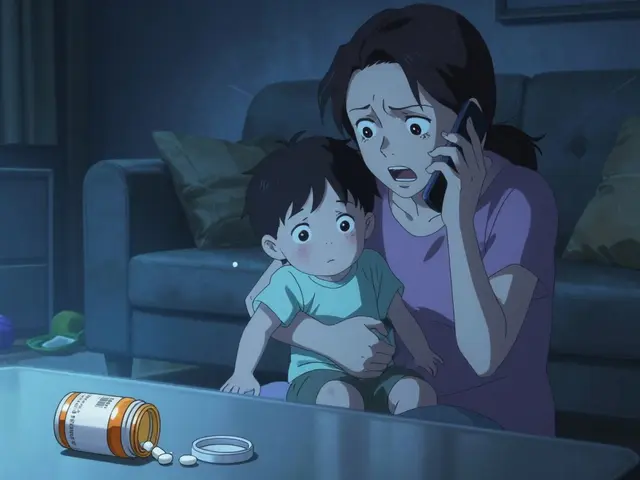
If your child swallows the wrong medication, time is everything. Every second counts. You won’t have time to panic, search online, or call a friend. You need to act fast - and act right. The good news? Most children survive these incidents when caregivers follow clear, proven steps. The bad news? Many parents do the wrong thing out of fear or old advice. I’ve seen it too many times: a parent tries to make their child vomit, wastes minutes hunting for the pill bottle, or waits to see if they "look okay." That’s exactly what makes a small mistake turn into a life-threatening emergency.
Step 1: Call Poison Control Right Now
Do not wait. Do not Google. Do not call your pediatrician first. Pick up the phone and dial 800-222-1222 - that’s the Poison Help number in the U.S. If you’re outside the U.S., find your country’s national poison center immediately. This is not a suggestion. It’s the single most important thing you can do.Poison Control centers are staffed 24/7 by toxicology experts who know exactly what to do based on the medication, the amount swallowed, and your child’s weight and age. They don’t guess. They have databases built from millions of real cases. In 2022, the American Association of Poison Control Centers handled over 1.9 million exposure calls, and 38% of them involved children under 5. Their advice cuts hospital visits by 43%. That’s not a small number. That’s life-saving.
While you’re calling, try to gather the medication container. But don’t leave your child’s side. If they’re still holding a pill or tablet, gently remove it from their mouth with your fingers. Don’t force it. Don’t stick your finger down their throat. Just take it out if it’s loose.
Step 2: Do NOT Induce Vomiting
This is the most dangerous myth still floating around. You might have heard from a grandparent, an old first-aid book, or even a now-outdated medicine label: "Make them throw up." Don’t. Not ever.Since 2004, the American Academy of Pediatrics and the American College of Medical Toxicology have said: never use syrup of ipecac. It doesn’t work well - studies show it changes outcomes in less than 1% of cases. Worse, it can cause your child to choke, aspirate vomit into their lungs, or burn their throat if the medication is caustic. If your child swallowed something like bleach, drain cleaner, or even a strong painkiller, vomiting could make things far worse.
Same goes for giving them milk, water, or food to "dilute" the poison. That’s not helpful. It might even delay proper treatment. Let the poison control specialist tell you what to do - and trust them.
Step 3: Watch for These Warning Signs
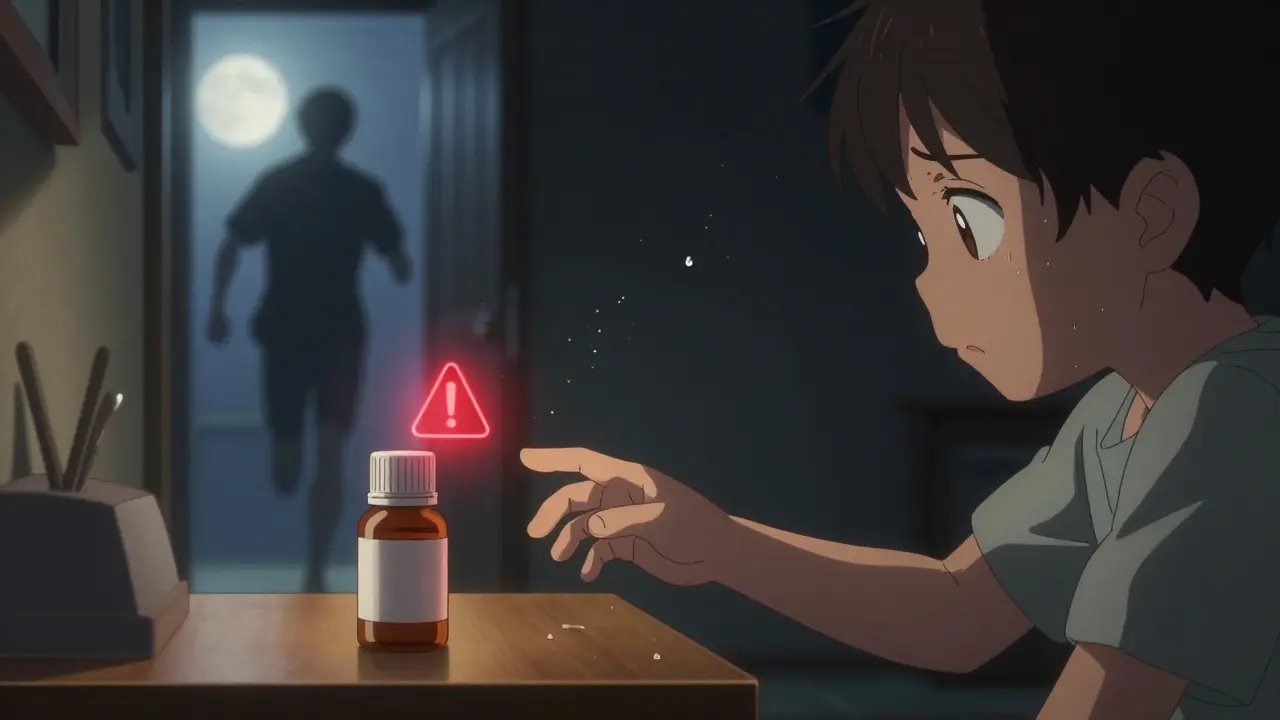
While you wait for Poison Control’s instructions, keep your eyes on your child. Some symptoms mean you need to call 911 right away - don’t wait for a callback. Call emergency services immediately if your child shows:- Difficulty breathing, gasping, or stopping breathing
- Loss of consciousness or extreme drowsiness
- Seizures or shaking
- Pupils that are unusually large or tiny
- Blue lips or fingernails
- Heartbeat that’s too fast, too slow, or irregular
These signs don’t always show up right away. A child who swallowed a single blood pressure pill like amlodipine might seem fine for 20 minutes - then suddenly drop into shock. Heart medications can cause blood pressure to crash below 70/40 mmHg and heart rate to fall below 50 beats per minute within 30 minutes. That’s not a slow decline. That’s cardiac arrest waiting to happen.
Other red flags that need urgent attention: excessive drooling, persistent vomiting, unexplained lethargy lasting more than 20 minutes, or unusual skin color (pale, gray, or flushed). Even if your child seems okay, don’t assume they’re safe. Some poisons take hours to show their worst effects.
Step 4: What Happens at the Hospital
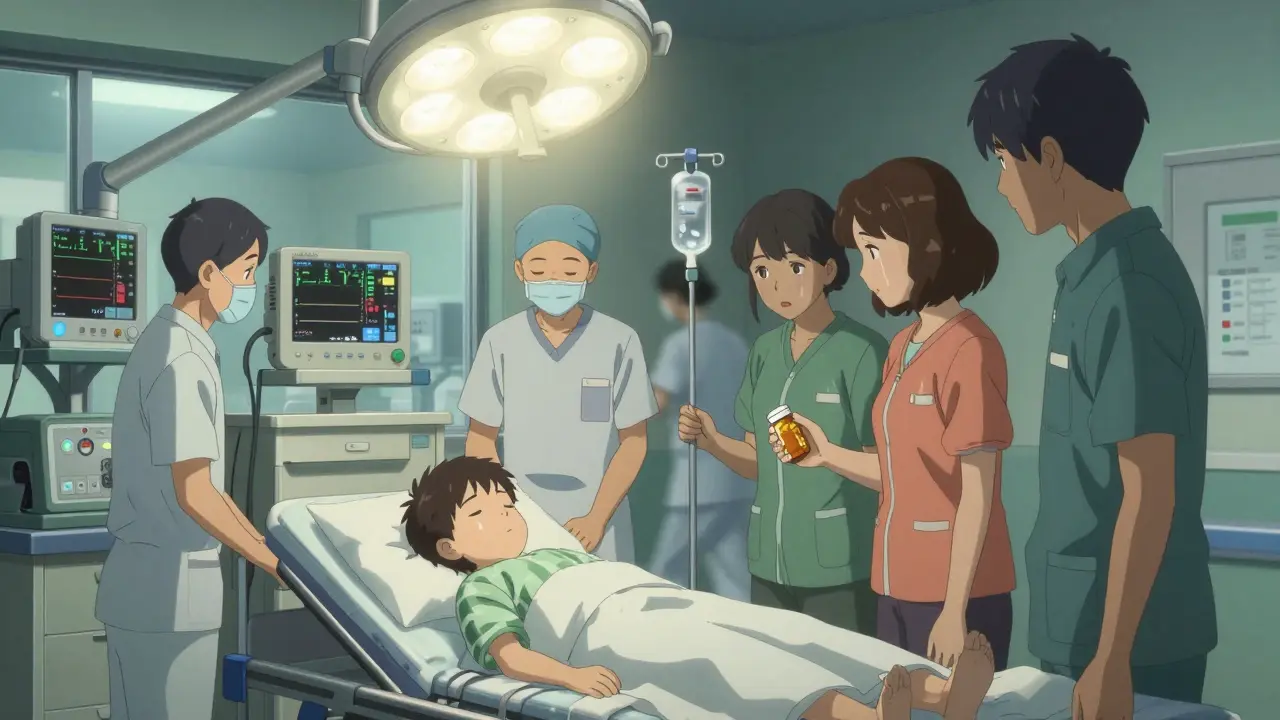
If Poison Control tells you to go to the ER, take your child immediately - and bring the medication container. Even if it’s empty. Even if you think it’s just a child’s chewable vitamin. The label tells doctors the exact ingredient, dosage, and inactive ingredients. That’s critical.At the hospital, they’ll start with vital signs: heart rate, breathing, blood pressure, oxygen levels. They’ll check blood sugar - especially if the pill might have been a diabetes medication like a sulfonylurea. These can cause dangerous low blood sugar in kids, even if they didn’t have diabetes before. Blood glucose is checked every 30 minutes for the first few hours.
They may give activated charcoal - a fine black powder that binds to toxins in the stomach - but only if it’s been less than an hour since ingestion and the poison isn’t something that charcoal can’t absorb (like alcohol, acids, or metals). For opioid overdoses, they’ll give naloxone (Narcan) through an IV or nasal spray. For certain antidepressants, they’ll use sodium bicarbonate. For sulfonylureas, they’ll use octreotide.
Most children stay under observation for at least 12 hours - even if they seem fine. Why? Because some drugs have delayed effects. A child who swallowed a single acetaminophen tablet might feel fine now, but liver damage can start 24 hours later. That’s why hospitals monitor liver enzymes and keep them overnight.
Step 5: Prevention Is the Only Real Solution
The best way to handle a medication emergency? Avoid it entirely. Most of these incidents are preventable.Here’s what works:
- Store all medications - even vitamins and supplements - in locked cabinets, not on counters or in purses.
- Use child-resistant caps - but don’t rely on them. Kids are smarter than you think. A 2-year-old can figure out a child-resistant cap in under a minute if they’re motivated.
- Keep medications in their original bottles. No more dumping pills into random containers.
- Use a pill organizer only if it’s locked and kept out of reach.
- Never take medication in front of your child. If they see you swallow a pill, they’ll want to try it.
- Choose liquid medications with flow restrictors. Since 2022, most brands now include them. They reduce accidental swallowing by 58%.
Smart tech is helping too. Devices like Hero Health’s smart pill bottle alert you if a bottle is opened by a child and lock automatically. In a Johns Hopkins study, it cut accidental access by 73%. But at $89.99/month, it’s not affordable for most families. So lock the cabinet. It’s free. And it works.
By 2025, new FDA rules will require all prescription and OTC medications to have two independent child-resistant mechanisms - not just one cap. That’s a big step forward. But until then, your lock is your child’s best defense.
What to Do After the Emergency
Once your child is safe, don’t just breathe a sigh of relief and go back to normal. Talk to your pediatrician about safety plans. Ask about local poison prevention programs. Check your home again - what else is within reach? Is your grandparent’s blood pressure pill still on the nightstand? Is your teenager’s ADHD medication in their backpack?And share what you learned. Tell other parents. Post in your neighborhood group. Send a quick message to your book club: "I didn’t know this, but if your child swallows the wrong pill, call Poison Control first - not 911, not your doctor. Call 800-222-1222."
Because here’s the truth: you’re not alone. One in five parents has had a child swallow the wrong medication. But only 61% of them knew the Poison Help number. That’s a gap we can fix. Right now. Today. Before the next accident happens.
What should I do if my child swallows a pill I didn’t know was in the house?
Call Poison Control at 800-222-1222 immediately. Even if you don’t know what the pill is, they can help identify it based on description or color. Do not wait to see if your child gets sick. Don’t try to make them vomit. Just call.
Can a single pill really be dangerous?
Yes. A single 10 mg amlodipine pill (a blood pressure drug) can cause a toddler’s heart rate and blood pressure to crash. One 500 mg acetaminophen tablet can start liver damage. Even a single chewable antihistamine can cause extreme drowsiness or seizures in young children. Never assume a pill is "just one."
Should I take my child to the ER even if they seem fine?
If Poison Control advises it, yes. Many medications have delayed effects. A child who seems fine after swallowing a diabetes pill might develop dangerously low blood sugar hours later. Hospitals keep children under observation for at least 12 hours after unknown ingestions. Better safe than sorry.
Is it safe to give my child activated charcoal at home?
No. Activated charcoal should only be given under medical supervision. It can cause choking, vomiting, or lung damage if inhaled. It’s also not effective for all poisons - like alcohol, acids, or iron pills. Only medical professionals should administer it.
How can I make sure my child can’t get into medicine?
Store all medications in a locked cabinet, out of sight and reach. Keep them in original containers. Use flow-restricted bottles. Never leave pills on counters, nightstands, or in purses. Teach older children that medicine is not candy. And always ask visitors to keep their medications locked up.
What if I don’t know the number for Poison Control?
In the U.S., it’s 800-222-1222. Save it in your phone under "Poison Control" or "Emergency." Put a sticker with the number on your fridge. Tell your babysitters, grandparents, and family members. In the UK, call 111 or 999. In Australia, it’s 13 11 26. Know your local number - now.


Jerry Rodrigues
January 21, 2026 AT 07:34Called Poison Control last year when my 3-year-old swallowed a baby aspirin. They walked me through everything. No panic. No guesswork. Just clear steps. Life-saving info.
Amber Lane
January 22, 2026 AT 07:44My sister didn’t know the number. She waited 40 minutes. Kid ended up in ICU. Don’t wait. Call 800-222-1222. Now.
Rod Wheatley
January 23, 2026 AT 17:44THIS. THIS. THIS. I’ve been screaming this from the rooftops since my niece swallowed a melatonin gummy last winter. Everyone thinks it’s ‘just a gummy’-NO. It’s a sedative. She slept for 12 hours. We didn’t know what to do. Poison Control saved her. They don’t judge. They don’t waste time. They just fix it. Keep the number saved. Put it on your fridge. Tell your babysitter. Your grandma. Your neighbor. It’s not ‘overkill.’ It’s basic parenting now. And if you think your kid’s too smart to get into meds? Ha. My 2-year-old opened a child-proof bottle. In 17 seconds. With a butter knife. So lock it. Lock it all. Even the vitamins. Even the CBD gummies you ‘forget’ on the counter. I’ve seen it. I’ve lived it. Don’t be the parent who says, ‘I didn’t know.’ You know now. Act.
Malvina Tomja
January 25, 2026 AT 00:11So now we’re supposed to trust poison control over doctors? Funny. My cousin’s kid got given charcoal by them and ended up with aspiration pneumonia. They’re not infallible. Just bureaucrats with databases. Always verify with a real MD.
Samuel Mendoza
January 25, 2026 AT 17:18Calling Poison Control first? That’s cute. In 2024, you should just call 911. They’re faster. And if you’re not in the US, this whole guide is useless. Why assume everyone’s American?
Roisin Kelly
January 25, 2026 AT 21:26Let me guess… this was written by a pharmaceutical rep. Activated charcoal? Naloxone? Octreotide? You’re selling fear. Real parents just keep meds locked. That’s it. No need for all this overcomplicated nonsense. Also, why does every parent suddenly need to be a toxicologist? Just don’t let kids near pills. Done.
lokesh prasanth
January 26, 2026 AT 22:32why not just teach kids not to eat random stuff? like… basic life skill? why we always blame parents? kids are curious. not evil. maybe we need less fear, more trust?
Glenda Marínez Granados
January 28, 2026 AT 02:21So… call Poison Control, don’t induce vomiting, watch for signs, go to ER if told, lock everything, and pray? 😅 Sounds like a 5-step plan to turn parenting into a hostage negotiation. I’ll stick with my ‘don’t leave meds out’ strategy. Works 99% of the time. 🙃
Yuri Hyuga
January 29, 2026 AT 18:41Thank you for this. Truly. As a father of two and a former ER nurse, I’ve seen too many avoidable tragedies. The fact that 61% of parents don’t know the Poison Control number is a national disgrace. 🇺🇸 Let’s change this. Save the number. Print it. Share it. Talk about it at PTA meetings. It’s not just advice-it’s a public health imperative. And yes, lock your meds. Even the ‘harmless’ ones. Even the ones in your partner’s purse. Even the ones you keep for ‘just in case.’ Because ‘just in case’ is exactly when it happens. I’ve held children who didn’t make it because someone waited. Don’t be that person. Be the one who acted. 🙏💙