

Every year, millions of people take prescription drugs, over-the-counter medicines, medical devices, and even cosmetics. Most of them work as expected. But sometimes, something goes wrong. A medication causes a dangerous reaction. A glucose monitor gives wrong readings. A cream triggers a severe rash. When that happens, you might wonder: Who do I tell? The answer is simple: FDA MedWatch.
What Is MedWatch, Really?
MedWatch isn’t just a form you fill out. It’s the U.S. Food and Drug Administration’s official system for tracking safety problems with medical products. Think of it as the nation’s early warning system. When a patient has a bad reaction, a doctor spots a pattern, or a manufacturer finds a defect, MedWatch collects that info. The FDA uses it to decide if a drug needs a stronger warning, a device needs a recall, or a product should be pulled off the market.It covers a lot: prescription pills, OTC pain relievers, insulin pens, blood pressure monitors, CBD oils, even hair dye and moisturizers. The only things it doesn’t cover? Vaccines (those go to VAERS), animal drugs, and tobacco products.
What makes MedWatch unique is that it works two ways. Healthcare professionals and manufacturers must report serious problems by law. But anyone - patients, family members, caregivers - can report too. And those voluntary reports? They matter. In fact, the FDA says many safety signals - like a rare heart rhythm problem linked to a new antibiotic - were first spotted because a patient or doctor took the time to report it.
When Should You Report?
You don’t need to be a doctor to know when something’s wrong. If you or someone you care about had a serious reaction, it’s worth reporting. The FDA defines a serious adverse event as one that:- Caused death
- Was life-threatening
- Required hospitalization
- Resulted in permanent disability
- Caused a birth defect
- Needed medical or surgical intervention to prevent harm
For example: You started a new blood thinner and ended up in the ER with internal bleeding. That’s reportable. Your child used a new inhaler and had trouble breathing so bad they needed an ambulance. That’s reportable. Your glucose meter gave a false low reading, and you passed out. That’s reportable.
Even if you’re not sure - report it anyway. The FDA doesn’t need proof. They need clues. One report might seem small. But 10, 50, or 200 similar reports? That’s a pattern. And patterns trigger investigations.
How to Report: Two Forms, Two Paths
There are two main forms, and which one you use depends on who you are.For Patients and Consumers: Form FDA 3500B
This is the simplified version. It’s designed for people without medical training. You can fill it out online at the MedWatch website or download a PDF to mail in.You’ll need:
- Your name and contact info
- The name of the product (drug, device, cosmetic)
- When you started using it
- What happened and when
- How it affected you (e.g., “I couldn’t breathe,” “I had a seizure”)
- Whether you saw a doctor
It takes about 10-20 minutes. The form has big buttons, clear fonts, and simple language - mostly. But some terms still trip people up. Words like “event abated” or “dose frequency” aren’t everyday language. If you don’t know what something means, skip it. Or better yet, bring the form to your doctor. They can help you fill it out using your medical records.
And here’s the truth: You don’t need your doctor’s permission to report. But if they help, your report becomes stronger. They can add details like lab results, diagnosis codes, or whether the reaction improved after stopping the product.
For Healthcare Professionals: Form FDA 3500
Doctors, nurses, pharmacists, and other providers use this version. It’s more detailed. You’ll include your license number, specialty, and whether you’ve reported to the manufacturer too. The form asks for clinical context: lab values, vital signs, other medications, and whether the reaction improved after stopping the product.Most professionals complete this in 10-15 minutes. Many say it’s straightforward - especially if they’re used to documenting patient events. The FDA sends an acknowledgment letter to confirm receipt. That small touch? It matters. It tells providers: Your voice is heard.

What Happens After You Submit?
You won’t get a phone call. You won’t get a follow-up email unless you ask for one. But your report goes into a database with over 1.2 million entries each year. FDA analysts review it. They look for clusters - the same drug linked to the same rare side effect across multiple reports.If enough reports point to a problem, the FDA can:
- Add a black box warning to the drug label
- Require a Risk Evaluation and Mitigation Strategy (REMS)
- Issue a safety alert to doctors and pharmacies
- Force a recall of a faulty device
- Require more studies
One real example: In the early 2000s, reports of severe liver damage from the herbal weight-loss supplement ephedra poured into MedWatch. The FDA reviewed the data, pulled the product, and banned it nationwide. That wouldn’t have happened without patient and provider reports.
And here’s the kicker: The FDA estimates that only 1% to 10% of serious adverse events are ever reported. That means for every report you file, 9 to 99 others are going unreported. Your report could be the one that saves someone else’s life.
Why Reporting Feels Hard - And How to Get Past It
Many people don’t report because they think:- “It’s not that big of a deal.”
- “The doctor will report it.”
- “I don’t have time.”
- “It won’t make a difference.”
But here’s the reality:
- Doctors are busy. They’re not required to report. Many don’t.
- “Not that big of a deal” is how major safety issues start. One person’s “mild rash” is another’s signal of a dangerous reaction.
- The online form takes less time than ordering coffee.
- It makes a difference. Every single time.
Still stuck? Here’s what to do:
- Write down what happened. Date, time, symptoms, how long it lasted.
- Find the product name. Look at the bottle, box, or prescription label.
- Go to fda.gov/medwatch.
- Click “Report a Problem.”
- Choose the consumer form (3500B).
- Fill out what you know. Skip what you don’t.
- Hit submit.
That’s it.
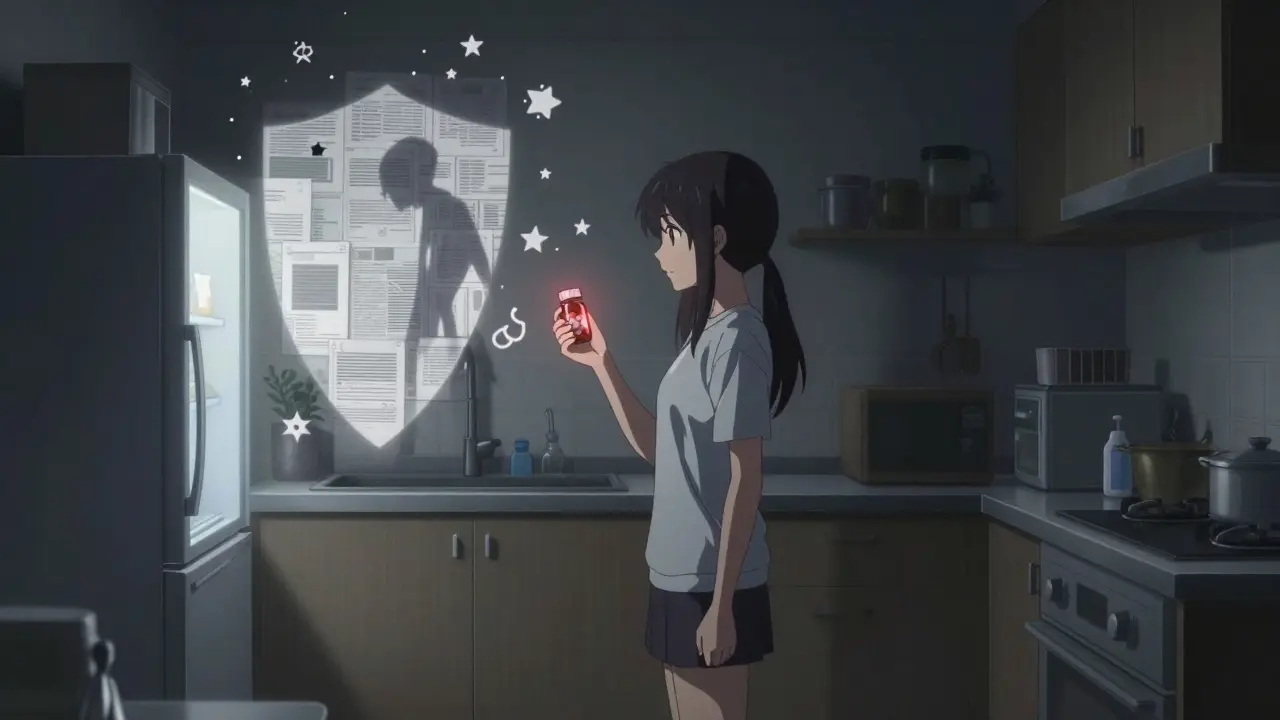
What’s New With MedWatch?
The FDA knows the system isn’t perfect. In 2021, they launched a redesigned website with better mobile support and clearer instructions. They now offer email and RSS alerts for new safety notices. And by 2025, they plan to integrate MedWatch with electronic health records - so when a doctor documents a reaction, it could auto-fill a report.They’re also testing AI tools to help patients understand confusing terms. Imagine typing “I felt dizzy after taking my pill” and the system suggesting: “That’s called ‘dizziness.’ Is this what you meant?”
It’s not just tech. The FDA is pushing harder to reach underserved communities - offering forms in Spanish, simplifying language, and working with pharmacies to hand out reporting flyers.
What You Can Do Today
You don’t need to be an expert. You don’t need to wait for a recall. If you’ve had a bad reaction to a medication, device, or cosmetic - report it. Even if it happened months ago. Even if you’re not sure. Even if you think someone else already did.MedWatch isn’t about blame. It’s about safety. It’s about making sure the next person doesn’t have to go through what you did.
Report it. It takes minutes. It could save lives.
Can I report a side effect if I’m not sure it was caused by the drug?
Yes. You don’t need to be certain. The FDA’s job is to investigate possible links. If multiple people report similar reactions after using the same product, analysts look for patterns. Your report - even if uncertain - adds to the evidence.
Do I need to contact my doctor before reporting?
No, you don’t need permission. But if you can, bring your report to your doctor. They can add clinical details - like lab results or your medical history - that make your report much more valuable to the FDA. It’s not required, but it helps.
What if I don’t know the exact name of the product?
Try to find it on the packaging, bottle, or prescription label. If you can’t, describe it as best you can: color, shape, markings, what it was used for. The FDA has databases to match descriptions to products. It’s better than not reporting at all.
Is MedWatch only for prescription drugs?
No. MedWatch covers prescription drugs, over-the-counter medicines, medical devices (like glucose monitors and pacemakers), biologics (like insulin or gene therapies), cosmetics (like shampoos and lotions), and even CBD products. Anything regulated by the FDA - except vaccines and animal drugs.
How long does it take for the FDA to act on a report?
There’s no set timeline. Some reports lead to quick alerts - like a recall of a faulty device. Others take months or years as analysts review hundreds of similar cases. The key is consistency. One report might not change anything. But 50? 100? That’s when action happens.
Can I report a problem with a supplement or herbal product?
Yes. The FDA regulates dietary supplements, even though they don’t need pre-market approval. If a supplement causes liver damage, high blood pressure, or interacts dangerously with a prescription drug, report it. Many safety alerts for herbal products started with MedWatch reports.
Will my report be kept private?
Yes. Your personal information is protected. The FDA doesn’t share your name or contact details with manufacturers or the public. Reports are anonymized in public databases. Your privacy is a priority.
What if I reported a problem and nothing changed?
That doesn’t mean your report didn’t matter. The FDA reviews every report, even if no public action follows. Your report may have contributed to internal reviews, updated labeling for healthcare providers, or helped shape future research. Change often happens quietly - behind the scenes.



amanda s
December 16, 2025 AT 22:58Kent Peterson
December 18, 2025 AT 15:27Josh Potter
December 18, 2025 AT 17:05Jane Wei
December 19, 2025 AT 00:25Radhika M
December 19, 2025 AT 04:33Philippa Skiadopoulou
December 19, 2025 AT 19:34Pawan Chaudhary
December 20, 2025 AT 22:03Jonathan Morris
December 21, 2025 AT 01:29Linda Caldwell
December 21, 2025 AT 22:21Anna Giakoumakatou
December 22, 2025 AT 17:21CAROL MUTISO
December 23, 2025 AT 01:05Martin Spedding
December 23, 2025 AT 18:54Jessica Salgado
December 24, 2025 AT 15:24Naomi Lopez
December 25, 2025 AT 00:50Erik J
December 25, 2025 AT 14:10