

Switching from a brand-name drug to a generic version is supposed to be simple-same active ingredient, same effectiveness, lower cost. But for some people, it’s not that straightforward. You might start feeling different after the switch: new headaches, dizziness, nausea, or even worse symptoms you didn’t have before. If that happens, you’re not imagining it. And you’re not alone. Around 1 in 50 people report changes after switching to generics, even when the science says they should be identical.
Why Do Side Effects Happen After Switching?
Generic drugs must meet strict FDA rules to prove they work the same way as the brand-name version. They have to deliver the same amount of active ingredient into your bloodstream within a narrow range-80% to 125% of the brand. That’s called bioequivalence. But here’s the catch: generics don’t have to match the brand’s inactive ingredients. Those are the fillers, dyes, preservatives, and coatings that hold the pill together or help it dissolve.
For most people, those differences don’t matter. But if you’re sensitive to certain dyes, gluten, or lactose-even in tiny amounts-you might react. A 2018 study looked at four common drugs: amlodipine, losartan, metoprolol ER, and simvastatin. It found that some side effects, like swelling in the legs or fatigue, were reported more often after switching to certain generics than others. Not because the active drug changed, but because the pill’s outer shell did.
There’s also a psychological factor. A 2021 survey found that 42% of patients believe generics are less effective than brand-name drugs. That belief can make people more likely to notice and report symptoms-even if they’re not caused by the medication. Still, if you feel worse after switching, it’s worth reporting. Your experience could help others.
What Counts as a Side Effect Worth Reporting?
You don’t need to wait for something life-threatening to act. The FDA wants to hear about any unexpected reaction, even if it seems minor. Here’s what to look for:
- New symptoms that started after you switched to the generic-like rashes, stomach pain, or trouble sleeping.
- Worsening of existing symptoms you were already managing.
- Side effects not listed on the medication’s label. If your doctor didn’t warn you about this one, it’s worth reporting.
- Any serious reaction-hospitalization, breathing trouble, chest pain, severe dizziness, or signs of an allergic reaction.
Even if you’re not sure it’s the medication, report it. The FDA’s system is designed to catch patterns. If ten people report the same issue after switching to the same generic from the same manufacturer, that’s a red flag. That’s how hidden problems get found.
How to Report Side Effects to the FDA
Reporting is easy, and you don’t need a doctor to do it for you. You can report yourself. Here’s how:
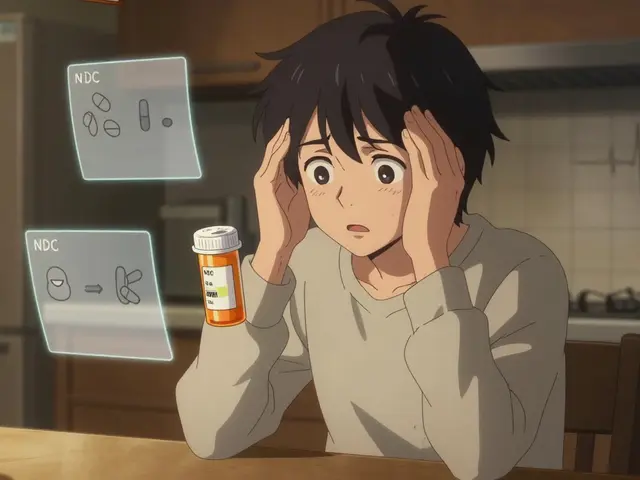
- Get the details. Grab your prescription bottle. Write down the name of the generic drug, the manufacturer (it’s on the label), the National Drug Code (NDC)-that’s the long number on the bottle-and the strength and form (e.g., 10mg tablet).
- Write down your history. What was the brand-name drug you were on? When did you switch? Did you have the same symptoms before? If yes, that’s important. If no, that’s also important.
- Choose your method. You have three options:
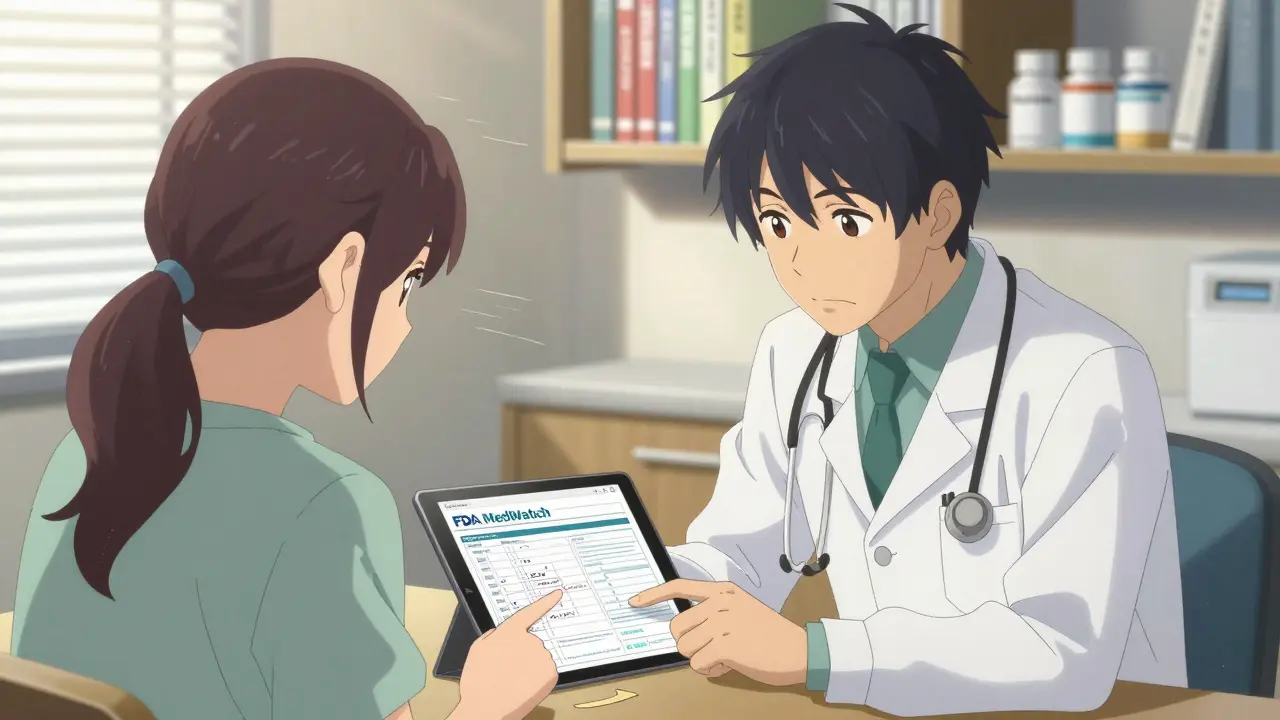
- Online: Go to www.accessdata.fda.gov/scripts/medwatch and fill out the form. It’s free, secure, and takes about 15-30 minutes.
- By phone: Call 1-800-FDA-1088. A representative will walk you through it. This is best if you’re in pain, confused, or just want to talk it through.
- By mail: Download Form FDA 3500B from the FDA website, fill it out, and mail it. You can also ask your pharmacist for a copy.
If your reaction is urgent-like trouble breathing, swelling of the face or throat, or sudden chest pain-call 911 or go to the ER. Then call 1-866-300-4374 to report it to the FDA immediately.
Why Your Doctor Matters
You can report on your own, but your doctor can make your report stronger. They can connect your symptoms to your medical history. If you’ve had heart problems, diabetes, or liver issues, that context helps the FDA decide if the reaction is truly linked to the drug.
Many people think their doctor will report it for them. But studies show only 12% of patients who had side effects after switching to generics had their doctor file a report. Most just mention it at the next visit. That’s not enough. If you tell your doctor, ask them to file the report with the FDA. Or better yet-do it together. Bring your pill bottle and your notes to the appointment.
Pharmacists can help too. They see hundreds of prescriptions every day. If your pharmacist notices a pattern-say, five people on the same generic from the same maker are complaining about the same side effect-they can flag it for the manufacturer and the FDA. Don’t skip the pharmacy when you have concerns.
What Happens After You Report?
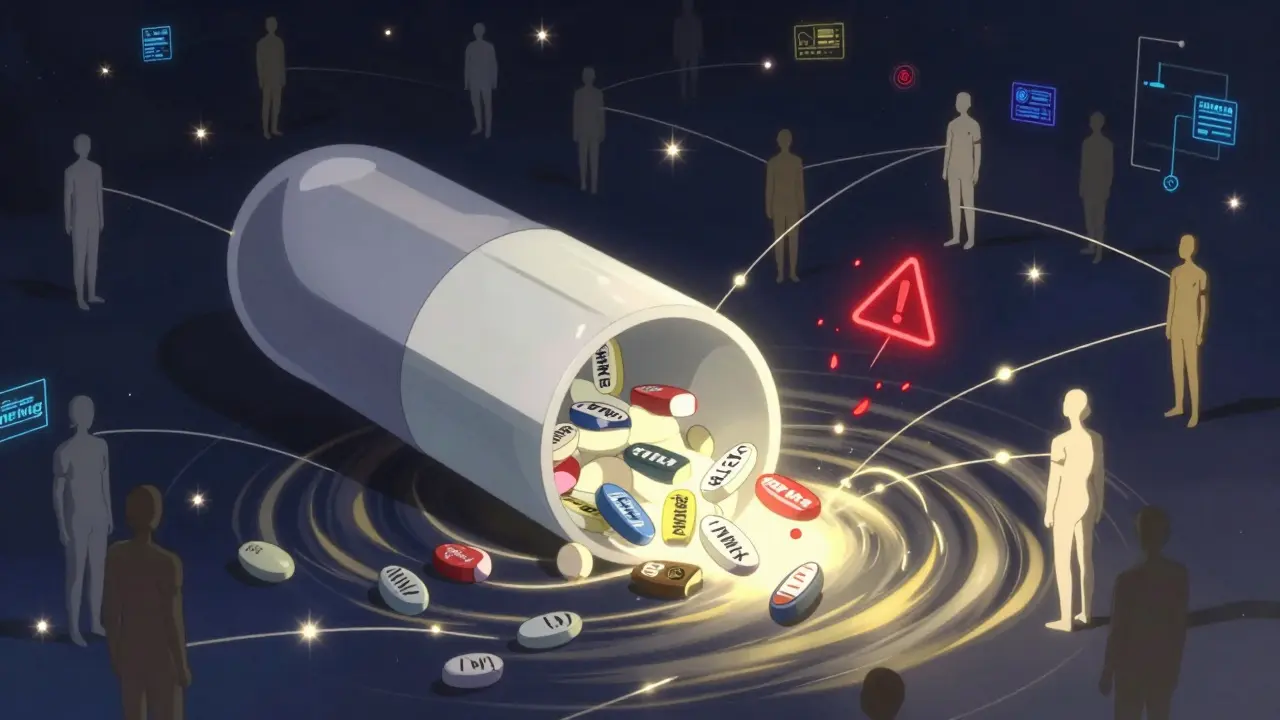
Once you submit your report, it goes into the FDA’s Adverse Event Reporting System (FAERS). It’s a giant database with over 2 million reports each year. The FDA doesn’t respond to every single report individually, but they look for trends. If a certain generic from a specific company shows a spike in reports for a rare side effect, they investigate.
Manufacturers are legally required to review all reports and send serious ones to the FDA within 15 days. If a pattern emerges, the FDA can require changes: a new warning label, a recall, or even a ban on that version of the drug.
Recent tech advances help too. The FDA now uses AI to scan reports faster. A 2022 study showed AI could spot hidden safety signals 40% quicker than human reviewers. That means your report could help catch a problem before it affects hundreds more people.
What About Authorized Generics?
There’s a type of generic called an “authorized generic.” It’s made by the same company that makes the brand-name drug, just sold under a different label. These are often identical in every way-including inactive ingredients. If you’ve had problems with regular generics, ask your pharmacist if an authorized generic is available. One study found patients reported fewer side effects with authorized generics compared to traditional ones.
For example, with amlodipine (a blood pressure drug), the rate of leg swelling was higher with traditional generics than with the authorized version. That suggests the problem wasn’t the drug-it was the pill’s coating or filler.
Don’t Stop Taking Your Medicine
If you think the generic is causing side effects, don’t quit cold turkey. That could be dangerous. Talk to your doctor first. They might switch you back to the brand, try a different generic, or adjust your dose. Never make changes on your own.
And remember: most people switch to generics with zero issues. The system works for the vast majority. But when it doesn’t, your voice matters. Every report helps improve safety for everyone.
What You Can Do Now
Here’s a quick checklist to take action today:
- Check your prescription bottle for the generic manufacturer and NDC code.
- Write down when you switched and what symptoms started.
- Call your doctor and say: “I think the new generic is causing side effects. Can we report it to the FDA?”
- Go to www.accessdata.fda.gov/scripts/medwatch and file your report.
- Keep a symptom journal for the next two weeks. Note timing, severity, and anything that makes it better or worse.
It takes 20 minutes. But that 20 minutes could save someone else from the same problem.
Do I need a doctor to report side effects from a generic medication?
No, you don’t need a doctor to report side effects. You can report directly to the FDA using their online form, phone line, or paper form. But your doctor’s input can make your report more helpful. They can confirm whether your symptoms are likely linked to the medication based on your medical history.
Are generic medications less safe than brand-name drugs?
No, generics are not less safe. They must meet the same strict FDA standards for quality, purity, and strength as brand-name drugs. The active ingredient is identical. Most people have no issues switching. But because generics can use different inactive ingredients, a small number of sensitive individuals may react. That’s why reporting side effects is so important-it helps the FDA track rare reactions.
What if I don’t know the name of the generic manufacturer?
Check the prescription bottle-it’s printed right on the label. If you don’t have it, call your pharmacy. They can tell you the manufacturer and provide the National Drug Code (NDC). You can also look up your medication using the FDA’s online database. Even if you don’t have all the details, report what you do know. The FDA can often fill in the gaps.
Can I report side effects if I switched back to the brand-name drug?
Yes, and you should. If your symptoms improved after switching back, that’s valuable information. It helps the FDA understand whether the issue was tied to the generic version. Be sure to note both the generic and brand-name drugs you took, along with the dates of each switch.
How long does it take for the FDA to act on a report?
There’s no set timeline. The FDA receives millions of reports each year. They don’t respond to each one individually. Instead, they look for patterns. If multiple reports point to the same issue with a specific generic, they may investigate further-requesting more data from the manufacturer, updating safety labels, or even recalling the product. Your report adds to the data pile. One report might not change anything, but 50 or 100 can.
Is reporting side effects only for serious reactions?
No. You should report any unexpected side effect-even if it’s mild. The FDA is especially interested in reactions that aren’t listed on the drug’s label. These are often the first signs of a new safety issue. Reporting minor issues helps catch problems early before they affect more people.
What if I report and nothing changes?
That’s okay. Safety monitoring is a long-term process. One report might not lead to immediate action, but it contributes to a larger picture. Thousands of reports build the evidence needed for regulatory decisions. Your report helps protect future patients-even if you never hear back.



Rob Deneke
January 15, 2026 AT 15:42Switched to generic metoprolol last month and started getting these crazy leg cramps at night. Thought it was just aging until I read this. Took me 3 days to gather the NDC code but I filed the report yesterday. Feels good to do something besides just suffer in silence.
evelyn wellding
January 16, 2026 AT 13:07YESSSS this is so important!!! 💪 I had the same thing with my amlodipine-swelling like I’d been standing in a river all day 😫 switched back to brand and poof-gone. I reported it and my pharmacist said 3 other people had the same issue with that batch. We’re making a difference!! 🙌
Chelsea Harton
January 17, 2026 AT 12:13inactive ingredients matter. period. the body isnt a lab. its messy. and so are we. stop pretending pills are magic.
Corey Chrisinger
January 18, 2026 AT 16:31It’s wild how much psychology plays into this. I used to swear generics gave me headaches-until I realized I was subconsciously expecting them to. Then I switched to an authorized generic and… nothing. No headaches. No guilt. Just relief. Sometimes the placebo isn’t in the pill-it’s in the label.
Also-AI scanning FAERS? That’s next-level. Feels like we’re entering a new era of pharmacovigilance. The system’s not perfect but it’s getting smarter. And that’s something.
Bianca Leonhardt
January 19, 2026 AT 13:54People who complain about generics are just lazy. If you can’t handle a few milligrams of cornstarch or dye, maybe you shouldn’t be on medication at all. The FDA doesn’t need your whining. Just take the damn pill.
Travis Craw
January 21, 2026 AT 06:29My doc never mentioned reporting side effects. I just assumed they’d handle it. Guess I was wrong. I’m gonna bring my bottle next visit and ask them to file it with me. Feels like the least I can do. Thanks for the nudge.
Christina Bilotti
January 21, 2026 AT 08:15Oh wow. Someone actually took the time to read the entire FDA guidance? How quaint. I suppose next you’ll be filing your grocery receipts with the USDA. At least your generic is cheaper than your therapist.
brooke wright
January 22, 2026 AT 00:03Wait so you’re saying I should report my nausea after switching to the generic omeprazole? I thought it was just stress. But now I’m thinking-did I get the same one as that guy who lost his hair? Should I check the NDC? Do I have to write a novel? Can I just text my pharmacist? I’m overwhelmed. Someone help.
vivek kumar
January 22, 2026 AT 09:27As someone from India where generics dominate 95% of the market, I’ve seen both sides. Some generics are indistinguishable from brand. Others? Catastrophic. The FDA’s bioequivalence range is too wide. 80-125%? That’s a 45% variance. In my country, we regulate it tighter. You’re right-reporting matters. But we also need global standards. Not every country has the FDA. This isn’t just an American issue.
And yes, I reported my dizziness after switching to a generic fluoxetine. Took me 45 minutes. No response. But I did it anyway. Because if I don’t, who will?