
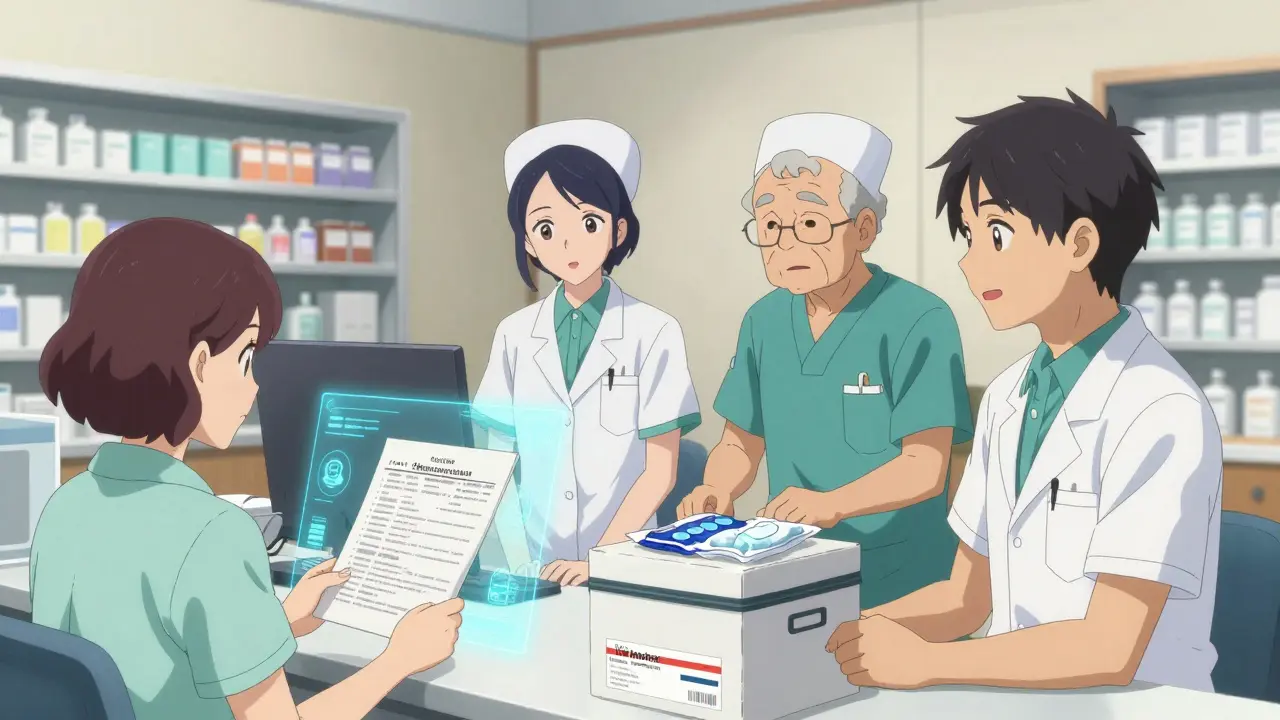
When a patient gets a generic version of a specialty drug, many assume it’s just like picking up a regular pill at the corner pharmacy. But that’s not how it works. Even when a drug is no longer branded, if it’s a specialty medication, it still goes through a specialty pharmacy. And that’s where providers - pharmacists, care coordinators, nurses - play a critical role. This isn’t about saving money. It’s about safety, support, and complexity.
What Makes a Drug ‘Specialty’?
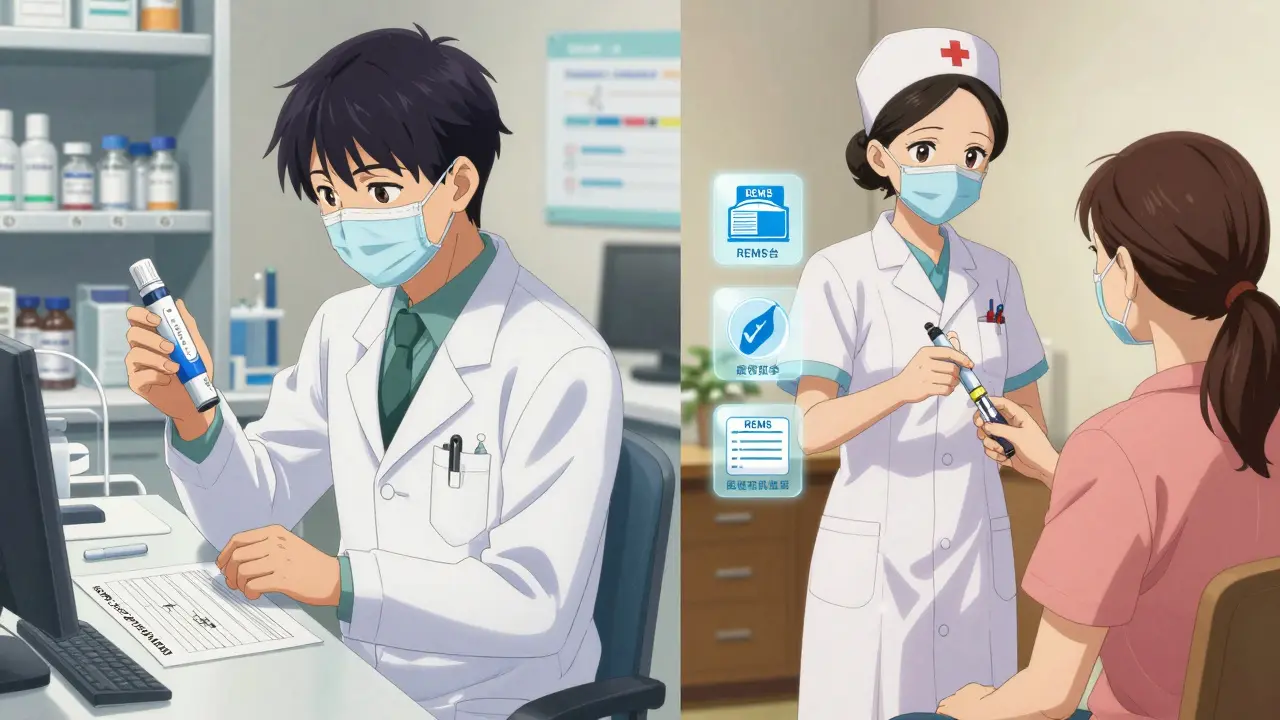
Not all expensive drugs are specialty drugs. And not all specialty drugs are biologics. The definition is based on how the drug is used, not just its price. According to the American Society of Health-System Pharmacists (ASHP), specialty drugs typically require special handling, storage, or administration. Many need refrigeration. Some must be injected or infused. Others come with strict safety rules called REMS (Risk Evaluation and Mitigation Strategies) from the FDA. These rules might require lab tests before each dose, or mandatory patient education. Even when a generic version becomes available, these requirements don’t disappear. Take methotrexate, for example. It’s been generic for years. But when it’s used for rheumatoid arthritis or psoriasis at high doses, it’s treated as a specialty drug. Why? Because it’s toxic if not monitored. The same goes for oral chemotherapy agents like ibrutinib or tofacitinib. Their generics are chemically identical to the brand, but the delivery system doesn’t change.Why Can’t Retail Pharmacies Dispense Them?
You might wonder: if it’s generic, why not just fill it at Walgreens? The answer lies in manufacturer distribution agreements. Many drugmakers - even for generics - require their products to be dispensed only through specialty pharmacies. This isn’t about profit. It’s about control. They want to ensure patients get the right counseling, proper storage, and follow-up care. Retail pharmacies often lack the infrastructure to handle temperature-sensitive shipping, REMS documentation, or disease-specific clinical support. A 2023 Surescripts report found that specialty prescriptions require 12 to 15 patient data points to process - things like insurance status, prior authorization history, lab results, and administration training records. Retail pharmacies typically handle 5 to 7. That gap isn’t accidental. It’s built into the system.The Workflow: More Than Just Filling a Prescription
Dispensing a generic specialty drug isn’t a simple transaction. It’s a multi-step process that takes an average of 7.2 days, according to a 2023 study in PMC. Here’s how it works:- Prescription intake - The pharmacy receives the script, often electronically, from a specialist’s office.
- Prior authorization - The pharmacy contacts the insurer to prove medical necessity. This step alone can take 3 to 7 days, even for generics.
- Financial assistance - Many patients can’t afford copays, even on generics. Specialty pharmacies help apply for manufacturer co-pay cards or patient assistance programs.
- Clinical review - A pharmacist checks for drug interactions, dosing appropriateness, and patient history. For example, a patient on a generic version of a hepatitis C drug might need liver function tests before starting.
- Patient education - Pharmacists or nurses call the patient to explain how to take the drug, what side effects to watch for, and how to store it. For injectables, they may even send a nurse to the home.
- Specialty packaging and shipping - Medications are packed in temperature-controlled boxes with ice packs and shipped overnight. Tracking is mandatory.
- Follow-up - The pharmacy calls again in 7 to 14 days to check on tolerance, side effects, and adherence.
Providers Are the Real Value
The dispensing fee for a specialty prescription ranges from $250 to $500. Critics say that’s too high. But look at what’s included. In a 2022 Pharmacy Times interview, Cheryl Allen, a pharmacist and MBA, put it plainly: “It’s way more than ‘ding-dong, here’s your pills.’ There are patient care coordinators, nurses, and pharmacists working with these patients.” Specialty pharmacy teams often specialize in one disease area - cancer, multiple sclerosis, rheumatoid arthritis. They build relationships. They remember that Mrs. Rivera’s daughter helps her with injections. They know Mr. Patel’s insurance denied his last refill because of a coding error. When he switches from the brand to the generic version of his drug, they don’t retrain him. They just update the label. A MyHealthTeams survey from January 2024 found that 68% of patients preferred staying with the same specialty pharmacy when switching to a generic. Why? Because they trusted the team. They didn’t want to start over.Biosimilars Are Changing the Game
True generics - chemically identical copies - only exist for small-molecule drugs. For biologics, which make up the bulk of specialty spending, we have biosimilars. These aren’t exact copies. They’re highly similar versions, approved after rigorous testing. And they’re growing fast. In 2023, 98% of biologic medications were distributed through specialty pharmacies. That includes biosimilars like adalimumab-atto (Humira biosimilar) or bevacizumab-awwb (Avastin biosimilar). The FDA approved more than 40 biosimilars by 2025, and CMS rules now require Medicare Part D plans to cover them. That means more patients will get these drugs through specialty pharmacies - even though they’re cheaper. The industry is preparing. ASHP reported in May 2024 that specialty pharmacies are upgrading their software to handle a 40% increase in biosimilar volume by 2026. The goal? Same level of care, lower cost.
Patient Experience: Mixed, But Often Positive
Patients have opinions. On Reddit, one user wrote: “My generic version of Xeljanz still comes through the same specialty pharmacy with the same nurse follow-ups, which I actually appreciate because she knows my case history.” Another said: “Went from $15 copay at Walgreens to $75 through specialty pharmacy with two-week delays.” Trustpilot data from May 2024 shows specialty pharmacies average 3.8 out of 5 stars. Higher scores come from clinical support (4.2/5). Lower scores come from delivery speed (3.1/5). The frustration isn’t about the drug being generic. It’s about delays, confusion over copays, and lack of communication. The fix? Real-Time Prescription Benefit (RTPB) technology. Surescripts found that using RTPB cut prior authorization time by 3.2 days on average. That’s huge. It means patients get their meds faster, even when they’re generic.The Bigger Picture: Consolidation and Competition
The specialty pharmacy market is dominated by three players: OptumRx (32%), CVS Specialty (28%), and Express Scripts (24%). But hospitals are pushing back. A 2024 ASHP survey found 63% of health systems plan to build their own specialty pharmacies. Why? To control costs and keep patient data in-house. This could disrupt the current model. If a hospital pharmacy starts dispensing generic specialty drugs directly to patients, will they still need the big players? Maybe not. But they’ll still need the same level of clinical support. That’s the real value - not the brand name, not the price, but the care.What’s Next?
By 2028, specialty drugs are projected to make up 61% of global pharmaceutical sales. Biosimilars will be a big part of that. And as more generics enter the market, the pressure will grow to make specialty pharmacy services more efficient - without losing the human touch. The message for providers is clear: your role isn’t changing. It’s expanding. Whether the drug is brand or generic, your job is to ensure it’s used safely, correctly, and with support. That’s what makes specialty pharmacy different. And that’s what keeps patients alive.Can a retail pharmacy dispense generic specialty drugs?
No, not if the drug is under a manufacturer’s distribution restriction. Even if it’s generic, many specialty drugs can only be dispensed through specialty pharmacies due to mandatory distribution programs. Retail pharmacies usually lack the infrastructure for temperature control, REMS compliance, and clinical follow-up.
Why are specialty pharmacy copays higher for generics?
Copays are often higher because specialty pharmacies charge dispensing fees ($250-$500) on top of drug cost. Insurance plans may not cover these fees fully, even for generics. Also, some plans still treat generic specialty drugs as “non-preferred” due to distribution rules, not drug cost.
Do biosimilars count as generic specialty drugs?
Biosimilars aren’t true generics - they’re highly similar versions of biologic drugs, not exact copies. But they’re treated like generics in specialty pharmacy workflows. They require the same handling, monitoring, and patient support. Most are dispensed through specialty pharmacies, even when cheaper than the brand.
How long does it take to get a generic specialty drug?
On average, it takes 7.2 days from prescription receipt to delivery. Oncology drugs take longer (8.7 days), while rheumatoid arthritis meds are faster (5.3 days). Delays usually come from prior authorization or insurance issues, not the drug being generic.
Is it better to stay with the same specialty pharmacy when switching to a generic?
Yes. A 2024 MyHealthTeams survey found 68% of patients preferred staying with the same specialty pharmacy when switching to a generic. The reason? Familiar staff, established care plans, and fewer errors. You’re not just getting a drug - you’re keeping a care team.


Beth Beltway
January 30, 2026 AT 07:54This is such a glorified excuse for pharmacy chains to jack up prices under the guise of 'clinical support.' The entire system is a racket. Generic methotrexate costs $10 at Walmart. Why should a patient pay $500 in 'dispensing fees' just because some bureaucrat decided it's 'specialty'? The only thing special here is the profit margin.
And don't give me that 'REMS compliance' nonsense. If the FDA says it's safe enough to be generic, it's safe enough to be dispensed by any pharmacy. This is corporate control masquerading as patient care.
Marc Bains
January 30, 2026 AT 18:36Let’s not throw the baby out with the bathwater. Beth, you’re right that the system is broken - but the solution isn’t to gut patient support. Think about it: a diabetic patient on oral chemo needs more than a pill bottle. They need someone who remembers their last lab result, knows their insurance denied them last month, and can walk them through injection technique.
Specialty pharmacies aren’t about profit. They’re about survival. The real villain is insurance bureaucracy, not the pharmacists trying to keep people alive.
kate jones
January 30, 2026 AT 20:33There is a critical distinction between chemical equivalence and therapeutic equivalence in the context of specialty drug distribution. While generics are bioequivalent to their branded counterparts, the logistical and clinical infrastructure required for safe administration - particularly for drugs with narrow therapeutic indices - remains non-negotiable.
The 12–15 data points referenced in the Surescripts report are not arbitrary; they are codified in CMS and Joint Commission guidelines to mitigate adverse events. Retail pharmacies lack the certified personnel, temperature-monitored logistics, and integrated EHR connectivity required to meet these standards.
Furthermore, the 68% patient preference for continuity of care with specialty pharmacies, as documented by MyHealthTeams, is not anecdotal - it reflects longitudinal outcomes data showing improved adherence and reduced hospitalizations.
Rob Webber
January 31, 2026 AT 13:18So let me get this straight - we’re paying $500 to get a pill that costs $12, and the reason is... someone might forget to refrigerate it? That’s not healthcare. That’s extortion wrapped in a lab coat.
My cousin got her generic Xeljanz through CVS. Took 10 days. They called her three times. Asked if she had a pet. Asked if she had a therapist. Asked if she wanted to join a support group. Then they mailed her a $75 copay bill.
Meanwhile, my neighbor got the same drug at a Walmart in Ohio. Paid $18. Got a free lanyard. No calls. No forms. No drama.
Who’s lying? The system or the patients?
owori patrick
February 1, 2026 AT 21:18In Nigeria, we don’t have specialty pharmacies. We have pharmacies that sometimes have the drugs - if they’re not expired, if the generator didn’t fail, if the importer didn’t get taxed out of existence.
I’ve seen patients wait three weeks for a generic version of a drug that’s supposed to be 'specialty.' They don’t get nurses calling. They get relatives driving 200km to the city to check if the shipment arrived.
So when I hear about $500 fees and 7-day delays, I’m not mad. I’m jealous.
At least you have a system - even if it’s broken. We have nothing.
Claire Wiltshire
February 2, 2026 AT 01:35I appreciate the depth of this post - thank you for highlighting the human element behind the logistics.
One point often missed: the emotional labor involved. Specialty pharmacy teams don’t just manage medications; they manage fear. A patient newly diagnosed with MS doesn’t need another confusing phone call from an insurance rep. They need someone who says, ‘I’ve helped 37 people like you - here’s what to expect.’
The dispensing fee isn’t for the pill. It’s for the peace of mind. And that’s priceless.
Darren Gormley
February 3, 2026 AT 08:24Wow. Just... wow.
So we’re now pretending that a $10 generic drug needs a 7-day, 7-step, nurse-call, ice-pack, REMS-compliant, $500 ‘experience’ just because some pharma exec decided it’s ‘specialty’?
Let me guess - the same companies that made billions off the brand version now own the specialty pharmacy? Coincidence? I think not.
Also, biosimilars are ‘not generics’ - sure, and a Ford F-150 is ‘not a truck.’ 😏
Someone’s making a killing here. And it’s not the pharmacist.
Mike Rose
February 4, 2026 AT 00:52so like… if its generic why cant i just get it at walgreens? like i dont need a nurse to tell me how to take a pill. i took tylenol once, i think i got it.
also why does it take 2 weeks? i need my meds now. this whole thing is a scam. they just want more money. end of story.
Sheila Garfield
February 5, 2026 AT 23:22I’ve been on a generic specialty drug for 3 years. My pharmacy calls every two weeks. Sometimes I don’t answer. Sometimes I’m mad. But they never give up.
Last month I missed a dose because I was scared of the side effects. They sent a nurse to my door. Not to push meds. Just to sit with me and say, ‘It’s okay to be scared.’
I don’t care if it costs $500. I care that someone remembers my name.
So yeah. The system’s flawed. But the people? They’re the good part.
Shawn Peck
February 7, 2026 AT 03:54THIS IS A SCAM. A TOTAL, ABSOLUTE, OVER-THE-TOP SCAM.
You mean to tell me that after 10 years of a drug being generic, they still won’t let Walgreens sell it? Why? BECAUSE THEY WANT TO MAKE MORE MONEY. That’s it. No ‘clinical support.’ No ‘REMS.’ No ‘patient care.’
It’s all about control. The big pharma companies OWN the specialty pharmacies. They’re not helping patients. They’re locking you in so you can’t escape their pricing.
And don’t even get me started on biosimilars. Calling them ‘not generics’? That’s just marketing speak to keep the gravy train rolling.
Wake up, people. This isn’t healthcare. It’s a monopoly with a stethoscope.