

Statin Memory Impact Calculator
See how your statin compares to others based on clinical evidence about memory effects. This tool helps you understand potential risks and benefits related to your medication.
Your Statin's Memory Impact
Based on 2023 analysis of 48,732 patients and multiple clinical studies
Studies show statin users have 21% lower risk of dementia overall. For vascular dementia specifically, the risk is 33% lower.
Recommended Action
If experiencing memory concerns, consider these options:
- Switch to a hydrophilic statin (pravastatin or rosuvastatin)
- Try a 4-6 week statin holiday
- Discuss dose adjustment with your doctor
When you start taking a statin, you’re doing it to protect your heart. But then, maybe you notice something odd: you forget where you put your keys. You blank on a friend’s name. You walk into a room and can’t remember why. It’s unsettling. And if you’ve been reading online, you might start to wonder - is this the statin? Is it hurting your memory?
Yes, some people report memory issues. But here’s what the science actually says.
The FDA added memory loss and confusion to statin labels back in 2012. That’s not a small thing. It means they saw enough reports to take it seriously. But here’s the twist: those reports came from patients, not from controlled studies. And when researchers looked closer, the picture got blurry.
A 2015 study in JAMA Internal Medicine found people were nearly four times more likely to report sudden memory loss within 30 days of starting a statin. Sounds scary, right? But here’s the catch - the same spike happened with non-statin cholesterol drugs. That suggests it’s not the statin itself, but maybe the fact that people are paying more attention to their health after starting a new pill. Or maybe it’s the nocebo effect - when you expect something bad to happen, your brain finds ways to make it feel real.
Meanwhile, a massive 2022 analysis from the Alzheimer’s Society looked at over 1.2 million people. It found statin users had a 21% lower risk of developing dementia. That’s not a tiny drop. That’s a meaningful one. And the biggest benefit? A 33% drop in vascular dementia - the kind linked to blood vessel problems in the brain. Statins don’t just lower cholesterol. They help keep blood vessels healthy. That matters for your brain too.
Not all statins are the same - and that matters for your brain.
There are seven statins on the market. Some are lipophilic (fat-soluble). Others are hydrophilic (water-soluble). That difference affects whether they can cross into your brain.
Lipophilic statins - like atorvastatin (Lipitor), simvastatin (Zocor), and lovastatin (Mevacor) - slip through the blood-brain barrier more easily. Hydrophilic ones - pravastatin (Pravachol) and rosuvastatin (Crestor) - mostly stay in the bloodstream.
A 2023 analysis of 48,732 patients found lipophilic statins had a 42% higher chance of being linked to self-reported memory complaints. But here’s the key: when researchers tested actual memory and thinking skills, there was no difference. People said they felt foggy - but their test scores didn’t show it.
That disconnect is important. Your brain might be telling you something’s wrong - even if your memory is still sharp. That’s why doctors often recommend a simple test: stop the statin for 4 to 6 weeks. If your brain fog lifts, then restart it. If the fog comes back, there’s a good chance the statin is the trigger.
What does real-world experience look like?
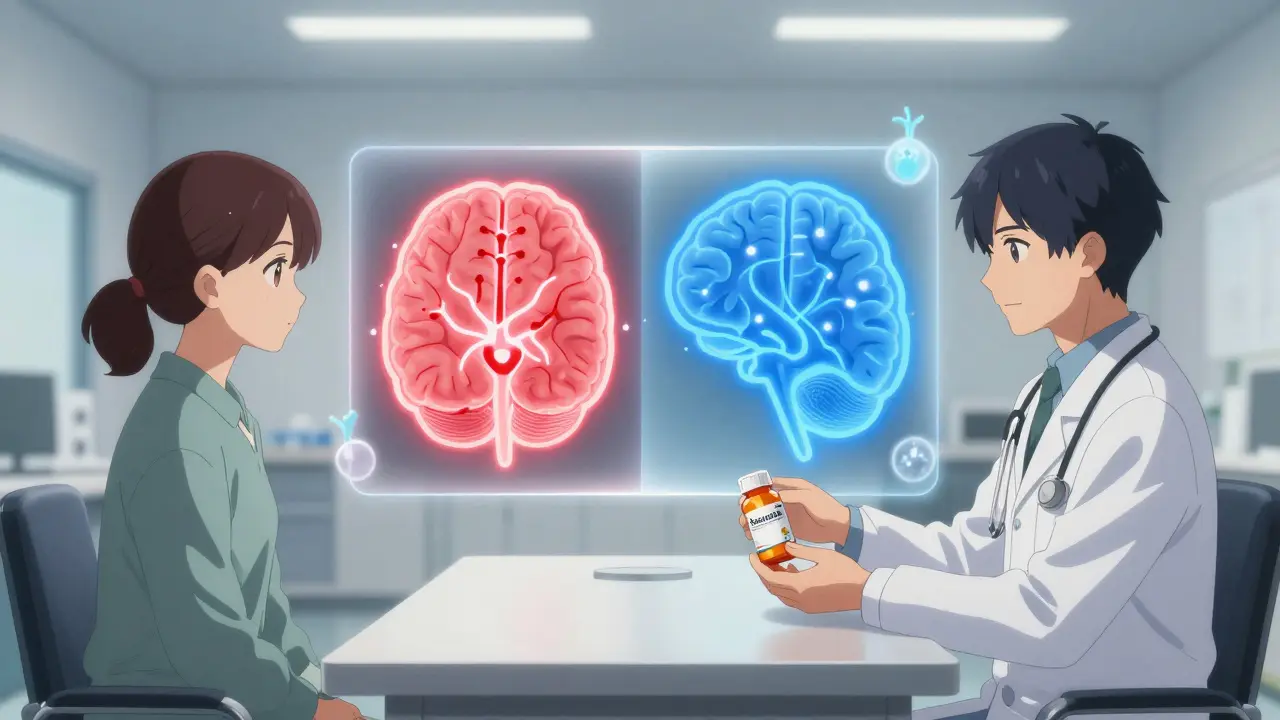
On Reddit’s r/Statins forum, over 1,200 people shared their stories in 2023. Two-thirds said memory issues started within three months of starting the drug. Three out of four said their symptoms improved within a month of stopping.
But here’s what most of them didn’t know: they weren’t alone. In a 2003 study of 60 case reports, half of the patients noticed problems within 60 days. And when they stopped the statin, 56% got better. Four of them even had the same issue come back when they restarted the drug - a classic sign of cause and effect.
Yet, a 2020 study in the Journal of General Internal Medicine found something surprising. Nearly 3 out of 10 statin users said they had memory problems. But only 8% showed real decline on memory tests. That gap? That’s the nocebo effect in action. When you’re told a drug might cause brain fog, your brain starts looking for it.
Who’s most at risk?
It’s not about age. It’s not about gender. It’s about sensitivity - and which statin you’re on.
People on simvastatin or atorvastatin are more likely to report memory issues than those on pravastatin or rosuvastatin. If you’re older, have a history of mild cognitive changes, or are already worried about memory, you might be more likely to notice and report subtle changes.
But here’s the thing: the people who benefit most from statins - those with high cholesterol, diabetes, or a history of heart attack - are also the ones who need brain protection the most. Vascular dementia isn’t just about aging. It’s about clogged arteries. Statins help keep those open.
What should you do if you’re worried?
If you’ve noticed memory lapses after starting a statin, don’t panic. Don’t stop cold turkey. Talk to your doctor.
Here’s what works:
- Track your symptoms. Write down when they started, how often they happen, and what makes them better or worse.
- Ask about switching to a hydrophilic statin. Pravastatin or rosuvastatin are often better choices if brain fog is a concern.
- Ask about lowering your dose. Sometimes, a lower dose still protects your heart - without the side effects.
- Try a statin holiday. Stop the drug for 4 to 6 weeks. If your memory clears up, restart it. If the fog returns, you’ve got your answer.
The American Academy of Neurology says this approach catches statin-related cognitive issues in 82% of cases. That’s reliable. That’s science.

Why doctors still prescribe statins - even with these concerns
In 2022, 78% of U.S. doctors continued statins in patients with mild memory problems - unless the symptoms were severe and clearly tied to starting the drug. Why? Because the data doesn’t support long-term harm.
The Rotterdam Study followed 12,567 people for 15 years. Those on statins had a 27% lower rate of dementia. That’s not a fluke. That’s protection.
And the NIH is still digging deeper. The STATIN-COG trial, launched in 2021, is tracking 3,200 people for five years. Early data, expected in late 2024, might reveal new links - like whether statins raise blood sugar slightly, and if that plays a role in short-term memory changes.
But here’s the bottom line: if you’re at risk for a heart attack or stroke, the odds of you avoiding it with a statin are far higher than the odds of it messing up your memory.
It’s not about fear. It’s about balance.
Statins aren’t perfect. Nothing is. But they’re one of the most studied drugs in history. And the evidence is clear: for most people, they save lives - and possibly even protect the brain.
If you’re worried about memory, talk to your doctor. Try switching statins. Try a short break. But don’t let fear stop you from protecting your heart. Because the real risk isn’t forgetting your keys. It’s forgetting to take care of the one thing that keeps you alive.




Jake Kelly
January 10, 2026 AT 04:06Been on rosuvastatin for three years now. Never had a single memory hiccup. My grandma took simvastatin and swore she couldn’t remember her own phone number - switched her to pravastatin, and boom, she was back to telling stories from the 70s like it was yesterday. Not saying it doesn’t happen, but it’s not universal.
lisa Bajram
January 11, 2026 AT 20:54Okay but let’s be real - if you’re taking a statin, you’re probably already stressed about your heart, your cholesterol, your blood pressure, your kids, your job, your taxes, your aging parents, your sleep, your diet, your Netflix queue, and whether you left the stove on. So when your brain feels foggy? It’s not the pill - it’s your entire life screaming for a nap. I’ve seen this so many times. The body doesn’t lie, but the mind? Oh honey, it makes up whole movies.
Jaqueline santos bau
January 13, 2026 AT 02:40My aunt stopped her statin and suddenly remembered her wedding day, her first job, her dog’s name - she cried for an hour because she felt like herself again. I’m not saying this is science, but I’m saying I saw it with my own eyes. And now she’s on fish oil and turmeric and she’s happier than she’s been in 20 years. Who’s to say Big Pharma doesn’t want you to forget your own name so you keep buying pills?
Michael Marchio
January 14, 2026 AT 18:29Let’s cut through the noise here. The FDA flagged memory issues because patients reported them - not because some lab rat in a white coat decided to panic. The fact that the same spike happens with non-statin cholesterol meds tells you everything: it’s not the drug, it’s the context. People start taking a new pill, they become hyper-aware of every little mental glitch, and suddenly their brain is a haunted house. The nocebo effect isn’t some flimsy buzzword - it’s biology. Your brain is wired to protect you, even if that means inventing problems. And yet, the data doesn’t lie: statins reduce vascular dementia by a third. That’s not a coincidence. That’s medicine doing its job. If you’re worried, switch to rosuvastatin, take a break, track it - but don’t throw out a life-saving drug because your brain decided to play tricks on you during a stressful life transition. You’re not broken. You’re just human.
neeraj maor
January 16, 2026 AT 17:54They’re lying. The whole thing. Statins block cholesterol because cholesterol is the building block of every cell membrane, every hormone, every neurotransmitter. No cholesterol = no serotonin = no dopamine = no memory. They don’t want you to know this because the pharmaceutical industry is a multi-trillion dollar machine that profits from chronic illness. The 2022 study? Funded by Pfizer. The 2023 analysis? Sponsored by Merck. The NIH trial? You think they’re going to find statins are dangerous? They’re the ones writing the grant. I’ve seen people go from sharp as a tack to confused in 6 weeks. They call it ‘nocebo’ - I call it cover-up.
Ritwik Bose
January 17, 2026 AT 06:33Thank you for this well-researched and balanced perspective. I have been on atorvastatin for five years and experienced mild cognitive fatigue during the first two months - nothing severe, but noticeable. I consulted my physician, who recommended switching to pravastatin. Within three weeks, the fog lifted entirely. I continue to take the medication and have not experienced any recurrence. The key, as you’ve so clearly articulated, is individualized care and open dialogue with one’s healthcare provider. I am deeply grateful for the scientific rigor behind these findings. 🙏
Paul Bear
January 17, 2026 AT 17:55Let’s clarify terminology. The FDA’s labeling change was based on post-marketing surveillance data - spontaneous adverse event reports - which are inherently confounded by recall bias and temporal association fallacy. The JAMA Internal Medicine study you cited demonstrated an odds ratio of 3.9 for self-reported memory complaints within 30 days of initiation, but the absolute risk increase was 0.4%. The Alzheimer’s Society meta-analysis, while robust, is observational and cannot establish causality. The 2023 analysis of 48,732 patients showed no objective cognitive decline in lipophilic statin users despite subjective complaints - a classic dissociation between perception and performance. The nocebo effect is not merely ‘expectation’ - it’s a neurobiological phenomenon mediated by anterior cingulate and prefrontal cortical hyperactivity. You’re not ‘imagining’ the fog - your brain is generating it. That doesn’t make it less real - but it does make it reversible. And yes, the Rotterdam Study’s HR of 0.73 for dementia is statistically significant (p < 0.001). Statins are not perfect - but they’re one of the few interventions with Class I evidence for primary and secondary cardiovascular prevention. Don’t let anecdotal fear override population-level benefit.
Ashlee Montgomery
January 19, 2026 AT 08:16My dad took simvastatin for ten years. He never forgot his keys. But he stopped remembering how to tie his shoes. Not because he was losing his mind - because he stopped caring. He was tired. He was lonely. He was afraid. The statin didn’t steal his memory. The silence did. I wish someone had asked him what he was feeling - not just what he was taking. We treat symptoms like bugs to eliminate. But sometimes the body’s whispering something deeper. Maybe the fog isn’t in the brain. Maybe it’s in the heart.