

iPLEDGE Compliance Tracker
iPLEDGE Compliance Tracker
Your Progress
Select your pregnancy status to see your requirements and track your compliance.
Next Reminder
Select your pregnancy status to see your reminders.
What Is iPLEDGE and Why Does It Exist?
iPLEDGE is a mandatory risk management program created by the U.S. Food and Drug Administration (FDA) to stop pregnant people from taking isotretinoin, a powerful acne medication that can cause devastating birth defects. It's not optional. If you're prescribed isotretinoin - sold under brands like Claravis, Amnesteem, or Zenatane - you must enroll in iPLEDGE before you can get your first prescription. This program started in 2006 and was updated in November 2023 to make it less burdensome, but the goal hasn't changed: no pregnancies during isotretinoin treatment.
Isotretinoin works wonders for severe, treatment-resistant acne. It clears skin that antibiotics and topical creams can't touch. But it's also one of the most dangerous drugs when taken during pregnancy. Studies from the Pennsylvania Dermatology Group (2023) show it can cause missing or deformed ears, cleft palates, brain damage, heart problems, and intellectual disabilities. The risk isn't low. It's extreme. That's why the FDA didn't just put a warning label on the bottle - they built an entire system around it.
Who Needs to Be in iPLEDGE?
Everyone who prescribes, dispenses, or takes isotretinoin must be registered in iPLEDGE. That includes:
- Patients - whether male, female, or non-binary
- Doctors - dermatologists and other prescribers
- Pharmacies - all U.S. pharmacies that fill isotretinoin prescriptions
The program treats all patients the same in terms of enrollment, but the rules change based on pregnancy potential. If you're capable of pregnancy, the requirements are strict. If you're not, they're simpler. There's no exception. Not even for emergencies. Not even for patients who say they're "never" having sex. The system doesn't ask why. It just asks: Are you capable of pregnancy?
Requirements for Patients Capable of Pregnancy
If you can get pregnant, you have to follow a strict set of steps every single month:
- Two negative pregnancy tests before starting treatment. The second one must be done 1 to 3 days before you get your first prescription.
- Monthly pregnancy tests throughout treatment. These can now be done at home using FDA-approved tests - as long as your doctor verifies the result.
- Two forms of birth control at the same time. One method alone isn't enough. You need two: like a pill plus condoms, or an IUD plus condoms.
- Monthly online counseling - you must watch a video and check a box saying you understand the risks. This happens every 30 days, no matter what.
- No delays in getting your prescription - if you don't pick up your meds within 7 days of being approved, you're locked out until the next month. But since the 2023 update, that 19-day waiting period is gone. You can try again the next day.
Before November 2023, you had to go to a CLIA-certified lab for pregnancy tests. That meant driving to a clinic, paying out-of-pocket, and sometimes waiting weeks. Now, you can use a home test bought at the drugstore. Your doctor just needs to confirm the result via the iPLEDGE system. This cut down trips for many patients from two visits per month to just one.
Requirements for Patients Not Capable of Pregnancy
If you're male, postmenopausal, or have had a hysterectomy, the rules are much simpler:
- One-time online education module (about 30 minutes)
- One-time electronic agreement acknowledging the risks
- Monthly check-in to confirm you're still not pregnant (yes, even men must do this)
That's it. No pregnancy tests. No birth control. No monthly lab visits. The system still asks you to confirm you're not pregnant every month - because the risk is so high, they can't assume anything. But the burden is far lighter. This tiered approach is one of the few smart parts of iPLEDGE.
What Changed in November 2023?
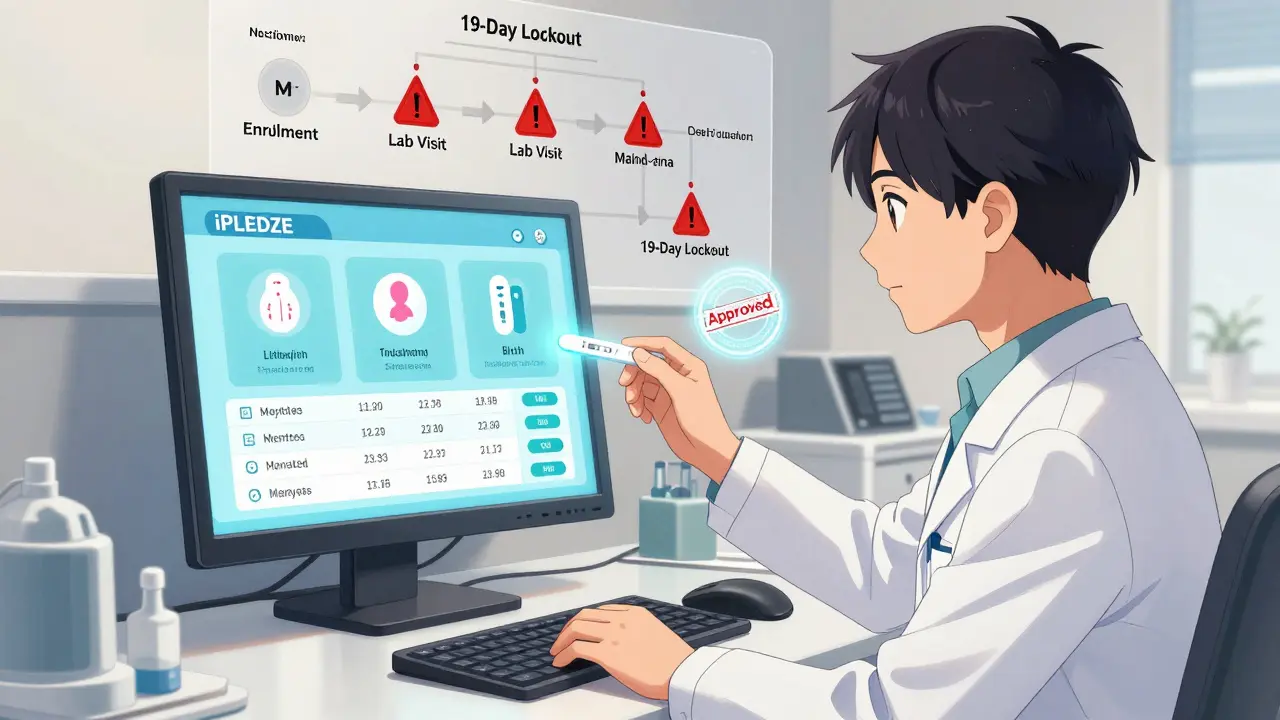
The FDA made its biggest update to iPLEDGE in 17 years. Here’s what got better:
- Home pregnancy tests are now allowed - no more mandatory clinic visits.
- The 19-day lockout is gone - if you miss your 7-day window to pick up meds, you can reapply the next day.
- Monthly counseling is no longer required for patients not capable of pregnancy - just one-time consent.
- Documentation of fetal outcomes is eliminated - the registry no longer tracks whether a pregnancy ended in a birth defect. This was seen as invasive and unnecessary.
These changes didn’t happen because the FDA stopped caring about safety. They happened because doctors, pharmacists, and patients kept saying: "This is hurting more than helping." A 2022 survey by the National Infertility Association found that 67% of young women had their treatment delayed by iPLEDGE - sometimes for over two weeks. That’s not just inconvenient. It’s dangerous. Acne doesn’t wait. And untreated severe acne can leave scars that last a lifetime.
Why Do So Many People Hate iPLEDGE?
Even with the 2023 updates, iPLEDGE is still a mess. Here’s why:
- System crashes - The website goes down often. Patients have reported being locked out for days because of a glitch.
- Pharmacy errors - 23% of prescription delays before 2023 were due to pharmacy system failures. Some pharmacies don’t even know how to use the system correctly.
- Time drain - A 2021 AMA survey found dermatologists spend 5-7 hours a week just managing iPLEDGE paperwork. That’s time they could spend seeing patients.
- Stigma - Female patients say they feel punished. Being forced to prove you’re not pregnant every month, while male patients face no such requirement, feels unfair.
Reddit threads from October 2023 show hundreds of patients calling the process "excruciating." One user wrote: "I missed my second test because my clinic closed early. I had to wait 30 days. My acne got worse. My therapist said I was spiraling. And I wasn’t even pregnant."
How Does iPLEDGE Compare to the Old System?
Before iPLEDGE, there was SMART - the System to Manage Accutane-Related Teratogenicity. SMART had the same goal but was brand-specific. If you took Accutane, you registered with Roche. If you took Claravis, you registered with Mylan. It was fragmented. iPLEDGE fixed that by creating one system for all brands.
But here’s the twist: Studies show iPLEDGE didn’t reduce pregnancy rates. A 2011 study in the Journal of the American Academy of Dermatology found 190 confirmed pregnancies between 2009 and 2010 - even with iPLEDGE active. The same study said SMART was just as effective. So why keep iPLEDGE? Because it’s centralized. Because it’s enforceable. Because it’s the only tool the FDA has to make sure every pharmacy, doctor, and patient is on the same page.
What Happens If You Break the Rules?
There are no second chances. If a patient gets pregnant while on isotretinoin, the prescriber and pharmacy can be fined. The patient’s account gets suspended. The drug is pulled. And the system flags the case for review.
Doctors who don’t follow the rules risk losing their ability to prescribe isotretinoin. Pharmacies that fill a prescription without iPLEDGE clearance can be shut down. There’s no gray area. The FDA doesn’t negotiate. They don’t make exceptions. If you’re pregnant and you get isotretinoin - it’s a violation. Period.
Is Isotretinoin Still Worth It?
Despite all the hoops, isotretinoin remains the most effective treatment for severe nodular acne. According to IQVIA data from 2022, over 1.2 million prescriptions were filled in the U.S. - and that number is still growing. For many people, it’s life-changing. Skin clears. Confidence returns. Scarring stops.
But it’s not a quick fix. Treatment lasts 4 to 5 months. You’ll need blood tests. You’ll need monthly check-ins. You’ll need to avoid alcohol, vitamin A supplements, and sun exposure. And yes - you’ll need to jump through iPLEDGE’s hoops.
Is it worth it? For many, yes. But only if the system works. And right now, it’s working better than it has in years.
How to Navigate iPLEDGE in 2026
If you’re starting isotretinoin, here’s what to do:
- Find a dermatologist enrolled in iPLEDGE - ask them before your first appointment.
- Complete the online education module (30 minutes). You’ll need a computer or phone.
- Take the first pregnancy test (in-clinic or home, if approved).
- Get two forms of birth control - and keep them on hand.
- Set phone reminders for your monthly check-ins. Don’t wait until the last minute.
- Call the iPLEDGE helpline (1-866-495-0654) if you get stuck. Wait times are still long, but they’re better than before.
Pro tip: Don’t wait until your skin is breaking out to start. Plan ahead. Schedule your first visit at least 6 weeks before you want to begin treatment. That gives you time to sort out the paperwork, tests, and birth control.
What’s Next for iPLEDGE?
The FDA says it’s not done. Dr. Lynn Drake, writing in February 2024, suggested using biometric verification - like fingerprint or facial recognition - to confirm pregnancy test results. That could stop fake tests. But it also raises privacy concerns.
For now, the focus is on digital fixes: better apps, fewer system crashes, automated reminders, and integration with electronic health records. The goal is simple: keep babies safe without making patients suffer.
Isotretinoin isn’t going away. And neither is iPLEDGE. But with the 2023 updates, it’s finally becoming something patients can live with - not just survive.
Can I take isotretinoin if I’m transgender or non-binary?
Yes. iPLEDGE doesn’t ask about gender identity. It asks about pregnancy potential. If you have ovaries and haven’t had a hysterectomy or are not postmenopausal, you’re classified as capable of pregnancy - regardless of how you identify. You’ll need the same requirements: two pregnancy tests, two forms of birth control, and monthly check-ins. If you’ve had a hysterectomy or are on long-term hormone therapy that eliminates ovulation, talk to your doctor. You may qualify for the simpler requirements.
What if I miss my monthly pregnancy test?
If you miss your test, you can’t get your next prescription until you complete it. Since the November 2023 update, there’s no 19-day lockout anymore. You can reapply the next day. But you still can’t get your meds until the test result is in the system. Don’t wait - schedule your test early in the month. If you can’t get to a clinic, use a home test and send the result to your doctor immediately.
Can I use just one form of birth control?
No. The FDA requires two methods simultaneously. One is not enough. Examples: birth control pill + condoms, IUD + condoms, or implant + condoms. You can’t use the same method twice (like two pills). The goal is to reduce failure risk. If one method fails, the second should catch it. Your doctor will help you pick two that work for your body and lifestyle.
Do I need to keep taking birth control after I finish isotretinoin?
No. Once your last dose is taken, you’re no longer at risk. But you must wait 30 days after your final prescription before trying to get pregnant. Isotretinoin stays in your system for a while. The FDA recommends using birth control for one month after stopping treatment - just to be safe. After that, you’re clear.
What if I’m in a rural area and can’t get to a clinic?
Since the 2023 update, home pregnancy tests are allowed. You can buy an FDA-approved test at any pharmacy, do it at home, and send a photo of the result to your doctor through the iPLEDGE portal. Your doctor will verify it. This change alone has made the program much more accessible for people without reliable transportation or nearby clinics.




Jimmy V
March 13, 2026 AT 13:39Richard Harris
March 14, 2026 AT 16:34Kandace Bennett
March 14, 2026 AT 20:26Tim Schulz
March 16, 2026 AT 09:23Jinesh Jain
March 16, 2026 AT 17:24Sabrina Sanches
March 17, 2026 AT 17:19Shruti Chaturvedi
March 19, 2026 AT 07:52Katherine Rodriguez
March 19, 2026 AT 11:24Devin Ersoy
March 20, 2026 AT 15:57Scott Smith
March 21, 2026 AT 21:52Sally Lloyd
March 23, 2026 AT 05:21Emma Deasy
March 24, 2026 AT 16:45tamilan Nadar
March 25, 2026 AT 11:37Adam M
March 26, 2026 AT 21:06Jimmy V
March 27, 2026 AT 10:01