

Imagine a busy hospital pharmacy at 2 AM. The lights are dim, the staff is tired, and the pressure to get life-saving medications out quickly is immense. In this high-stress environment, a simple mistake-like picking the wrong vial or misreading a handwritten order-can have devastating consequences. This is exactly why pharmacy workflow and error prevention systems are technology solutions designed to streamline medication preparation, dispensing, and management while reducing human errors. These aren't just fancy software updates; they are critical safety nets that save lives.
The urgency behind these systems isn't new. Back in 1999, the Institute of Medicine released a landmark report titled 'To Err is Human,' which shook the healthcare world. It estimated that medication errors cause between 44,000 and 98,000 preventable deaths annually in U.S. hospitals alone. Since then, we've moved from paper charts to digital ecosystems. Today's systems integrate robotics, barcode scanning, and software automation to create what experts call "closed-loop" medication management. If you work in a pharmacy or manage one, understanding how these systems function is no longer optional-it's essential for patient safety and operational efficiency.
How Modern Pharmacy Workflows Actually Function
At its core, a modern pharmacy workflow system acts as a digital conductor for an orchestra of tasks. When a prescription order comes in, it doesn't just sit on a counter. The system immediately interprets the order, screens it against the patient’s history, and validates that the medicine is correct for that specific individual. This process relies heavily on integration with Electronic Health Records (EHR).
Here is where the magic happens: real-time data exchange. Through standards like HL7 bi-directional communication, the pharmacy system talks directly to the hospital’s EMR. This means the pharmacist can instantly see the patient’s full medication history, allergies, and current conditions without calling the doctor’s office. Search results indicate that technology-assisted workflows can detect up to 14 times more errors than manual processes. This isn't about replacing pharmacists; it's about giving them superpowers to catch mistakes before they reach the patient.
The workflow typically follows a clear path:
- Order Receipt: The system captures the electronic prescription.
- Validation: Automated checks for drug interactions, dosage limits, and allergies occur instantly.
- Preparation: For complex meds like IVs, robotics or guided interfaces measure compounds accurately.
- Verification: Barcode scanners confirm the right drug is being dispensed.
- Dispensing: The medication is released to the nurse or patient with a final digital audit trail.
This structured approach minimizes the "human factor" fatigue that leads to errors during long shifts. By automating the mundane checks, pharmacists can focus their expertise on clinical decision-making rather than basic counting or reading handwriting.
Key Components of Error Prevention Technology
You might wonder what actually makes up these systems. They aren't single products but rather suites of integrated tools. Let’s break down the primary components you’ll encounter in a modern setup.
Barcode Verification Systems are the frontline defense. Every medication bottle has a unique code. When a pharmacist scans it, the system cross-references it with the order. If there’s a mismatch-even by a milliliter-the system locks the drawer or alerts the user immediately. This prevents "look-alike, sound-alike" drug errors, which are notoriously dangerous.
Electronic Prescription Processing eliminates the guesswork of handwritten notes. Digital orders reduce transcription errors significantly. But beyond just typing, these systems use natural language processing to understand context and flag ambiguous instructions for clarification.
Inventory Management Modules keep tabs on stock levels in real-time. They alert staff when medications are running low or nearing expiration. This prevents situations where a pharmacist reaches for a drug only to find it missing or expired, causing delays and potential substitution errors.
Integration Capabilities tie everything together. As noted in industry analyses, seamless integration with platforms like Epic, Cerner, or specialized tools like TELUS Health Kroll is crucial. Without this connectivity, data silos form, and errors slip through the cracks. For instance, if the inventory system doesn’t talk to the ordering system, you might prescribe a drug that isn’t actually in stock, leading to chaotic last-minute substitutions.
| Feature | Function | Error Prevention Impact |
|---|---|---|
| Barcode Scanning | Verifies drug identity against order | Prevents wrong-drug dispensing |
| EHR Integration | Accesses patient history & allergies | Catches interaction/allergy conflicts |
| Robotic Compounding | Automates IV mixing | Eliminates measurement inaccuracies |
| Inventory Alerts | Tracks stock & expiration dates | Prevents use of expired/missing meds |

Specialized Systems for High-Risk Areas: IV Compounding
While general dispensing is important, Intravenous (IV) compounding carries some of the highest risks in pharmacy practice. A small error in concentration can be fatal. This is where specialized systems like Wolters Kluwer’s Simplifi+ IV Workflow Management come into play. These tools are designed specifically for the unique needs of hospitals, outpatient infusion centers, and central-fill facilities.
IV Workflow Management Systems introduce "Technology Assisted Workflow" (TAWF). Instead of relying solely on memory or paper logs, the system guides the pharmacist step-by-step through the preparation process. It identifies the exact medications needed for a specific patient, calculates dilutions, and ensures compliance with strict standards like USP <797> and <800>. These standards govern sterile compounding and hazardous drug handling, respectively.
Why is this distinction important? Because IV prep is complex. It involves multiple steps, precise measurements, and often hazardous substances. General pharmacy software might handle a pill refill well, but it won’t guide you through the aseptic technique required for a chemotherapy mix. Specialized systems provide video demonstrations, checklists, and automated documentation that ensure every step is recorded and verified. This reduces the cognitive load on the pharmacist and creates a robust audit trail for regulatory compliance.
Implementation Challenges and Real-World Feedback
If these systems are so effective, why isn’t every pharmacy using them flawlessly? The answer lies in implementation. Adopting a new workflow system is not just an IT project; it’s a cultural shift. Users report strong satisfaction with the end results-saved time, increased productivity, and fewer errors-but the journey to get there is often rocky.
One major hurdle is cost. Enterprise solutions can range from $50,000 to $250,000 annually, depending on the size of the pharmacy and features required. Smaller independent pharmacies may struggle with this investment. Additionally, there’s the hidden cost of training. Staff need to learn new interfaces, change old habits, and trust the technology. Reports indicate transition periods of 2 to 6 months before full benefits are realized. During this time, productivity often dips as people make mistakes learning the system.
Another challenge is system complexity. Some users complain that certain platforms are overly complicated, requiring too many clicks to complete simple tasks. For example, a pharmacy lead technician using KanBo noted the benefit of real-time tracking but also highlighted the need for hierarchical workspace structures to manage prescription refills effectively. If the software doesn’t align with real-world workflows, staff will find workarounds, defeating the purpose of error prevention.
However, success stories abound. One documented case involved 340B hospitals using an HL7 interface that gave end-users control during the preparation process, solving previous documentation nightmares. The key takeaway? Successful adoption requires comprehensive staff training and workflow redesign, not just installing new tech. The American Society of Health-System Pharmacists (ASHP) emphasizes this in their IV Workflow Implementation Checklist, urging leaders to involve frontline staff in the design phase.
Future Trends: AI and Predictive Analytics
Where do we go from here? The future of pharmacy workflow systems is increasingly intelligent. Current developments focus on enhanced integration and artificial intelligence applications. Imagine a system that doesn’t just react to errors but predicts them. Predictive analytics can forecast inventory needs based on seasonal trends or local health outbreaks, ensuring you never run short on critical meds.
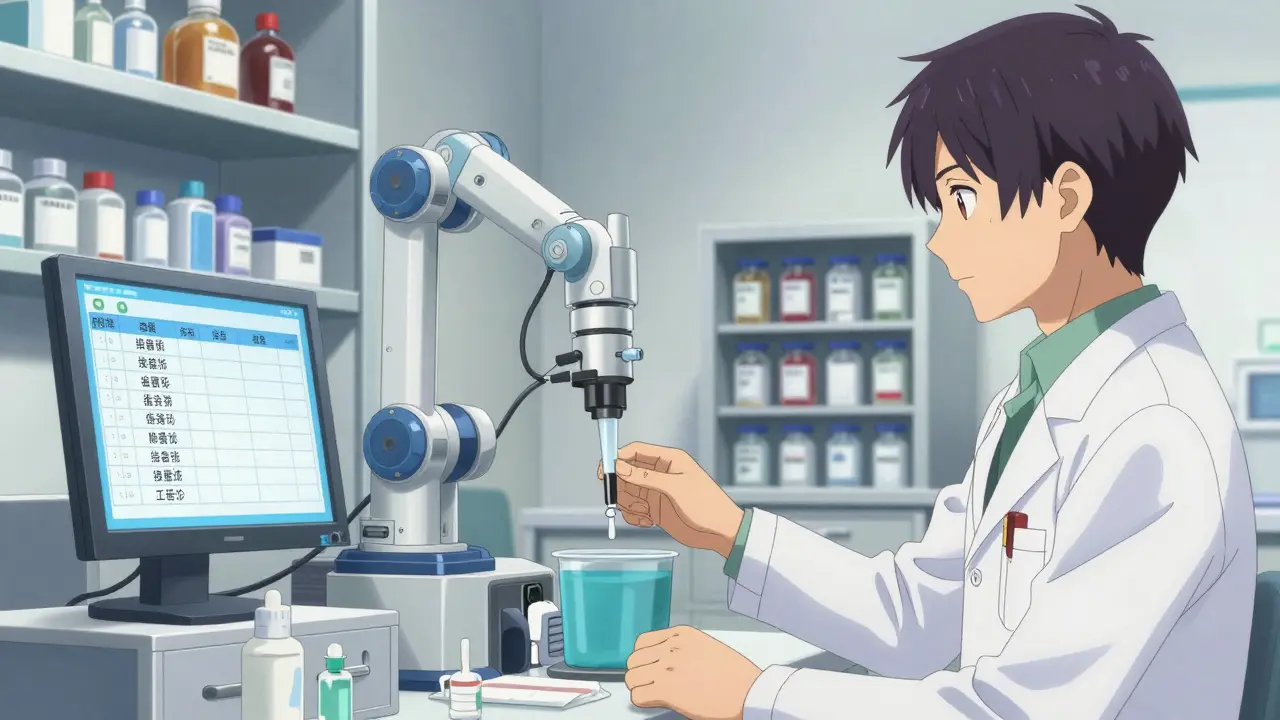
We’re also seeing greater use of robotics for medication preparation. Robots don’t get tired, don’t have bad days, and maintain consistent precision. As demand for IV medications grows, embracing these innovative technologies will lead to safer, more efficient operations. Furthermore, deeper integration with telehealth platforms is emerging. As more patients consult doctors remotely, prescriptions flow digitally, requiring pharmacy systems to adapt to faster, virtual-first workflows.
Industry analysts predict continued consolidation in the pharmacy technology space. Larger healthcare IT companies are acquiring specialized workflow solutions to create comprehensive platforms that address the entire medication use cycle-from prescription to administration. This trend suggests that interoperability will become even more critical, breaking down silos between different healthcare providers.
Practical Steps for Adoption
If you’re considering implementing a workflow system, start with a clear assessment of your current pain points. Are errors mostly in dispensing or compounding? Do you struggle with inventory shortages? Define your goals before choosing a vendor.
Next, prioritize integration capabilities. Ensure the system communicates seamlessly with your existing EHR and PIS (Pharmacy Information Systems). Look for vendors that offer robust support and training resources. Remember, the best technology fails without proper user adoption. Involve your staff early in the selection process. Their insights into daily workflows are invaluable.
Finally, monitor performance metrics. Use reporting features to track key indicators like prescription fill times, patient wait times, and error rates. Tools like Kissflow allow you to visualize these metrics, helping you identify bottlenecks and areas for improvement. Continuous evaluation ensures the system evolves with your pharmacy’s needs.
What is the primary purpose of pharmacy workflow systems?
The primary purpose is to enhance patient safety by reducing medication errors through automated checks and safeguards, while simultaneously improving operational efficiency and speed in medication preparation and dispensing.
How much does a pharmacy workflow system cost?
Costs vary significantly by vendor and scope. Enterprise solutions for large hospitals typically range from $50,000 to $250,000 annually. Smaller independent pharmacy solutions may be less expensive but still require significant investment in licensing and maintenance.
What are the main challenges in implementing these systems?
Key challenges include high implementation costs, extensive staff training requirements, potential workflow disruption during the 2-6 month transition period, and system complexity that may not align perfectly with existing practices.
Do these systems replace pharmacists?
No, they do not replace pharmacists. Instead, they augment their capabilities by handling routine checks and calculations, allowing pharmacists to focus on clinical decision-making, patient counseling, and complex care coordination.
What is IV Workflow Management?
IV Workflow Management is a specialized subset of pharmacy systems focused on the safe and accurate preparation of intravenous medications. It uses technology-assisted workflows, robotics, and strict compliance checks to minimize errors in high-risk compounding environments.
How do barcode verification systems prevent errors?
Barcode verification systems scan the unique code on each medication package and cross-reference it with the electronic order. If there is any discrepancy, such as the wrong drug or dosage, the system alerts the pharmacist immediately, preventing the error from reaching the patient.