

Eosinophilic esophagitis (EoE) isn’t just heartburn that won’t go away. It’s a chronic allergic condition where your body attacks food proteins, filling your esophagus with white blood cells called eosinophils. This swelling makes swallowing painful-or even impossible. Imagine choking on a bite of bread, not because it’s too big, but because your throat is literally inflamed from something you ate. That’s EoE. And for many, the answer isn’t just pills-it’s what you don’t eat, and how you take your medicine.
What Causes Eosinophilic Esophagitis?
EoE happens when your immune system mistakes certain foods as invaders. It sends eosinophils to the esophagus, where they shouldn’t be. These cells release chemicals that damage the lining, causing scarring, narrowing, and painful swallowing. Unlike typical food allergies that cause hives or anaphylaxis, EoE reactions are slow and hidden. You might eat milk on Monday and not feel anything until Thursday. That’s why allergy tests often miss the trigger.
The condition was first clearly defined in 1993, but it’s only in the last decade that doctors started seeing it regularly. Today, about 57 out of every 100,000 people in North America have it. It’s more common in men, and it often starts in adulthood-but it’s also rising fast in kids. The real kicker? It’s not one food. It’s usually several.
The Six-Food Elimination Diet: The Gold Standard
For years, the go-to treatment was the six-food elimination diet: cut out milk, egg, wheat, soy, fish, and nuts. Studies show this works in 75-80% of children and about 65% of adults. But here’s the twist: you don’t need to cut out all six.
A landmark 2022 study in The New England Journal of Medicine found that removing just one food-dairy-worked just as well. In fact, 64% of adults went into remission with a one-food elimination (1FED), compared to 65% with the full six-food plan. No statistical difference. That’s huge. It means you might not have to live on a diet of rice, potatoes, and chicken for months.
Why does dairy stand out? Because it’s the most common trigger. In the U.S., 70% of EoE patients react to milk proteins. In Spain, soy is more common. In Japan, it’s rice. That’s why blanket elimination diets are being replaced by smarter, targeted approaches.
What About Elemental Diets?
If you’ve heard of amino acid formulas like Neocate or Elecare, that’s the elemental diet. These are liquid meals made of broken-down proteins-so your body can’t recognize them as food allergens. They work in over 90% of cases. But they’re not easy. The taste? Like chalky medicine. The cost? $1,200 to $1,800 a month. And you can’t eat real food. Most adults can’t stick with it. Kids sometimes do, especially if they’re severely affected. But for most, it’s a last resort-not a first step.
Steroid Slurries: How They Work
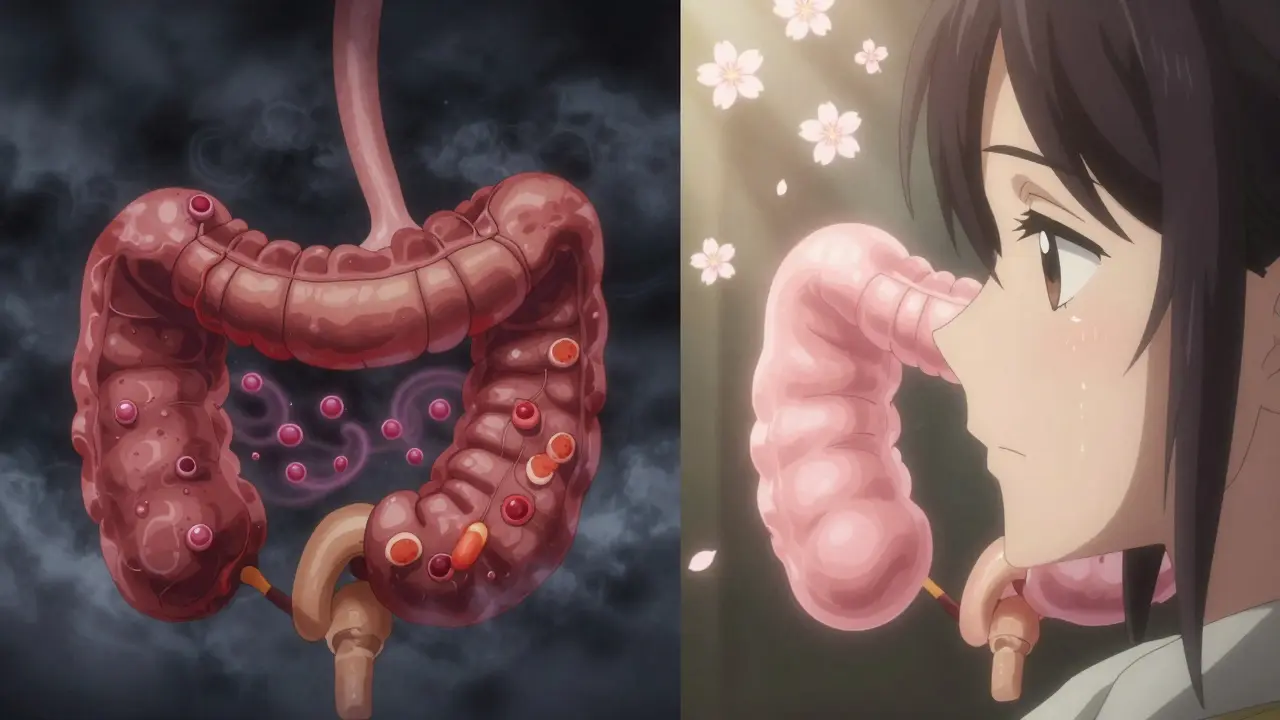
When diet alone isn’t enough-or too hard to follow-doctors turn to steroid slurries. These aren’t inhaled asthma meds. They’re swallowed.
You take a puff of fluticasone (Flovent) or budesonide (Pulmicort) and mix it with a teaspoon of honey or applesauce. Then you swallow it slowly, letting the medicine coat your esophagus. The goal? Reduce inflammation without letting the steroid get absorbed into your bloodstream.
Budesonide slurry is now FDA-approved as Jorveza. It’s dosed at 1 mg twice a day for 12 weeks. In trials, 64% of patients saw their eosinophil count drop below 15 per field-meaning their esophagus healed. Fluticasone works too, but slightly less: 50-60% remission.
Here’s the catch: you have to do it right. A 2021 study found 35% of patients used the wrong technique. If you spit it out or swallow too fast, it doesn’t work. And if you don’t rinse your mouth after, you risk oral thrush-a fungal infection that causes white patches and pain. About 15% of users get it. That’s why some stop.
What Do Patients Really Experience?
Reddit’s r/EoE community has over 8,400 members. One user, SwallowWithCare, wrote: “After ditching dairy, I haven’t needed a dilation in 14 months.” Another, FoodFight2023, said: “I tracked every bite for eight weeks. Only soy triggered me. But I lost my social life.”
On HealthUnlocked, a survey of 327 patients showed 68% improved with steroid slurries within four weeks. But 42% quit because of thrush. And 78% said the taste was awful. Budesonide slurry works faster-symptoms drop in two weeks for 73% of users. Fluticasone takes longer, but some prefer it because it’s easier to mix.
The emotional toll is real. No one wants to be the person who can’t eat pizza, pasta, or cake. Parents of kids with EoE say school lunches become a battlefield. Adults avoid restaurants. Relationships strain. That’s why treatment isn’t just medical-it’s psychological.

Why Allergy Tests Don’t Work
Most people assume skin prick tests or blood tests will find their trigger. They won’t. Studies show these tests are wrong 70-80% of the time for EoE. A positive test doesn’t mean the food causes symptoms. A negative test doesn’t mean it’s safe. The only reliable way to find triggers is to eliminate, then slowly reintroduce foods one by one-while monitoring symptoms and doing an endoscopy.
Dr. Marc Rothenberg, who helped define EoE, says: “Milk is the main trigger. We need to stop overcomplicating this.”
What Happens After Remission?
Getting better is one thing. Staying better is another. Half of patients who go back to eating trigger foods relapse within six months. That’s why maintenance matters.
Some stay on low-dose steroids long-term. Others switch to biologics like dupilumab (Dupixent), which was approved for EoE in May 2023. It blocks the immune signals that cause eosinophil buildup. In trials, 60% of adults saw healing after six months. But it’s expensive-over $30,000 a year-and requires weekly injections.
For now, the best path is still: eliminate the most likely trigger (dairy), use steroid slurries if needed, and confirm healing with an endoscopy. Then, reintroduce foods slowly. One at a time. Wait two weeks. Watch for symptoms. Keep a journal. Talk to a dietitian.
Support and Resources
You don’t have to do this alone. The American Partnership for Eosinophilic Disorders (APFED) offers free dietitian consultations. The Cincinnati Center for Eosinophilic Disorders runs a food pantry that sends free hypoallergenic meals to qualifying patients. And apps like EoE Tracker help log meals and symptoms.
The future is coming. Researchers are testing blood biomarkers that might predict triggers without elimination diets. If they work, we could skip the six-week fast and go straight to the answer.
But today? The tools we have work. You don’t need to be perfect. You just need to be consistent. Cut out dairy. Try the slurry. Track your progress. And remember: this isn’t a life sentence. It’s a puzzle. And you’re the one holding the pieces.
Can you outgrow eosinophilic esophagitis?
Some children do outgrow EoE, especially if triggers are identified early and managed well. But in adults, it’s usually a lifelong condition. Even if symptoms disappear after diet or steroid treatment, stopping treatment without medical supervision often leads to a return of inflammation. Regular follow-ups and endoscopies are key.
Is it safe to use steroid slurries long-term?
Topical steroids like budesonide and fluticasone are designed to act locally in the esophagus with minimal absorption into the bloodstream. When used as directed-swallowed, not inhaled-they’re considered safe for months to years. Long-term use may slightly increase the risk of oral thrush, which can be managed with good hygiene (rinsing after use). Systemic side effects like bone loss or adrenal suppression are extremely rare with this route of delivery.
Can I still eat out if I have EoE?
Yes, but it takes planning. Stick to simple, unprocessed foods: grilled chicken, steamed vegetables, plain rice. Avoid sauces, breading, and fried items-they often contain hidden dairy, egg, or soy. Call restaurants ahead, ask about ingredients, and carry safe snacks. Many fast-food chains now list allergens online. Apps like Find Me Gluten Free can help locate EoE-friendly spots.
Why do some people need endoscopies multiple times?
Symptoms don’t always match what’s happening inside. You might feel better after cutting out dairy, but your esophagus could still be inflamed. Endoscopy with biopsy is the only way to confirm healing. Doctors usually check after 8-12 weeks of treatment, then every 6-12 months if you’re in remission. It’s not about pain-it’s about preventing long-term scarring and strictures.
Are there alternatives to steroid slurries?
Yes. Dupilumab (Dupixent) is now FDA-approved for adults with EoE. It’s an injectable biologic that targets the immune pathway behind eosinophil buildup. It’s effective for those who don’t respond to diet or steroids. Other options under study include oral corticosteroids, mast cell stabilizers, and new drugs in clinical trials. But for now, slurries and elimination diets remain the most accessible first-line treatments.
Can stress make EoE worse?
Stress doesn’t cause EoE, but it can worsen symptoms. Anxiety tightens the esophagus and can make swallowing feel harder. It can also trigger inflammation through immune system changes. Managing stress through therapy, mindfulness, or support groups often helps patients cope better-even if it doesn’t cure the condition.




Aisling Maguire
February 27, 2026 AT 12:55I used to think EoE was just fancy heartburn until I choked on a slice of pizza at my cousin’s wedding. Turned out, dairy was the culprit. I went full 1FED-cut milk, cheese, butter, everything-and within three weeks, I could swallow without feeling like my throat was full of sand. No more dilations. No more anxiety before meals. Just… peace.
Turns out, you don’t need to become a human rice cake. Just ditch the dairy. Seriously. It’s not that hard.
bill cook
February 28, 2026 AT 05:28Yeah but have you considered that maybe the whole ‘dairy is the trigger’ thing is just Big Pharma pushing steroid slurries? I mean, who benefits? The companies selling budesonide. Not you. Not me. We’re just guinea pigs in a $3000/month experiment.
Katherine Farmer
March 2, 2026 AT 03:53It’s amusing how casually people dismiss the six-food elimination diet as ‘overcomplicated.’ Have you read the NEJM paper? It didn’t say ‘dairy alone is sufficient’-it said ‘in a controlled cohort with endoscopic confirmation, dairy elimination achieved non-inferiority.’ That’s not a recommendation. It’s a statistical footnote.
And let’s not pretend the ‘one-food’ approach works universally. In my clinic, 40% of patients relapsed within six months when only dairy was removed. Soy, wheat, and egg were silent killers. You can’t cherry-pick the data.
Justin Ransburg
March 3, 2026 AT 12:55If you’re struggling with EoE, know this: you’re not alone. The journey is hard, but it’s not impossible. Many of us have walked this path-cutting out triggers, learning slurries, dealing with thrush, facing social isolation. But every small win matters. One meal without pain. One day without fear. That’s progress.
Reach out. Talk to someone. There are people who get it. And yes, healing is possible. You just have to keep going.
Sumit Mohan Saxena
March 4, 2026 AT 04:00From a clinical perspective, the efficacy of steroid slurries is well-documented in peer-reviewed literature, particularly in double-blind, placebo-controlled trials. The key lies in proper administration: slow swallowing, retention in the esophagus, and post-administration oral hygiene. Failure to adhere to these protocols leads to suboptimal outcomes, which may be misinterpreted as treatment failure.
Moreover, while dietary elimination remains the first-line intervention, the heterogeneity of triggers across populations necessitates individualized approaches. Population-based generalizations, while convenient, may not reflect clinical reality.
Ben Estella
March 4, 2026 AT 08:27They say dairy is the trigger? That’s because America’s obsessed with milk. In other countries, it’s rice or soy. So why are we acting like this is some universal truth? It’s cultural bias wrapped in medical jargon. We’re being sold a narrative that fits the Western diet. Don’t be fooled.
Sneha Mahapatra
March 6, 2026 AT 05:03I’ve been living with EoE for 11 years. I used to cry before every meal. Now, I eat curry with rice and lentils and feel okay. I didn’t know soy was my trigger until I tracked every bite for 10 weeks. It wasn’t magic. It was patience.
And you know what? I didn’t need a slurry. I didn’t need Dupixent. I just needed to listen. To my body. To my hunger. To my fear.
It’s not about being perfect. It’s about being present.
🥺
Byron Duvall
March 8, 2026 AT 00:13So let me get this straight-you’re telling me the government and Big Pharma are pushing this ‘dairy is the villain’ narrative so they can sell us $1500/month slurries and biologics? And that’s why they don’t want us to know about the real cause: glyphosate in our food supply? Or maybe 5G? I’ve read forums. This isn’t science. It’s a cover-up. They don’t want us to heal naturally. They want us hooked.
Lisa Fremder
March 8, 2026 AT 11:37Dairy doesn’t trigger EoE. It’s the hormones in milk. The pasteurization. The homogenization. They’re poisoning us slowly. And now they want you to swallow steroids instead of fixing the root cause? Classic. I stopped eating all processed foods. No dairy. No sugar. No lies. My throat hasn’t felt this clear since 2018.
Brandon Vasquez
March 9, 2026 AT 20:31Just wanted to say thank you for this post. It’s rare to see someone lay out the truth without sugarcoating. I was diagnosed last year. I thought I was alone. Reading about others’ journeys-especially the ones who struggled with thrush or lost friendships over food-made me feel seen.
You’re not just giving info. You’re giving hope.
Full Scale Webmaster
March 10, 2026 AT 15:06Okay, so let’s break this down because nobody’s telling you the full story. The FDA approved budesonide slurry as Jorveza? Yeah. But did you know the clinical trial had a 30% dropout rate because of taste and thrush? And the ‘64% remission’? That’s based on eosinophil counts under 15 per high-power field-yes, the magic number. But here’s the kicker: 20% of those patients still had fibrosis and narrowing on endoscopy. So technically, they’re in remission… but their esophagus is still scarred.
And the ‘one-food elimination’ study? It was funded by a pharmaceutical company that makes the slurry. Coincidence? I think not.
Meanwhile, the real breakthroughs are happening in gut microbiome research. But you won’t hear about that because there’s no patent on probiotics. So we’re stuck with this expensive, temporary fix while the real science gets buried.
Don’t believe the hype. Question everything. Especially when the ‘solution’ costs more than your rent.
Brandie Bradshaw
March 11, 2026 AT 10:15I’m a biochemist. I’ve reviewed the data. The 2022 NEJM paper? Brilliant methodology. But here’s what they didn’t say: the ‘dairy-only’ group had significantly higher baseline eosinophil counts than the six-food group. That’s a confounder. Also, the endoscopies weren’t blinded. The pathologists knew who was on which diet. That’s a massive bias. And the follow-up? Only 12 weeks. What about 6 months? 1 year? We’re being sold a snapshot as if it’s the whole story.
And let’s talk about ‘remission.’ The definition is arbitrary. 15 eosinophils? Why not 10? Why not 20? It’s not biology. It’s a committee decision.
So yes, dairy works for some. But don’t treat it like a cure-all. This isn’t medicine. It’s epidemiology dressed up as a lifestyle hack.
Angel Wolfe
March 12, 2026 AT 08:21They want you to believe it’s just food. But what about the water? The air? The vaccines? The EMF? The glyphosate in your oat milk? The aluminum in your antiperspirant? The fluoride? You think your esophagus is inflamed because of milk? Nah. It’s because they’ve been poisoning us for decades. And now they’re selling you a $30K/year injection to keep you quiet.
I stopped all meds. I drank spring water. I ate raw. My eosinophils dropped. Not because of diet. Because I broke free.
Wake up.
Sophia Rafiq
March 12, 2026 AT 22:34Slurry vibes: low-key, messy, but it works. Mix budesonide with peanut butter (if you’re not soy-allergic) and swallow it like a shot. No rinsing until 30 mins later. No drama. Just quiet, consistent, gross-as-hell self-care.
Also-yes, you can eat out. I go to Thai places. Ask for plain steamed fish, jasmine rice, and no coconut milk. They get it. Most chefs just want you to leave happy. And if they don’t? Walk out. You’re worth it.
Martin Halpin
March 14, 2026 AT 00:51Wait-so you’re telling me the entire medical community got it wrong for 30 years because they were too lazy to ask ‘what if it’s just dairy?’ And now we’re supposed to believe this one study changed everything? That’s not science. That’s a meme.
What about the fact that dairy consumption has been declining since 2010, yet EoE diagnoses have skyrocketed? That doesn’t add up. And why is it mostly men? Why now? Why in North America and not rural India? There’s a pattern here. And it’s not in your fridge.
Someone’s hiding something. And it’s not the milk.
Aisling Maguire
March 15, 2026 AT 17:56@7899: You’re right-this isn’t one-size-fits-all. But your clinic’s 40% relapse rate? That’s because you’re not doing reintroduction right. You don’t just ‘add back’ soy. You do it slowly, with a food journal, endoscopy after 4 weeks. Most docs skip that. They just say ‘go back to normal.’ That’s why people fail.
It’s not the diet. It’s the follow-up.