
Sleep Apnea Risk Calculator
Opioid Sleep Apnea Risk Assessment
This tool estimates your risk of severe sleep apnea complications while taking opioids based on medical research. Results are for informational purposes only and not medical advice.
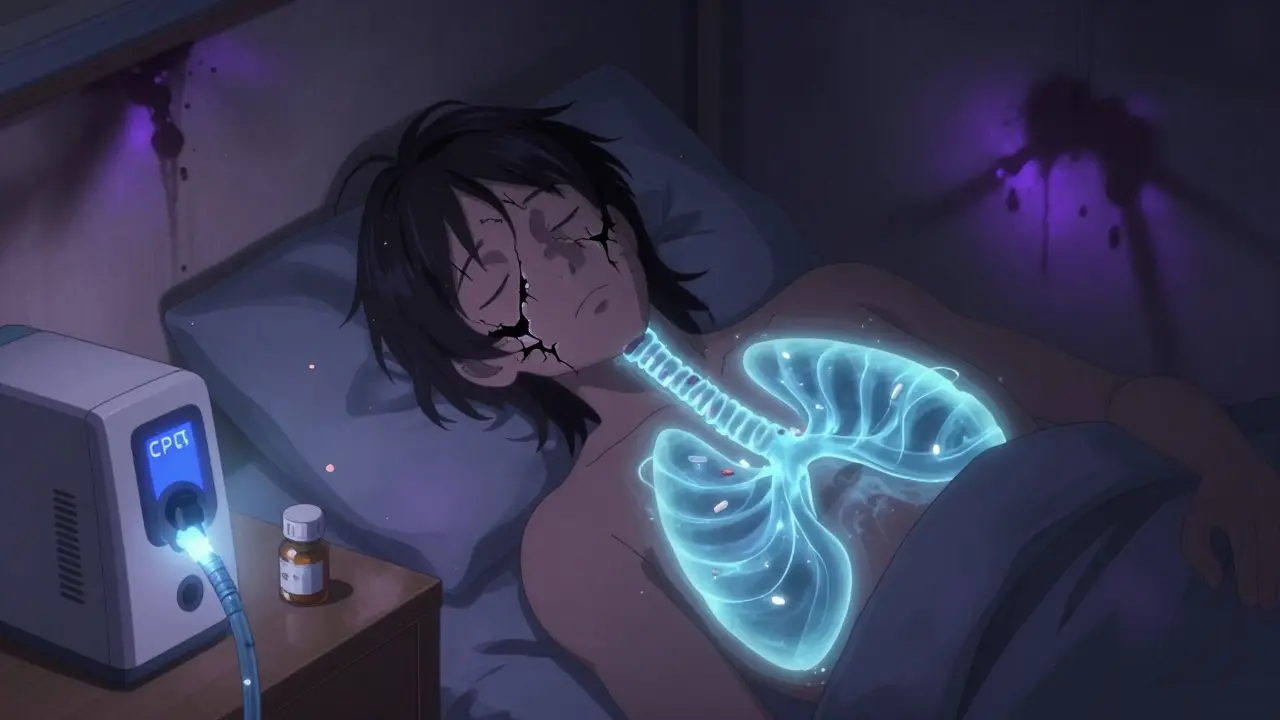
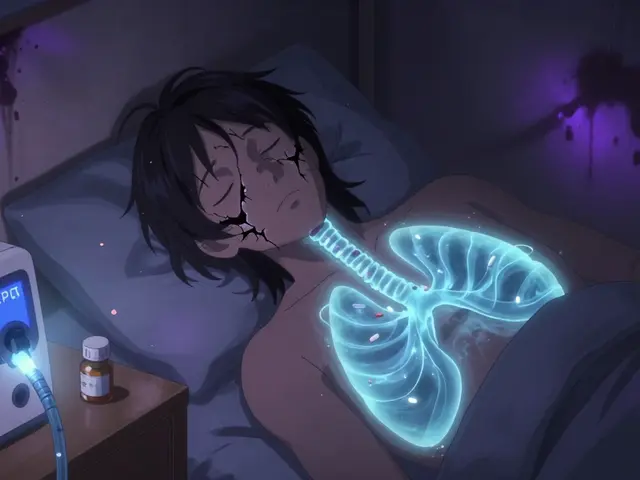
When you’re taking opioids for chronic pain, you might not think about your breathing at night. But if you snore, wake up gasping, or feel exhausted even after a full night’s sleep, something dangerous could be happening while you’re unconscious. Opioids don’t just dull pain-they also slow down your breathing, especially during sleep. And when that happens in someone with sleep apnea, the results can be life-threatening.
Why Opioids and Sleep Apnea Are a Deadly Mix
Opioids like oxycodone, hydrocodone, and methadone act on the brain’s breathing control centers. They reduce how often you breathe and how deeply you inhale. During the day, your brain compensates-you’re awake, alert, and your body pushes harder to get oxygen. But at night, when you fall asleep, that natural backup system shuts off. That’s when opioids start to take over. In people with sleep apnea, this is catastrophic. Sleep apnea already causes breathing to stop repeatedly during sleep. Obstructive sleep apnea (OSA) happens when throat muscles relax and block the airway. Central sleep apnea (CSA) happens when the brain forgets to tell the lungs to breathe. Opioids make both worse. They increase the number of central apneas by 3 to 5 times compared to non-users. Studies show that chronic opioid users have an average of 25 to 35 breathing pauses per hour. For someone without opioids, even with sleep apnea, that number is usually under 20. The real danger? Oxygen levels crash. Research found that 68% of people on long-term opioids experience oxygen saturation below 88% for more than five minutes during sleep. For reference, normal overnight oxygen levels stay above 90%. Below 80% is considered severe hypoxia-and that’s happening in a significant portion of opioid users with untreated sleep apnea.Who’s at the Highest Risk?
Not everyone on opioids develops this problem, but certain groups are far more vulnerable:- People taking high doses-Each additional 10 mg of morphine equivalent per day increases the apnea-hypopnea index (AHI) by 5.3%. Doses over 100 mg MEDD (morphine equivalent daily dose) are linked to central apnea rates above 20 events per hour in two-thirds of users.
- Methadone users-Methadone carries the highest risk. Users are over four times more likely to develop moderate-to-severe sleep apnea than those on other opioids.
- People with existing OSA-If you already have untreated sleep apnea, adding opioids raises your risk of nighttime oxygen levels dropping below 80% by 3.7 times.
- Those with obesity-A BMI over 30 doubles the risk of airway collapse, and opioids make it even worse.
What Happens in Your Brain and Airways
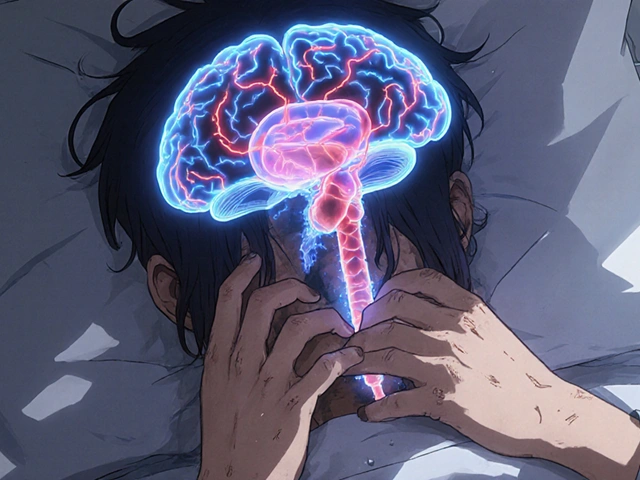
Opioids don’t just make you sleepy-they disrupt the brain’s breathing rhythm. They bind to μ-opioid receptors in the brainstem, specifically in areas like the pre-Bötzinger complex, which controls the timing of breaths. This causes central apneas: your brain literally stops sending the signal to breathe. At the same time, opioids relax the muscles in your upper airway. The genioglossus muscle, which holds your tongue forward to keep the airway open, becomes sluggish. This drops the pressure needed to keep your throat open by 2 to 4 cm H₂O-enough to trigger or worsen obstructive events. So you get a double hit: your brain forgets to breathe, and your airway collapses when it should stay open. This is why polysomnography (sleep studies) show opioid users have higher central apnea indices (CAI) than non-users. One study found the average CAI was 12.3 events per hour in opioid users, compared to just 2.5 in people not taking opioids. That’s nearly five times more central breathing pauses.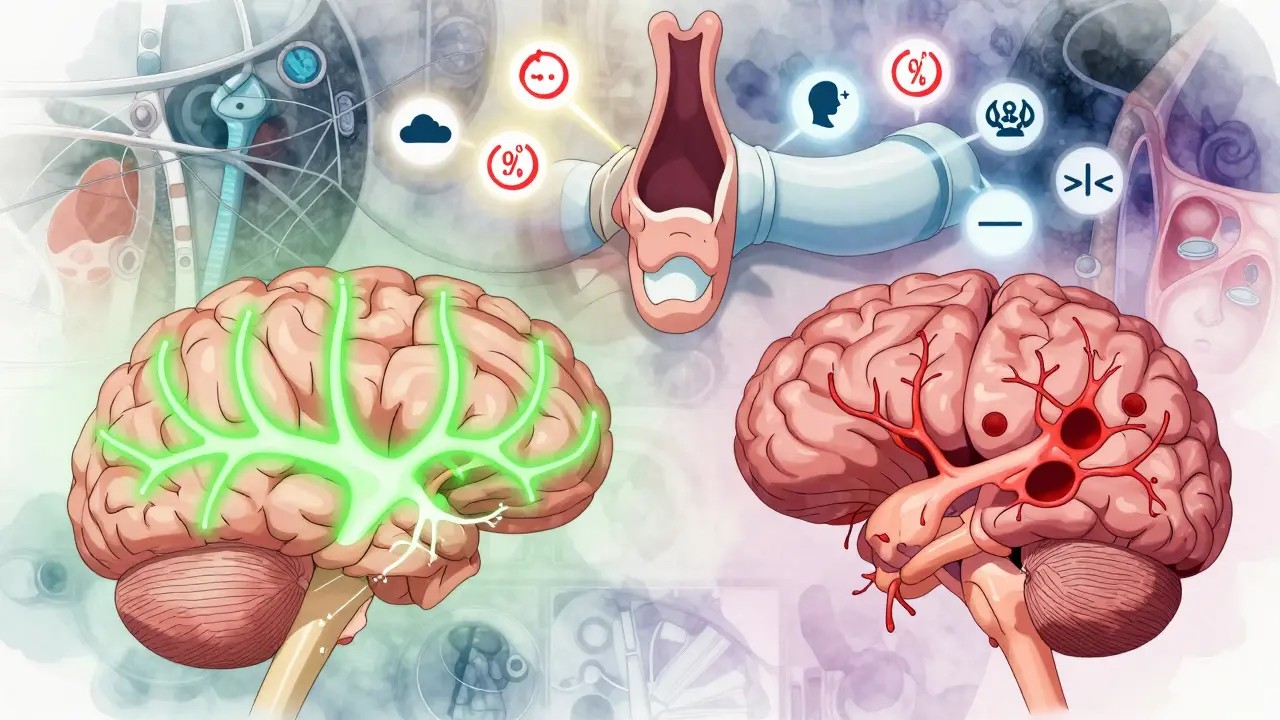
Doctors Are Starting to Screen-But Too Few Are
Guidelines from the American Academy of Sleep Medicine and the CDC now recommend screening for sleep apnea before starting long-term opioid therapy, especially if the dose is over 50 MEDD or if you have risk factors like snoring, obesity, or daytime fatigue. But here’s the problem: only 28% of primary care doctors routinely screen for sleep apnea before prescribing opioids. Many don’t know the risks. Others don’t have access to sleep specialists. Patients often don’t connect their nighttime symptoms to their medication. At the University of Michigan, researchers found that 78% of opioid-treated pain patients referred for sleep evaluation had undiagnosed sleep apnea. Many were waking up gasping but assumed it was just “bad sleep.” One patient, a 54-year-old man on oxycodone for back pain, had oxygen levels drop to 72% during sleep. He had no idea his medication was nearly killing him at night.What Can Be Done?
The good news? This problem can be managed.- CPAP therapy is the gold standard for obstructive sleep apnea. But adherence is low in opioid users-only 58% stick with it, compared to 72% in non-users. Why? Opioids cause brain fog and fatigue, making it harder to tolerate the mask and machine.
- Opioid dose reduction can help. Lowering the dose by even 25% has been shown to reduce apnea events significantly.
- Opioid rotation-Switching from methadone or high-dose oxycodone to buprenorphine (which has less respiratory depression) can improve breathing during sleep.
- Positional therapy-Sleeping on your side can reduce airway collapse. Simple tools like pillow wedges or tennis ball sewn into the back of a shirt can help.
- Acetazolamide-A clinical trial at UCSD found that 500 mg of acetazolamide daily reduced AHI by 35% in opioid users. It’s not FDA-approved for this use yet, but it’s being studied as a non-CPAP option.
Real Stories, Real Consequences
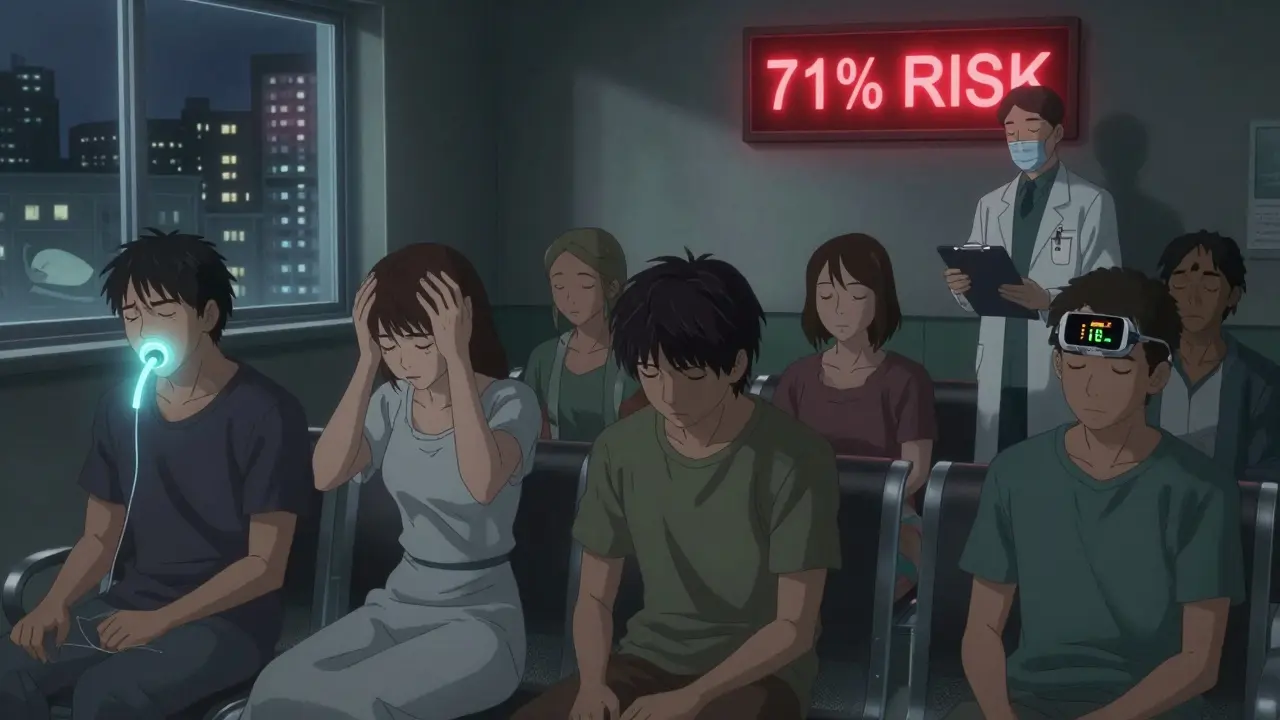
Online forums are full of stories. On Reddit’s r/ChronicPain, users describe waking up choking, feeling like they’re suffocating, or being told by partners they stop breathing for 20 seconds at a time. One woman said her CPAP machine “saved her life” after years of unexplained fatigue. Another man said he stopped opioids cold turkey and saw no improvement-suggesting some brain changes may be permanent. At the Cleveland Clinic, hospitals that started routine sleep screening saw a 41% drop in opioid-related respiratory emergencies over 18 months. That’s not just a statistic-it’s people going home alive.What You Should Do Now
If you’re on opioids for chronic pain:- Ask yourself: Do I snore loudly? Do I wake up gasping? Do I feel exhausted even after 8 hours of sleep?
- If yes to any of these, ask your doctor for a sleep evaluation. Don’t wait for symptoms to get worse.
- If you’re on more than 50 MEDD, insist on a sleep study-even if you feel fine.
- If diagnosed with sleep apnea, follow through with treatment. CPAP works. So does dose reduction.
- Don’t assume your doctor knows. Bring up the link between opioids and sleep apnea. Cite the CDC guidelines.
What’s Next for Research
Scientists are now looking at genetic markers. The NIH is tracking 1,200 opioid users in a registry to find who’s most at risk. Early data shows people with certain PHOX2B gene variants are over three times more likely to develop severe central apnea on opioids. New drugs like cebranopadol are being tested to deliver pain relief without suppressing breathing. But they’re years away. For now, the solution is simple: test, treat, and adjust. The numbers are clear. Over 10 million Americans are on long-term opioids. That’s 10 million people whose breathing could be silently failing at night. This isn’t a rare side effect. It’s a widespread, preventable crisis. And it’s happening right now-in your town, in your family, maybe even in your own home.Can opioids cause sleep apnea, or just make it worse?
Opioids don’t just worsen existing sleep apnea-they can cause new cases of central sleep apnea. They disrupt the brain’s breathing signals, leading to pauses in breathing even in people who never snored or had sleep issues before. Studies show up to 46% of long-term opioid users develop severe sleep apnea, even without obesity or other risk factors.
Is it safe to take opioids if I have sleep apnea?
It’s risky, but not always impossible. If you have sleep apnea and need opioids, treatment must come first. Start with CPAP or another therapy to stabilize your breathing before or while starting opioids. Never start or increase opioid doses without treating the sleep apnea. Many patients can safely use opioids at lower doses if their breathing is properly managed.
How do I know if I have sleep apnea from opioids?
Signs include waking up gasping or choking, loud snoring, daytime fatigue despite enough sleep, morning headaches, and being told by a partner you stop breathing at night. If you’re on opioids and have any of these, ask for a sleep study. Standard home tests may miss central apneas-ask for a test validated for opioid users, like the Nox T3 Pro.
Will stopping opioids fix my sleep apnea?
Sometimes. Many people see big improvements in breathing after reducing or stopping opioids. But in some cases, especially with long-term use, the brain’s breathing control system may be permanently altered. That’s why treating the sleep apnea-even after stopping opioids-is still important.
Are there alternatives to opioids that don’t affect breathing?
Yes. Non-opioid pain options include gabapentin, pregabalin, certain antidepressants like duloxetine, physical therapy, and nerve blocks. Buprenorphine is an opioid with less respiratory depression than oxycodone or methadone and may be a safer choice if opioids are necessary. Always discuss alternatives with your pain specialist.
Jennifer Glass
January 4, 2026 AT 22:26So many people don’t realize how insidious this is. I’ve seen friends on long-term opioids who just blamed their fatigue on ‘aging’ or ‘stress’-turns out their oxygen was dipping into the 70s at night. It’s not just about snoring; it’s your brain forgetting to breathe. Scary stuff.
And honestly, why aren’t more doctors pushing for sleep studies before prescribing? This isn’t some rare edge case-it’s systemic negligence.
saurabh singh
January 5, 2026 AT 15:58Man, this hits different. In India, we don’t even talk about opioid risks like this-people just pop pills for back pain like candy. I’ve got a cousin on methadone for years, snores like a chainsaw, and never thought to get checked. This post should be mandatory reading for every GP in the world.
Also, acetazolamide? That’s wild. We use it for altitude sickness back home-never knew it could help with opioid-induced apnea. Gotta share this with my uncle’s doctor.
Terri Gladden
January 6, 2026 AT 02:54OMG I thought I was just a bad sleeper 😭 I’ve been on oxycodone for 6 years and my husband says I stop breathing for like 30 seconds at a time and then gasp like a fish outta water… I thought it was just cuz I’m overweight and stressed. But now I’m crying because I didn’t know I was almost dying in my sleep 😭😭😭
Just called my doc and booked a sleep study. If this saves my life I’m gonna scream from the roof
en Max
January 6, 2026 AT 13:29Based on current clinical evidence, the confluence of chronic opioid administration and underlying respiratory dysregulation-particularly in the context of central sleep apnea-represents a significant, under-recognized public health imperative. The μ-opioid receptor-mediated suppression of the pre-Bötzinger complex directly compromises respiratory drive, exacerbating pre-existing anatomical obstructions. This is not merely an association; it is a mechanistic cascade.
Furthermore, the documented reduction in AHI following buprenorphine substitution, coupled with CPAP adherence rates below 60%, underscores the urgent need for integrated pain and sleep medicine protocols. Without standardized screening at >50 MEDD, we are perpetuating iatrogenic harm.
Angie Rehe
January 7, 2026 AT 21:27Y’all are acting like this is news. I’ve been screaming about this since 2020. Doctors give out opioids like they’re candy and then act shocked when patients die in their sleep. It’s not ‘accidental’-it’s negligence. And don’t get me started on how insurance refuses to cover Nox T3 Pro because it’s ‘experimental’-it’s FDA-cleared! You’re literally choosing profit over people.
Stop pretending this is a ‘rare side effect.’ It’s epidemic. And if your doctor doesn’t know this, find a new one. Now.
Chris Cantey
January 9, 2026 AT 17:29The brain’s respiratory centers are not designed to be chemically muted. Opioids don’t just sedate-they silence. And when that silence happens during sleep, the body has no defense. The tragedy isn’t the pain. It’s that we’ve normalized dying quietly while medicated.
I’ve seen it. I’ve held the hand of someone who didn’t wake up. And the worst part? They were following every prescription. No one told them this could happen.
Ashley Viñas
January 10, 2026 AT 08:16Let me be the first to say: if you’re on opioids and haven’t had a sleep study, you’re playing Russian roulette with your life. And no, ‘I don’t snore’ doesn’t count. Central apnea doesn’t make noise-it just kills you silently. You think you’re managing pain? You’re managing your own slow suffocation.
Also, buprenorphine isn’t just ‘safer’-it’s the only opioid that doesn’t turn your brain into a broken breathing switch. Why aren’t we prescribing it as first-line? Because Big Pharma doesn’t make enough off it.
And yes, I’ve read the guidelines. And yes, I’m mad you haven’t.
Enrique González
January 11, 2026 AT 20:36Just got my sleep study results last week. AHI of 38. Oxygen dipped to 74%. I was on 120 mg MEDD. My doctor said ‘maybe cut back.’ I said ‘no, I’m done.’ Went cold turkey. Three weeks later, my AHI dropped to 9. No CPAP needed.
This isn’t about quitting pain meds. It’s about choosing life. You don’t need to suffer to be alive. I’m proof.
Aaron Mercado
January 13, 2026 AT 20:27STOP. RIGHT. NOW. If you’re on opioids and you’re tired all the time-you’re not lazy. You’re dying in your sleep. And if your doctor didn’t warn you, they’re not your doctor-they’re a drug pusher with a license.
I lost my brother to this. He was 42. Had back pain. Took oxycodone. Said he was ‘just tired.’ They found him in bed. No signs of struggle. Just… gone. Because his brain forgot to tell his lungs to breathe.
Don’t wait for the obituary. Get tested. TODAY.