
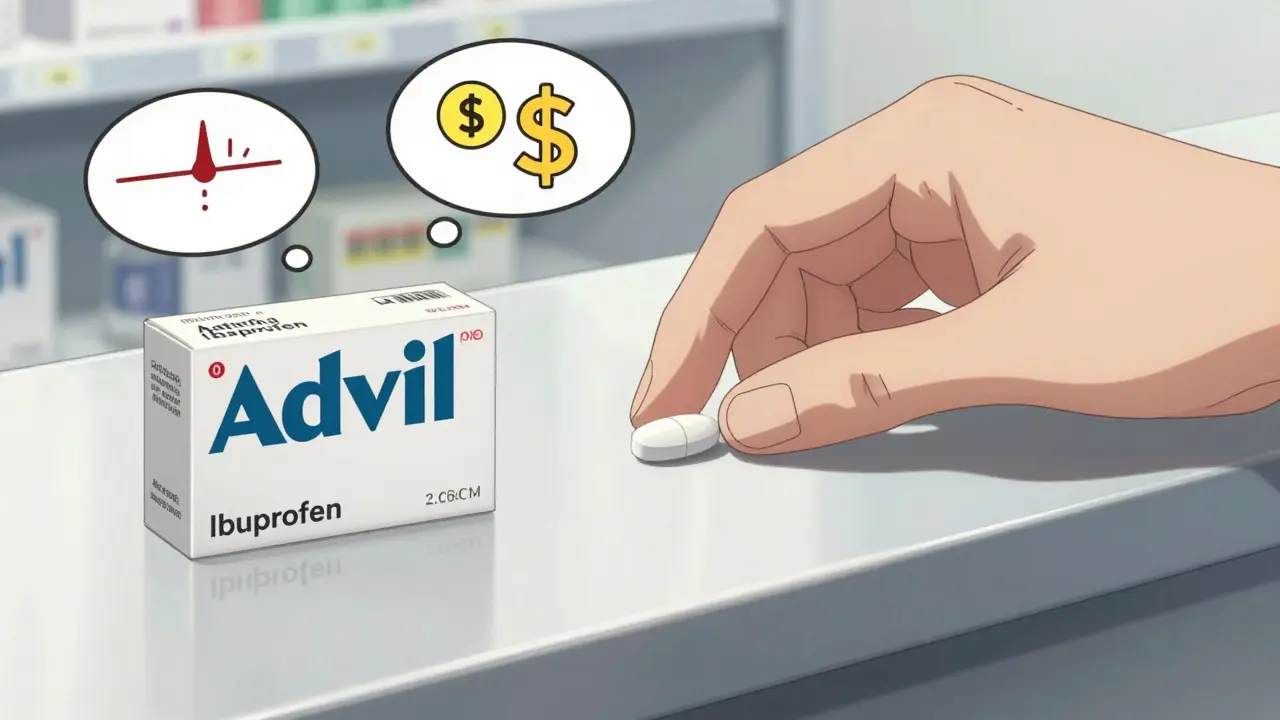
When you pick up a prescription, do you ever check the label? Not just to see your name or dosage-but to see if it’s a generic or a brand-name drug? If you’ve ever felt uneasy about a generic, you’re not alone. And it’s not just about price. There’s a powerful psychological force at work called the labeling effect, and it can change how your body responds to medicine-even when the active ingredient is exactly the same.
Same pill, different mind
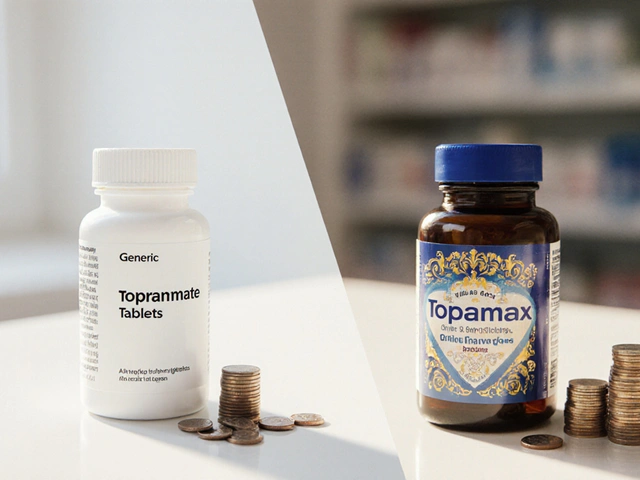
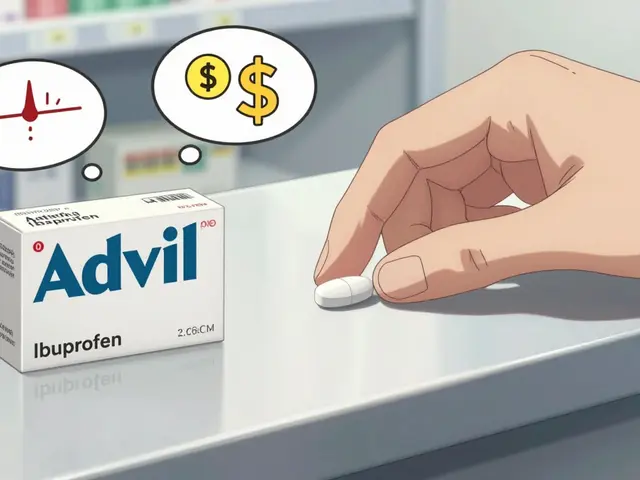
Two pills. Identical chemical makeup. Same dose. Same manufacturer, sometimes even the same factory. One is labeled Advil. The other says ibuprofen. One costs $5. The other, 85% less. But here’s the twist: in controlled studies, people taking the generic-labeled pill report more pain, are more likely to stop taking it, and even blame it for side effects-even when it’s just a sugar pill. A 2019 study in the European Journal of Public Health gave 72 people identical placebo tablets. Half were told they were getting a brand-name drug. The other half were told they were getting a generic. After seven days, 54% of the generic-labeled group quit the study. Only 33% of the brand-name group did. Those who thought they were on generics also reported higher pain levels-on average, 1.2 points higher on a 10-point scale. They were also twice as likely to reach for over-the-counter painkillers to make up for what they thought wasn’t working. This isn’t about chemistry. It’s about belief.The placebo effect, reversed
We’ve all heard of the placebo effect: if you believe a pill will help, your brain can actually make you feel better-even if it’s just starch. But the labeling effect flips that. It’s the nocebo effect in action: when you believe something won’t work, your body responds accordingly. In a 2016 study, researchers gave 87 students either real ibuprofen or a placebo. But here’s the key: the placebo was labeled either as a brand-name or a generic. The brand-name placebo worked almost as well as the real drug. Patients reported nearly the same pain relief. But the generic-labeled placebo? It barely worked at all. People who thought they were taking a generic version of ibuprofen-when they were actually taking sugar-felt almost no relief. Even more telling: 47% of people who got the generic-labeled placebo said they experienced side effects like dizziness or nausea. Only 28% of those who got the brand-name placebo said the same. The pill was identical. The only difference? The label.Why does this happen?
It’s not irrational. It’s learned. We’ve been conditioned to think brand-name means better. Ad campaigns, doctor recommendations, even the look of the pill-round, colorful, polished-tell us these are premium. Generics? Often plain white tablets with no logo, printed in small font. They look like something you’d find in a discount bin. And it’s not just perception. There’s real-world confusion. A 2020 study found that nearly half of all generic drug labels had differences in wording compared to their brand-name counterparts-sometimes in ways that could mislead patients about risks or uses. One in eight had label discrepancies that could be life-threatening. Imagine being told your generic blood thinner has “no known interactions” when the original warns of 12 major ones. That’s not just psychology. That’s a safety gap.
Who’s most affected?
The labeling effect hits harder for people with lower health literacy. In the 2019 study, patients who struggled to understand medical terms were 67% more likely to quit their generic medication than those with higher literacy. That’s not a coincidence. If you don’t fully trust the science behind bioequivalence, the label becomes your only guide. Older adults, people managing chronic conditions like high blood pressure or diabetes, and those on tight budgets are especially vulnerable. They’re more likely to be switched to generics-and more likely to believe the switch means their treatment is now inferior. One study found that patients on generic statins were 20% more likely to stop taking them within six months than those on brand-name versions-even though both worked the same.What’s being done?
The FDA knows this is a problem. In 2020, they launched “It’s the Same Medicine,” a public campaign showing side-by-side photos of brand-name and generic pills with the message: “Same active ingredient. Same safety. Same effectiveness.” In pilot programs, the campaign cut patient concerns by 28%. In 2023, researchers tested a simple fix: adding the phrase “therapeutically equivalent to [brand name]” to generic labels. The result? Discontinuation rates dropped from 52% to 37%. That’s a 29% improvement-just from a few extra words. Some pharmacies now print a small sticker on generic bottles: “This is the same medicine as [brand name].” Pharmacists are being trained to say it out loud: “This is just as effective as the name-brand, but it costs less.” The Generic Pharmaceutical Association launched “Generic You Can Count On” in early 2024, investing $50 million in patient education. Hospitals are updating their internal systems to show both brand and generic names on prescription screens. And the FDA is drafting new labeling rules that could require generic manufacturers to mirror the tone and clarity of brand-name labels.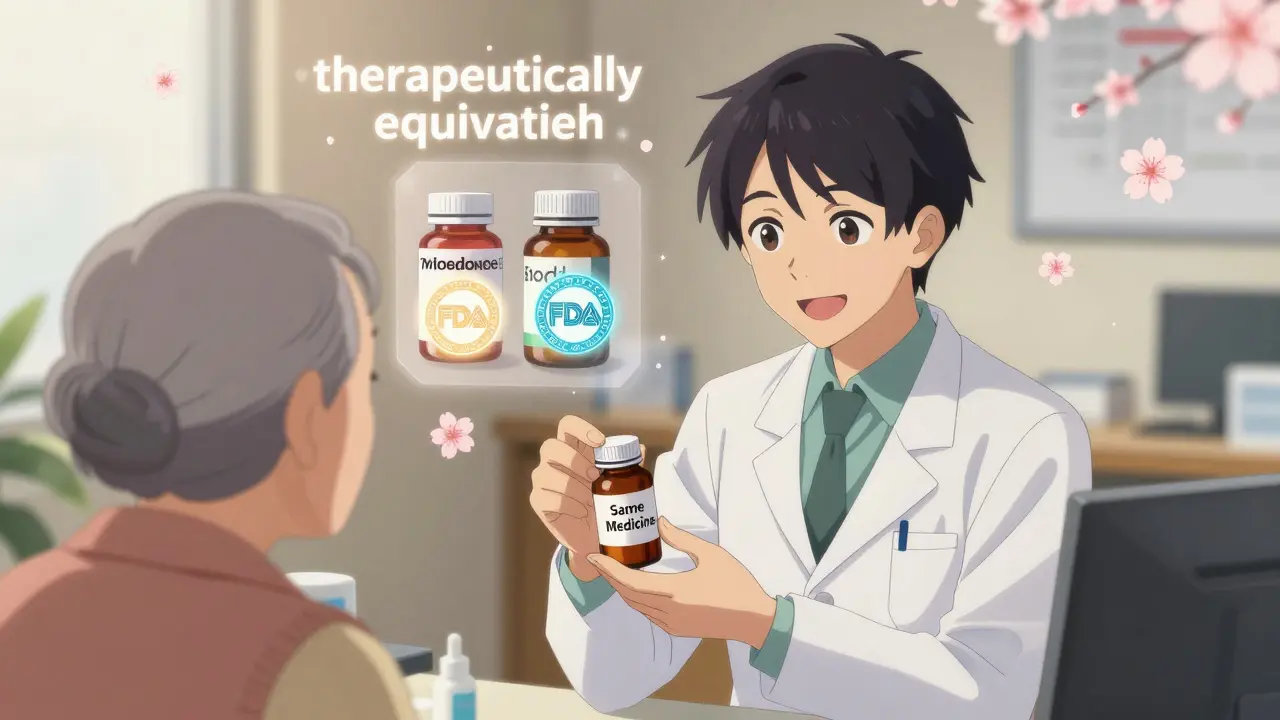
What does this mean for you?
If you’ve ever felt like your generic medication “just doesn’t work as well,” ask yourself: Is it the pill-or the label? You’re not imagining things. Your brain is responding to the message it’s been given. But the science is clear: generics are not inferior. They meet the same strict standards. They’re tested for absorption, strength, and purity. They’re just cheaper. Talk to your pharmacist. Ask them to explain the difference between the two labels. If you’re switching from a brand to a generic, don’t assume your symptoms are worse-ask if it’s possible your expectations changed. And if you’re a provider or caregiver: don’t just hand over the prescription. Say it out loud. “This is the same medicine. It’s FDA-approved. It works the same way.” Words matter. Labels matter. Perception is part of the treatment.The bigger picture
Generics make up over 90% of all prescriptions filled in the U.S. But they account for less than 23% of drug spending. That’s $373 billion saved every year. That’s millions of people who can afford their medicine because generics exist. But if people stop taking them because they think they’re weaker, those savings vanish. Patients end up in the ER. They switch back to expensive brands. Costs rise. Health worsens. The labeling effect isn’t just a psychological quirk. It’s a public health issue. And fixing it isn’t about changing pills. It’s about changing how we talk about them.Are generic drugs really the same as brand-name drugs?
Yes. By law, generic drugs must contain the same active ingredient, strength, dosage form, and route of administration as the brand-name version. They must also meet the same strict standards for purity, stability, and bioequivalence set by the FDA. The only differences are in inactive ingredients (like fillers or dyes) and packaging. Studies show they work the same way in the body.
Why do some people feel generics don’t work as well?
It’s often the labeling effect. When people see a plain, low-cost generic label, their brain expects less. This triggers the nocebo effect-where negative expectations reduce perceived effectiveness. Studies show people report more pain, more side effects, and are more likely to stop taking generic-labeled pills-even when they’re identical to brand-name versions.
Can a generic drug’s label be misleading?
Sometimes. A 2020 study found that nearly half of generic drug labels had differences in wording compared to their brand-name counterparts. Some of these differences could affect how patients understand risks or uses. For example, a generic might omit a warning about a drug interaction that the original label includes. Regulatory agencies are working to fix this, but it’s still a gap in practice.
Does the labeling effect apply to all medications?
It’s strongest for conditions where perception plays a big role-like pain, anxiety, depression, and migraines. These rely partly on the brain’s ability to modulate symptoms. For drugs like antibiotics or insulin, where the effect is purely biological, the labeling effect is weaker. But even then, poor adherence due to mistrust can lead to treatment failure.
What can I do if I think my generic isn’t working?
Don’t stop taking it. Talk to your pharmacist or doctor. Ask if your symptoms could be tied to your expectations. Request a comparison of your brand-name and generic labels. In many cases, switching back temporarily can help confirm whether it’s the medicine or the mindset. Many patients find their symptoms improve once they understand the science behind generics.
Are there any new changes to generic labeling?
Yes. In 2023, the FDA proposed new guidance to standardize generic labeling and reduce perception gaps. Some manufacturers are now adding phrases like “therapeutically equivalent to [brand name]” on labels. A 2023 trial showed this reduced discontinuation rates by nearly a third. The Generic Pharmaceutical Association is also funding education campaigns to rebuild trust.

Kathy Scaman
January 27, 2026 AT 00:26So you're telling me my brain is just that gullible? 😅 I switched to generics last year to save cash and honestly didn't think twice-until now. Guess I'm the 54% who quit without realizing it was all in my head.
Rhiannon Bosse
January 28, 2026 AT 05:28Ohhh so THIS is why Big Pharma doesn't want you to know about this. 😏 They make billions off your placebo belief. The FDA’s ‘It’s the Same Medicine’ campaign? Cute. But they’re still letting generics look like discount toilet paper. This is corporate gaslighting, folks.
Howard Esakov
January 29, 2026 AT 12:10Of course the label matters. You wouldn’t serve caviar on a paper plate and expect people to savor it. Generics are the paper plate version-same fish, same salt, but the *experience* is degraded. Don’t pretend psychology isn’t part of medicine.
Mindee Coulter
January 29, 2026 AT 19:00I’ve been a pharmacist for 12 years and I say this to every patient: ‘This is the same pill, just cheaper.’ It changes everything. No jargon, no fluff. Just truth.
Lance Long
January 30, 2026 AT 14:19Hey, I get it. I used to think generics were sketchy too. Then I started taking my generic blood pressure med and actually felt better-because I stopped stressing about whether it was ‘real.’ Your mind is your most powerful medicine. Trust the science, not the packaging.
Irebami Soyinka
January 31, 2026 AT 10:52USA still thinks money = quality. In Nigeria, we take whatever works-even if it’s wrapped in a grocery bag. You people overthink everything. The pill don’t care what you call it. 🤷♀️
Anna Lou Chen
February 2, 2026 AT 05:58The labeling effect is merely a symptom of late-stage capitalist semiotics-where the signifier (brand name) has been ontologically severed from the signified (therapeutic efficacy). We’ve internalized neoliberal pharmacopeia as a fetish object. The generic, as a deconstructed sign, triggers a Lacanian anxiety of the Real’s intrusion into the Symbolic order of ‘premium’ healthcare. Hence, the nocebo cascade.
Jess Bevis
February 3, 2026 AT 21:12My grandma took generics for 20 years. Never had an issue. She just trusted her pharmacist.
Chris Urdilas
February 5, 2026 AT 10:15Wait… so if I tell myself my generic is *better* than the brand, will it work better? 😏 I’m trying this tomorrow. ‘This is the elite version. The brand is just a knockoff.’
Phil Davis
February 6, 2026 AT 01:19So the real problem isn’t the pill. It’s the label. And the label is a lie we’ve been sold. Brilliant. Now tell me who benefits from keeping us confused… and why the FDA won’t just mandate identical labeling.
doug b
February 6, 2026 AT 04:46Just tell people: ‘Same stuff. Half the price. No magic.’ That’s it. No fluff. No fancy campaigns. Just straight talk. People get it.
Bryan Fracchia
February 6, 2026 AT 09:03I used to be skeptical too. Then I read the FDA’s bioequivalence guidelines. The margins for absorption are tighter than what most brand-name drugs actually achieve. Generics are often more consistent. The label’s the problem-not the medicine.
Rose Palmer
February 8, 2026 AT 04:04It is imperative that healthcare professionals actively mitigate the nocebo effect through deliberate, evidence-based communication. Standardized labeling protocols, coupled with pharmacist-led counseling, have demonstrated statistically significant improvements in medication adherence and patient-reported outcomes. Further regulatory harmonization is warranted.
Jeffrey Carroll
February 9, 2026 AT 10:07I’ve been on generics for years. No issues. But I get it-if you’re stressed, sick, or broke, the label becomes your whole story. Maybe the fix isn’t just changing words… but changing how we talk to people who are already scared.