
Hypoglycemia Risk Assessment Tool
Medication Selection
Risk Assessment
Critical Safety Recommendation
Important:
Personalized Action Plan
Immediate Actions
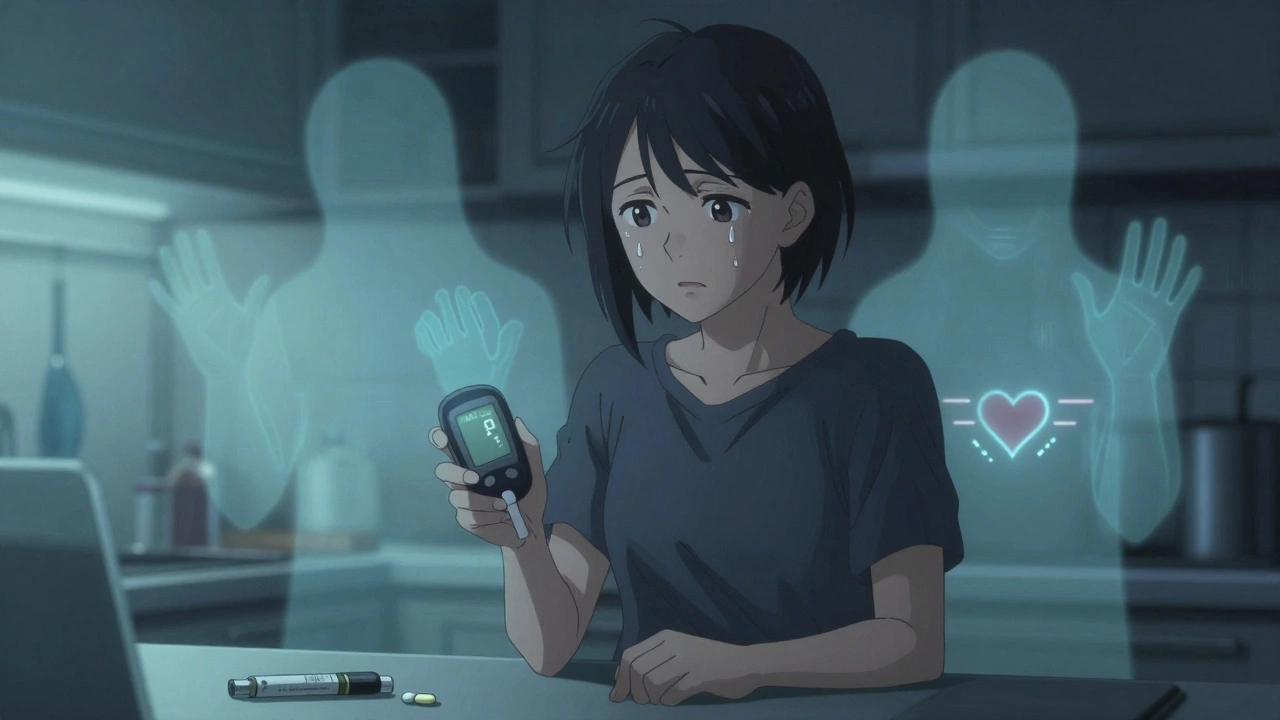
When you’re managing diabetes with insulin, your body already walks a tightrope between too much and too little sugar. Now add a beta-blocker - a common heart medication - and that tightrope gets even narrower. Many people don’t realize that these two drugs, often prescribed together, can quietly hide the warning signs of low blood sugar. This isn’t just a minor inconvenience. It’s a life-threatening risk.
What Happens When Insulin Meets Beta-Blockers?
Insulin lowers blood glucose. Beta-blockers, used for high blood pressure, heart disease, or arrhythmias, block adrenaline. That sounds helpful - until you realize adrenaline is one of your body’s main alarms for low blood sugar. When insulin drops your glucose too far, your body normally sends out warning signals: shaking, racing heart, sweating, anxiety. These are your body’s way of saying, “Eat something now.”
Beta-blockers, especially non-selective ones like propranolol, silence those alarms. Your heart doesn’t race. Your hands stop trembling. You feel fine - until suddenly, you don’t. That’s hypoglycemia unawareness. You’re not just unaware of the danger. Your brain is already starving for glucose, and you have no warning.
Research shows that about 40% of people with type 1 diabetes develop this condition over time. And if you’re on insulin plus a beta-blocker? Your risk goes up. A 2019 study found that people taking selective beta-blockers like atenolol or metoprolol had more than twice the odds of severe hypoglycemia compared to those not taking them. Even worse, these events often happen within the first 24 hours of starting the beta-blocker - or after a dose change.
Not All Beta-Blockers Are the Same
Here’s the key detail most patients and even some doctors miss: not all beta-blockers act the same way. There’s a big difference between cardioselective (like metoprolol, atenolol) and non-selective (like propranolol) types. Non-selective ones block both beta-1 and beta-2 receptors - meaning they interfere with more of your body’s natural defenses against low blood sugar.
But even cardioselective beta-blockers aren’t safe. They still suppress heart rate and tremors - two major warning signs. The real game-changer is carvedilol. Unlike other beta-blockers, carvedilol also blocks alpha receptors and has antioxidant properties. Studies show it causes less disruption to hypoglycemia awareness. In fact, one analysis found patients on carvedilol had a 17% lower risk of severe hypoglycemia compared to those on metoprolol.
Why does this matter? Because if you’re on insulin and need a beta-blocker, carvedilol should be the first choice - not the last resort. The 2022 American College of Cardiology guidelines now recommend it specifically for diabetic patients at high risk of low blood sugar.
One Warning Sign Still Works - And You Must Know It
Even though beta-blockers shut down adrenaline-driven symptoms, they don’t touch one critical signal: sweating.
That’s because sweating is controlled by a different system - acetylcholine acting on sweat glands, not adrenaline. So if your hands are clammy, your shirt is damp, or you suddenly feel cold and clammy without explanation, that’s your body screaming at you: “Low sugar!”
Yet most people don’t recognize this as a hypoglycemia sign. They think it’s just anxiety, hot weather, or stress. In one survey of diabetic patients on beta-blockers, over 60% couldn’t name sweating as a warning sign. That’s dangerous. If you’re on insulin and a beta-blocker, you must treat any unexplained sweating as a medical alert. Check your blood sugar immediately - don’t wait for your heart to race.
The Hidden Metabolic Trap
It’s not just about masking symptoms. Beta-blockers can actually make low blood sugar worse - and harder to fix.
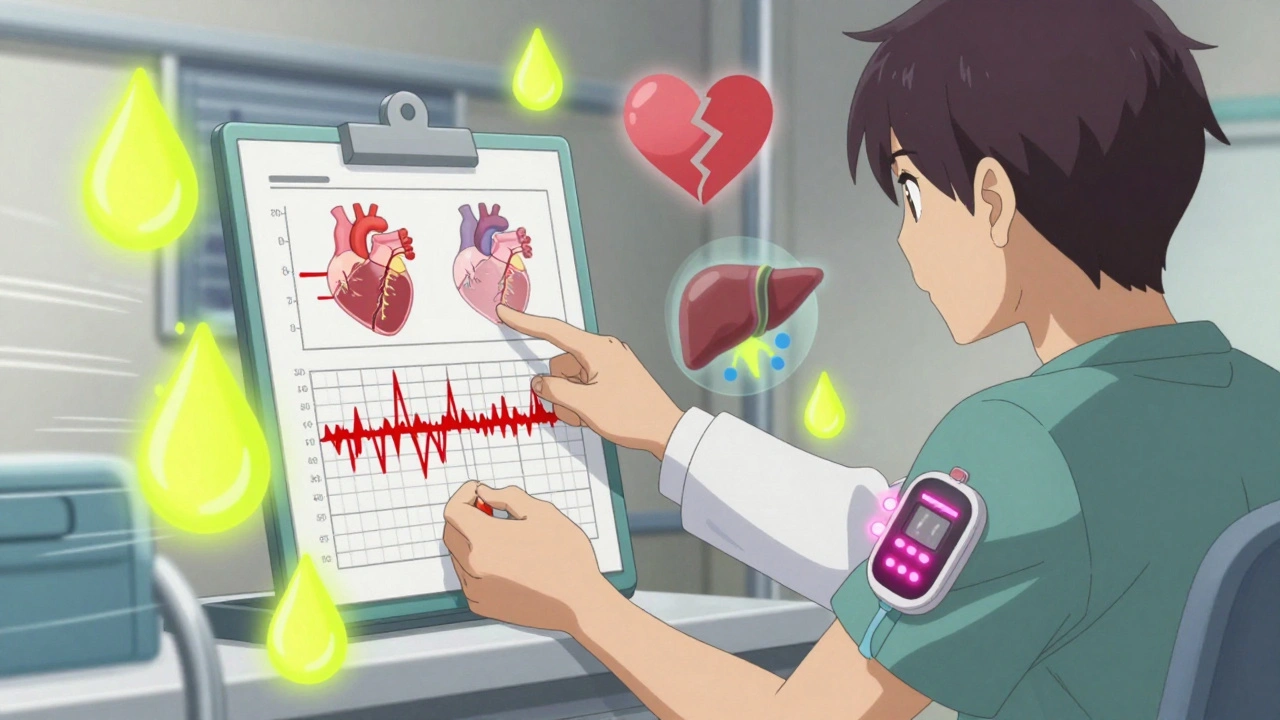
Here’s how: your liver normally releases stored glucose when your blood sugar drops. That’s called glycogenolysis. Beta-blockers, especially those blocking beta-2 receptors, directly inhibit this process. So even if you eat something, your body can’t pull glucose out of storage fast enough to recover.
Plus, beta-blockers can slightly reduce insulin clearance, meaning insulin stays active longer. This combination - suppressed warning signs + impaired glucose recovery + prolonged insulin action - creates a perfect storm. A mild drop in blood sugar can spiral into a seizure or coma before you even realize what’s happening.
Studies confirm this. Hospitalized patients on selective beta-blockers had 3.2 times higher odds of dying from a hypoglycemic event compared to those not on them. Carvedilol, again, stood out - it didn’t carry that same risk.
What Should You Do?
If you’re taking insulin and your doctor prescribes a beta-blocker, here’s what you need to do right now:
- Ask which beta-blocker - and why. Push for carvedilol if you’re at risk for hypoglycemia.
- Check your blood sugar more often - at least every 4 hours, especially in the first few days after starting or changing the dose. Don’t wait for symptoms.
- Know your one real warning sign: sweating. If you break out in a cold sweat for no reason, test your glucose - even if you feel fine.
- Carry fast-acting sugar - glucose tabs, juice, or candy - everywhere. Don’t rely on your body to warn you.
- Consider continuous glucose monitoring (CGM). If you’re on insulin and a beta-blocker, CGM isn’t optional - it’s essential. Since 2018, CGM use has grown 300% in this group, and it’s cut severe hypoglycemia events by 42%.
- Teach family or caregivers what to look for. If you pass out, they need to know it’s likely low blood sugar - not a seizure or stroke - and to give you glucagon or sugar immediately.
What About Long-Term Risk?
You might wonder: “Is this only a hospital problem?” Not at all. While some large studies, like the ADVANCE trial, didn’t find a big difference in hypoglycemia rates over five years, those studies included mostly stable outpatients. Real-world data tells a different story. In the first week after starting a beta-blocker, the risk spikes. And for people with long-standing diabetes or existing hypoglycemia unawareness, the danger never goes away.
Also, remember: beta-blockers save lives. For someone who’s had a heart attack, they reduce death risk by 25%. The goal isn’t to stop them - it’s to use them safely. That’s why guidelines now say: “Continue beta-blockers, but monitor like you’re managing a bomb.”
The Future: Personalized Safety
Researchers are now looking at genetics to predict who’s most at risk. The 2023 DIAMOND trial is testing whether certain gene variants make some people far more likely to lose hypoglycemia awareness when on beta-blockers. If successful, this could mean blood tests before prescribing - not guesses.
Until then, the rules are simple: if you’re on insulin, treat beta-blockers like a hidden danger. Don’t assume your body will warn you. Don’t rely on old habits. Your life depends on knowing the new rules.
Can beta-blockers cause low blood sugar?
Beta-blockers don’t directly cause low blood sugar, but they make it much more likely and dangerous when you’re on insulin. They block your body’s natural ability to raise blood sugar during a low and hide the warning signs. This means a mild drop can turn into a severe, life-threatening event without you realizing it.
Which beta-blocker is safest for diabetics on insulin?
Carvedilol is currently the safest option. Unlike metoprolol or atenolol, it doesn’t suppress glucose recovery as much and has been shown to reduce severe hypoglycemia events by 17% compared to other beta-blockers. It’s now the preferred choice in diabetic patients with heart disease who need a beta-blocker.
What should I do if I start sweating for no reason?
Check your blood sugar immediately. Sweating is the only reliable warning sign left when you’re on beta-blockers. Don’t wait for shaking or a racing heart - those may be gone. Cold, sudden sweating means your glucose is likely dropping. Eat 15 grams of fast-acting sugar and retest in 15 minutes.
Do I need to stop my beta-blocker if I have hypoglycemia unawareness?
No - but you must change how you manage it. Stopping a beta-blocker can be dangerous if you have heart disease. Instead, switch to carvedilol, start using a continuous glucose monitor, check your blood sugar every 4 hours, and educate yourself on sweating as your only warning sign. These steps reduce risk by 35% in real-world settings.
Can continuous glucose monitoring help?
Yes - dramatically. CGM alerts you to drops before you feel anything, even if you’re unaware of symptoms. Since 2018, CGM use in this group has grown 300%, and it’s cut severe hypoglycemia events by 42%. For anyone on insulin and a beta-blocker, CGM isn’t a luxury - it’s a necessity.



Emma Sbarge
December 13, 2025 AT 11:46So let me get this straight - we’re telling people on insulin to just assume every random sweat is a death sentence? No wonder people are terrified to leave the house. This isn’t medical advice, it’s a horror script.
Richard Ayres
December 14, 2025 AT 22:39This is one of the clearest, most clinically grounded explanations I’ve seen on this topic. The distinction between carvedilol and other beta-blockers is critical, and too many prescribers still default to metoprolol out of habit. The data on glycogenolysis suppression is especially under-discussed. Thank you for highlighting the 2022 ACC guidelines - this should be standard curriculum for endocrinology and cardiology trainees.
Sheldon Bird
December 16, 2025 AT 04:12Big thanks for breaking this down. I’ve been on insulin for 18 years and started metoprolol last year - I thought the random sweating was just stress. Now I check my CGM every time I feel even a little damp. It’s saved me from two near-misses already. You’re right - it’s not optional. CGM is your new best friend. ❤️
Jennifer Taylor
December 17, 2025 AT 20:08Wait… so are you saying the pharmaceutical industry is secretly pushing dangerous beta-blockers on diabetics to keep us dependent on CGMs and glucagon pens? I mean, look at the timeline - right after CGM prices skyrocketed, they started pushing carvedilol as the ‘safe’ option. Coincidence? Or is this a $300 billion money grab disguised as medical guidance? 🤔
Jade Hovet
December 18, 2025 AT 05:04OMG I JUST REALIZED I’VE BEEN IGNORING MY SWEATING FOR YEARS 😭 I thought it was just hot flashes or anxiety. I’m getting a CGM tomorrow. Also, carvedilol? My doc just prescribed metoprolol last week… I’m calling them right now. Thank you thank you thank you!! 💪❤️🩹
nithin Kuntumadugu
December 19, 2025 AT 07:53lol u think this is bad? try living in india where they give beta blockers like candy and insulin is rationed. no one here even knows what cgms are. my cousin died from ‘sudden heart attack’ - turned out he was just hypoglycemic for 3 hours and no one checked his sugar. they just gave him more beta blocker. capitalism kills.
Lauren Scrima
December 20, 2025 AT 03:57So… you’re telling me the only symptom left is sweating? And we’re supposed to trust that? Because last time I sweated ‘for no reason,’ I was just having a panic attack. Also, why is carvedilol suddenly the ‘hero’? Did it get a Netflix documentary? 🤨
Constantine Vigderman
December 21, 2025 AT 09:24Guys. I was skeptical too. But after my last low-sugar episode where I blacked out for 12 minutes (no warning, just… darkness), I did everything this post said. CGM? Changed my life. Carvedilol? Switched last month. Now I sleep like a baby. You’re not weak for needing tech or a new med - you’re smart. Keep going. You got this. 💪🔥
Casey Mellish
December 23, 2025 AT 01:16Excellent summary. The physiological distinction between beta-1 and beta-2 receptor blockade is often glossed over in clinical practice. Carvedilol’s alpha-blocking properties and antioxidant effects are underappreciated in this context. The 17% risk reduction in severe hypoglycemia is statistically and clinically significant. This should be mandatory reading for all primary care physicians managing diabetic patients with cardiovascular comorbidities.
Tyrone Marshall
December 24, 2025 AT 06:39It’s fascinating how medicine keeps turning survival mechanisms into liabilities. Adrenaline was never meant to be a diagnostic tool - it was meant to save you. Now we’re told to treat a natural stress response like a broken alarm clock. We’ve outsourced awareness to machines because we’ve forgotten how to listen to our bodies. Maybe the real problem isn’t the drugs - it’s that we’ve stopped trusting biology.
Yatendra S
December 25, 2025 AT 17:26the body is a temple but the system is a glitch. beta blockers are the silent killers disguised as saviors. we are all just data points in a machine that profits from our ignorance. carvedilol? maybe. or maybe it’s just the next placebo with a fancy name. the truth is hidden in the margins of the clinical trial footnotes.
Keasha Trawick
December 27, 2025 AT 11:54Let’s not sugarcoat this - we’re talking about a pharmacological ambush. Beta-blockers don’t just mask symptoms; they hijack autonomic feedback loops, inducing a state of metabolic amnesia. The liver’s glycogenolytic suppression via beta-2 antagonism is a direct assault on endogenous gluconeogenic resilience. And let’s not forget the prolonged insulin half-life - a perfect storm of iatrogenic vulnerability. Carvedilol’s multimodal receptor profile is the only known countermeasure. This isn’t just pharmacology. It’s neuroendocrine warfare.