

Taking five or more medications a day? You’re not alone. Nearly 40% of adults over 65 do. But with each added pill comes a higher chance of something going wrong - a dangerous interaction, a missed dose, or side effects that feel like a new illness. The good news? You can build a medication schedule that cuts those risks dramatically. It’s not about memorizing complex rules. It’s about using a simple, proven system that works with your life, not against it.
Start with a Complete Medication List
Before you even think about timing, you need to know exactly what you’re taking. This includes prescriptions, over-the-counter painkillers, vitamins, herbal supplements, and even eye drops or topical creams. Many people forget the little stuff - like ibuprofen for arthritis or fish oil for heart health - but these can cause serious interactions. A 2019 study found that patients bringing all their meds to appointments had an average of 3.2 discrepancies per person. That’s more than three things doctors didn’t know about.Write it all down. Include the name, dose, how often you take it, and why. Don’t rely on memory. Keep this list in your wallet, on your phone, and posted near your medicine cabinet. Update it every time you see a new provider - even if they didn’t prescribe anything. Many patients get conflicting instructions because specialists don’t talk to each other. One doctor might prescribe a blood thinner while another adds an NSAID, unknowingly doubling your bleeding risk. A 2023 update to the American Geriatrics Society’s Beers Criteria lists 30 high-risk combinations to avoid, especially in older adults. You need to know what’s in your mix before you can fix it.
Use the Universal Medication Schedule (UMS)
Forget vague instructions like “take twice daily” or “with meals.” Those phrases cause confusion. A 2016 study showed 34% of patients with low health literacy misinterpreted them. The Universal Medication Schedule (UMS) fixes this by using clear time blocks: morning (6-10 a.m.), noon (10 a.m.-2 p.m.), evening (2-6 p.m.), and bedtime (8 p.m.-12 a.m.).Why does this work? Because it matches how people actually live. You don’t wake up at 7:03 a.m. to take a pill - you take it when you brush your teeth. You don’t count hours between doses - you take it after lunch. Research from Northwestern University found that using UMS cut misinterpretation rates from 34% to just 6%. Adherence jumped by over 12 percentage points. That’s not a small gain. That’s life-changing.
Group your pills into these four windows. If a drug needs to be taken every 8 hours, you can still fit it into UMS by placing it at morning, evening, and bedtime. For example: 7 a.m., 3 p.m., and 11 p.m. That’s within the UMS windows and keeps spacing close enough to be effective. Don’t force exact timing unless it’s critical - like antibiotics or blood thinners. For most meds, consistency matters more than precision.
Know Your Critical Interactions
Not all drugs play nice together. Some need space. Some need food. Some need to be kept far apart.Thyroid meds like levothyroxine must be taken on an empty stomach - at least 30 to 60 minutes before breakfast. Calcium, iron, and antacids can block absorption if taken too close. So if you take both, schedule calcium for bedtime, and thyroid first thing in the morning. Same with statins - they work best when taken at night because your liver makes cholesterol mostly while you sleep. Taking them with dinner helps, but don’t mix them with grapefruit juice. That one interaction can spike your risk of muscle damage.
Anticoagulants like warfarin react badly with NSAIDs (ibuprofen, naproxen) and even some herbal supplements like ginkgo or garlic. These can increase bleeding risk by 60-70%. If you’re on blood thinners, stick to acetaminophen for pain. Ask your pharmacist to run a screening using Lexicomp or another tool. It takes 10-15 minutes and can catch hidden dangers you’d never think to ask about.
Don’t ignore food. Some meds need to be taken with food to reduce stomach upset. Others need to be taken on an empty stomach to absorb properly. Write these notes right on your schedule. Example: “Metformin - with breakfast and dinner” or “Cipro - 2 hours before or after dairy.”

Use a Pill Organizer - But Choose the Right One
A pill organizer isn’t just a convenience. It’s a safety tool. A 2018 meta-analysis found that using one reduced dosing errors by 45%. But not all organizers work the same.For most people, a 7-day box with AM/PM compartments is enough. If you’re on more than four meds a day, go for one with four slots per day (morning, noon, evening, bedtime). Label each compartment with a permanent marker or use color-coded stickers. Red = morning, blue = noon, green = evening, purple = bedtime. Visual cues stick better than words.
Some people swear by digital organizers like Hero Health - a smart dispenser that locks and unlocks doses at the right time and sends alerts. In a 2022 pilot, it achieved 92% adherence among patients taking 10+ meds daily. But if you’re not tech-savvy, a simple plastic box with big labels works just as well. The key is consistency. Use the same organizer every day. Keep it visible - on the kitchen counter, next to your coffee maker. Out of sight means out of mind.
Sync Your Refills and Simplify
Juggling 10 different refill dates is a recipe for missed doses. That’s why “90 x 4” prescribing is gaining traction. Instead of getting a 30-day supply of each drug on different days, ask your doctor to prescribe 90-day supplies filled four times a year. That means you refill everything on the same day - maybe the first Monday of every month.The American Medical Association says this saves doctors up to two hours a day in admin time. For you? It means one trip to the pharmacy instead of ten. No more scrambling when you run out of blood pressure pills because your refill wasn’t ready. It also makes it easier for pharmacists to catch interactions - they see your full list at once, not piecemeal.
Not every drug can be prescribed this way. Controlled substances, antibiotics, or meds that need frequent dose changes may still require monthly refills. But for chronic conditions like high blood pressure, diabetes, or cholesterol? Ask. Most pharmacies and insurers support it now. You’d be surprised how often they say yes.
Track Your Doses - But Keep It Simple
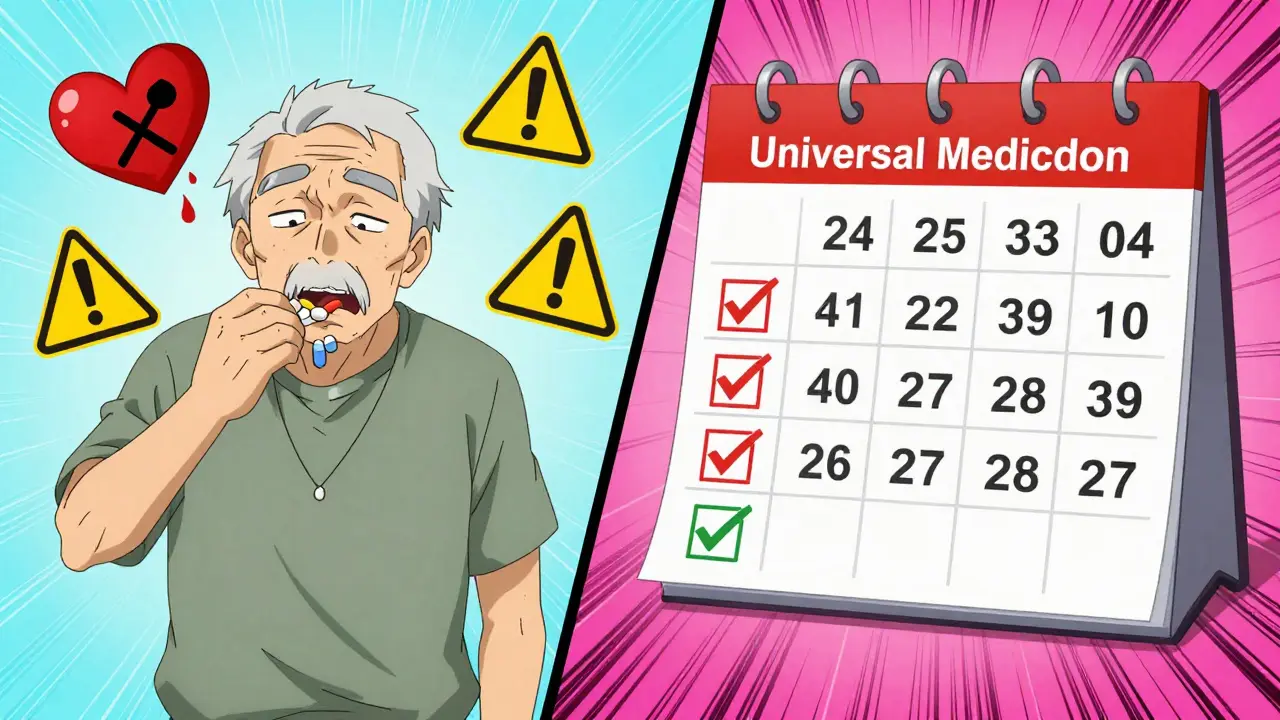
A paper calendar isn’t high-tech, but it’s effective. A 2020 study showed that patients who marked off each dose improved adherence from 50% to 75%. That’s huge. You don’t need an app. Just get a big monthly calendar - the kind you hang on the wall. Next to it, tape your medication list. Each time you take a pill, put a big checkmark or X in the box.Some people use apps like Medisafe or MyTherapy. They send reminders and track refills. A 2021 study found they boosted adherence by 20-35% compared to paper. But only 38% of users over 65 use them consistently. If you’re not comfortable with phones, don’t force it. A paper calendar with a pen next to it works better than an app you never open.
Pro tip: Add a column for symptoms. If you feel dizzy after taking your evening pill, write it down. Patterns emerge. Maybe it’s not the pill - maybe it’s the grapefruit juice you started drinking. Or maybe you’re taking it too close to your blood thinner. Tracking turns guesswork into evidence.
Ask for Help - Especially from Pharmacists
You don’t have to figure this out alone. Pharmacists are trained to spot interactions. They see your full history. They know which drugs clash and why. Yet most people never ask.Request a “brown bag review.” Bring all your meds - bottles, supplements, even the ones you don’t take anymore - to your next pharmacy visit. Pharmacists will sort through them, spot duplicates, check for dangerous combos, and suggest simplifications. In one study, pharmacists found an average of 3.2 errors per patient during these reviews. That’s more than three potential emergencies prevented.
Ask if your pharmacy offers Medication Therapy Management (MTM). It’s a free service for Medicare patients. A pharmacist sits down with you for 30 minutes, reviews your entire regimen, and creates a personalized schedule. One study showed MTM reduced emergency visits by 24% and drug interactions by 32%. That’s not just savings - that’s safety.
What to Do When Things Go Wrong
Even the best schedule can break. You miss a dose. You take two by accident. You feel weird. Don’t panic. But don’t guess either.If you miss a dose, check the label. Some meds say “take as soon as you remember.” Others say “skip it and wait for the next dose.” Never double up unless instructed. For example, if you miss your blood pressure pill in the morning, don’t take two at night. That can drop your pressure too low.
If you feel new symptoms - dizziness, nausea, unusual bruising, confusion - write them down. Note the time, what you took, and what you ate. Call your pharmacist or doctor. Don’t wait. A 2022 survey found that 67% of patients with complex regimens had conflicting instructions from different doctors. You’re not imagining it - it’s messy. But you can fix it. Bring your updated schedule to your next appointment. Say: “I’ve been following this plan. I’m feeling X. Can we check if this makes sense?”
Final Tip: Make It Routine
The best schedule in the world won’t help if it’s not part of your daily life. Link your meds to habits you already have. Brush your teeth? That’s your morning pill time. Eat breakfast? That’s when you take your statin. Watch the news at 6 p.m.? That’s your evening dose. Tie it to something automatic.It takes about two to four weeks to build a routine. Be patient. You’ll mess up sometimes. That’s normal. What matters is that you have a system to get back on track. Keep your schedule visible. Keep your pills organized. Keep talking to your pharmacist. And remember - this isn’t about being perfect. It’s about staying safe, one dose at a time.
Can I take all my pills at once to make it easier?
No - not without checking with your pharmacist or doctor. Some medications need to be spaced apart to work properly or avoid dangerous interactions. For example, taking calcium and thyroid medicine together can block absorption. Taking blood thinners with NSAIDs can increase bleeding risk. Even if it seems easier, combining pills without guidance can be risky. Use the Universal Medication Schedule to group them safely by time of day instead.
What if my doctors give me different instructions?
This is common - especially if you see multiple specialists. Each doctor may focus on their own condition without seeing your full list. Always bring your updated medication schedule to every appointment. Ask: “Are these instructions compatible?” If there’s conflict, ask your primary care provider or pharmacist to help reconcile them. They’re trained to spot inconsistencies and can communicate with your other doctors to align your plan.
Do I need a smartphone app to manage my meds?
No. While apps like Medisafe or MyTherapy can help and boost adherence by 20-35%, they’re not necessary. Many people, especially older adults, do better with simple tools: a pill organizer, a printed schedule taped to the fridge, and a calendar to check off doses. The key is consistency, not technology. If an app feels overwhelming, stick with paper. What works for you is what matters.
How do I know if a medication interaction is happening?
Watch for new or worsening symptoms after starting or changing a med. Common signs include dizziness, confusion, nausea, unusual bruising or bleeding, muscle pain, or sudden fatigue. These aren’t always obvious - they might feel like aging or stress. Keep a symptom log next to your schedule. If something new pops up, note the time, what you took, and what you ate. Bring it to your pharmacist. They can check for known interactions using clinical tools like Lexicomp.
Can I save money by using a pill organizer?
Yes - indirectly. Missing doses can lead to hospital visits, which cost thousands. A 2021 study found that patients who used pill organizers had fewer ER visits. Also, syncing your refills with the “90 x 4” method can reduce pharmacy trips and sometimes lower copays. Some insurers offer discounts for using adherence tools. While the organizer itself costs under $20, the real savings come from avoiding complications and unnecessary treatments.








Jenci Spradlin
January 9, 2026 AT 12:09man i used to just dump all my pills in a cup and swallow 'em like candy til my aunt nearly ended up in the er. this post saved my life. now i use the ums system and a little plastic box with red/blue/green labels. no more confusion.
Heather Wilson
January 10, 2026 AT 22:00While I appreciate the general structure of this article, it lacks sufficient statistical granularity to be clinically actionable. The referenced studies, while cited, are not properly contextualized within the broader meta-analytic literature on medication adherence in geriatric populations. Furthermore, the UMS framework, though intuitively appealing, has not been validated against randomized controlled trials with primary endpoints of hospitalization reduction. The omission of pharmacokinetic modeling is a significant oversight.
Chris Kauwe
January 12, 2026 AT 14:06Look, America’s healthcare system is broken because we’ve let bureaucrats and pharma lobbyists turn medicine into a puzzle. You don’t need a 7-day organizer-you need a system that doesn’t require you to be a pharmacist to survive. This UMS thing? It’s basic common sense. The fact that we need an article to explain taking pills at breakfast instead of midnight says everything about how far we’ve fallen.
Meghan Hammack
January 13, 2026 AT 14:20OH MY GOSH THIS IS SO HELPFUL!!! I was so overwhelmed with my 8 meds a day and now I’m using the color-coded box and checking off my calendar like a boss 🎉✨ My grandma even started doing it after I showed her-she said it feels like a game now. You’re a legend for writing this. 💪❤️
RAJAT KD
January 13, 2026 AT 16:01Excellent guide. I have been managing polypharmacy for elderly patients in Delhi for over a decade. The UMS approach works universally, regardless of literacy level. Always recommend the brown bag review-pharmacists in India are often underutilized but highly trained. A simple conversation can prevent ICU admissions.
Matthew Maxwell
January 14, 2026 AT 21:36It’s disappointing that so many people treat their medication like a casual habit rather than a medical necessity. This article barely scratches the surface of responsibility. If you can’t follow a simple schedule, perhaps you shouldn’t be taking multiple drugs. Personal accountability is not optional-it’s the foundation of health.
Ian Long
January 16, 2026 AT 19:56I get where Heather’s coming from with the stats, but I’ve seen too many older patients get lost in the noise of medical jargon. This post cuts through it. The UMS isn’t perfect science-it’s practical wisdom. Sometimes the best intervention isn’t a new study, it’s a color-coded pillbox and someone who says, ‘Hey, let’s figure this out together.’
Pooja Kumari
January 18, 2026 AT 11:32I tried everything-apps, alarms, pill organizers-and I still forgot my meds for three weeks straight. I felt so guilty. My daughter cried when she found me with half my pills still in the bottle. I thought I was just getting old. But then I did the brown bag review and found out my blood pressure med was conflicting with my fish oil. My pharmacist cried too. We fixed it. I’m not broken. I just needed someone to sit with me. Thank you for saying that.
Jacob Paterson
January 19, 2026 AT 23:36Wow. Another feel-good article that makes people feel smart for using a plastic container. Real innovation? How about a single pill that combines everything. Or a government-regulated dosing system. Or maybe stop prescribing 10 drugs to 70-year-olds in the first place. But no, let’s just tell them to use a calendar. Groundbreaking.
Angela Stanton
January 20, 2026 AT 16:49OMG this is literally life-changing 🙌 I just used the UMS + emoji tracker 🟠🟡🟢💜 and now I feel like a superhero 🦸♀️💊 My pharmacist said I’m her ‘most organized patient ever’ and gave me a free lanyard 😭✨ #MedicationWin
Johanna Baxter
January 20, 2026 AT 20:15I hate this. I’m 72 and I’ve been taking these pills since 2010. Now you want me to color code them and write down how I feel? I’m not a robot. My body knows what it needs. This whole system feels like control. Who made you the boss of my medicine?
Patty Walters
January 22, 2026 AT 07:07i used to skip my metformin if i was in a rush. then i started tying it to brushing my teeth-same time, every day. no more guessing. no more guilt. simple. the color-coded box was a game changer. i still forget sometimes, but now i have a system to catch it. thanks for reminding me i’m not alone.
Phil Kemling
January 24, 2026 AT 00:52There’s a deeper truth here that no one talks about: medication schedules are a form of temporal discipline. We are forced to submit our bodies to the logic of clocks and calendars because medicine has become a system of fragmentation-specialists, prescriptions, refills-all divorced from the lived rhythm of human existence. The UMS isn’t just practical; it’s a quiet rebellion against the alienation of modern healthcare. We don’t just take pills. We reassert our agency, one time block at a time.