

Cranberry Medication Interaction Checker
Check Your Medication
Results
Select your medications and cranberry product to see potential interactions
Please select medications and click "Check Interactions" to see your results
For decades, cranberry juice has been a go-to remedy for preventing urinary tract infections (UTIs). But if you're taking medication-especially blood thinners like warfarin-you’ve probably heard conflicting advice. Some pharmacists say avoid it entirely. Others say it’s fine. So what’s the truth? Let’s cut through the noise with real data, not fear.
Why Cranberry Juice Gets a Bad Rap
The concern started in 2003, when a single case report suggested cranberry juice might boost the effects of warfarin, a blood thinner. The idea was simple: cranberry juice might interfere with how your body breaks down drugs. Specifically, it was thought to inhibit enzymes like CYP2C9 and CYP3A4, which handle many medications. That sounds scary. But science doesn’t work on single cases. It works on repeated testing. Fast forward to 2009. Researchers at the University of Western Ontario ran a controlled study with 18 healthy women. They gave half of them amoxicillin and cefaclor-two common antibiotics-along with 8 to 12 ounces of cranberry juice cocktail. The other half took the antibiotics alone. The results? No meaningful change in how the drugs were absorbed or processed. The peak concentration and total exposure (AUC and Cmax) were virtually identical. That’s not a fluke. It’s a controlled, peer-reviewed study. So why does the myth still stick? Because one bad apple spoils the barrel. A few scattered case reports of elevated INR levels in warfarin users got amplified. But when you look at the full body of evidence, the picture changes.Warfarin: The Only Real Risk
Here’s the one area where caution is still warranted: warfarin. Warfarin has a narrow therapeutic window. Too little, and you risk clots. Too much, and you risk bleeding. Even small changes in how it’s metabolized can be dangerous. And yes-some studies have shown small fluctuations in INR when people drink large amounts of cranberry juice while on warfarin. But here’s the catch: most of those reports were anecdotal. A 2010 systematic review looked at 11 case reports and 4 controlled studies. Eight case reports claimed an interaction. But all four controlled studies found no significant effect on INR. One of them gave 12 healthy volunteers 250 mL of cranberry juice three times a day for two weeks. No change in warfarin levels. No spike in bleeding risk. So why do pharmacists still warn against it? Because the consequences of getting it wrong are life-threatening. Even if the risk is low, the cost of a mistake is too high. That’s why guidelines from the American College of Clinical Pharmacy still say: avoid cranberry products if you’re on warfarin. It’s not because the science proves a danger-it’s because the stakes are too high to gamble.What About Other Medications?
Let’s clear this up once and for all: most medications are not affected by cranberry juice. Antibiotics? No problem. The 2009 study already showed that amoxicillin and cefaclor aren’t altered by cranberry juice. That includes common UTI drugs like nitrofurantoin and trimethoprim-sulfamethoxazole. No interaction found. Statins? No evidence. Blood pressure meds? No evidence. Antidepressants? No evidence. Even drugs metabolized by CYP3A4-like some statins or calcium channel blockers-don’t show clinically relevant changes with standard cranberry juice consumption. Why? Because the concentration of active compounds in regular cranberry juice is too low. Most commercial cranberry juice cocktails are only 27% cranberry. The rest is water, sugar, and flavoring. That’s not enough to meaningfully inhibit liver enzymes. You’d need to drink gallons a day to even come close.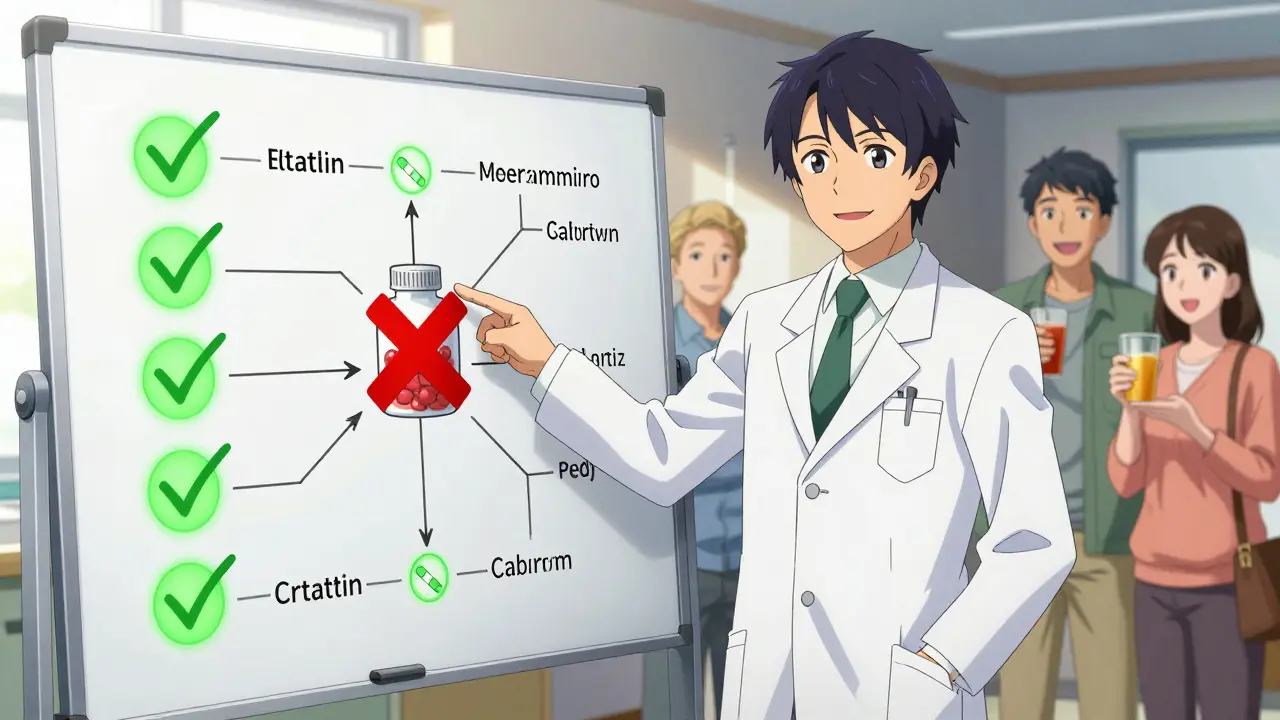
Supplements Are a Different Story
Here’s where things get tricky. Cranberry supplements-capsules, tablets, powders-are not the same as juice. Some contain concentrated extracts with up to 36mg of proanthocyanidins per serving. That’s the compound believed to have the strongest effect on drug metabolism. No human studies have definitively proven these supplements cause interactions. But they’re not tested the same way juice is. And the industry is growing fast. The global cranberry supplement market hit $1.2 billion in 2022, with concentrated extracts making up 45% of annual growth. The European Medicines Agency requires interaction warnings on labels. The U.S. FDA does not. That means you’re on your own to read the fine print. If your supplement says “standardized to 36mg proanthocyanidins,” treat it like a drug-not a health drink.What Should You Actually Do?
If you’re on warfarin: Avoid cranberry juice and supplements entirely. If you’ve been drinking it regularly for years and your INR is stable, talk to your doctor before making any changes. Consistency matters more than elimination. But don’t start it if you haven’t already. If you’re on antibiotics, statins, blood pressure meds, or antidepressants: You’re fine. One 8oz glass of cranberry juice a day won’t hurt. The same goes for occasional supplements. The science says no interaction. If you’re confused: Ask your pharmacist. Not your doctor. Not your friend on Reddit. Pharmacists are trained to spot these interactions. They see hundreds of patients every week. They know the difference between a theoretical risk and a real one.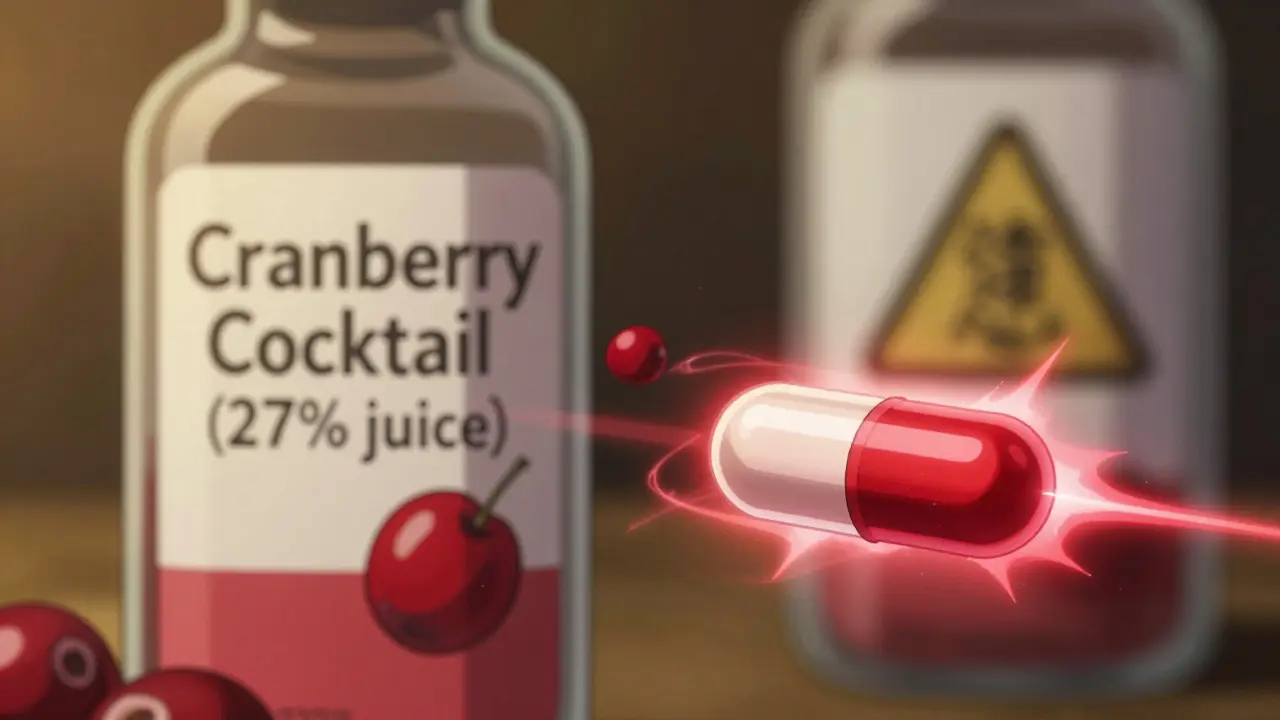
Why the Confusion Persists
Let’s be honest: the confusion isn’t just about science. It’s about fear. Grapefruit juice? We all know it’s dangerous with statins. That’s been proven for decades. Cranberry juice? It’s the new grapefruit. But it’s not the same. Grapefruit juice has 17 documented serious interactions. Cranberry juice has one-warfarin-and even that’s debated. Meanwhile, 22% of American women aged 30-60 use cranberry products to prevent UTIs. And 63% of them are on at least one prescription drug. That’s millions of people who could be unnecessarily avoiding a safe, effective tool because of misinformation. The American Urological Association updated its guidelines in 2021 to say: “Cranberry products may be used for UTI prevention in patients not taking warfarin, with no dosage restrictions for other medications.” That’s a huge shift from their 2010 stance, which advised blanket avoidance.The Bottom Line
Cranberry juice isn’t a drug. It’s a fruit drink. And for most people, it’s perfectly safe. The only clear risk is with warfarin. Even then, it’s not a guaranteed interaction-it’s a theoretical one with low probability. But because the consequences are so severe, avoidance is still the standard recommendation. For everything else: drink your juice. Take your meds. Don’t let fear stop you from using something that helps. The science is clear. The myths? They’re just noise.Can cranberry juice interfere with blood thinners like warfarin?
Yes, there’s a possible interaction with warfarin, but it’s not guaranteed. Some case reports show elevated INR levels after consuming cranberry juice, but controlled studies have found no consistent effect. Because warfarin has a narrow safety window, most healthcare providers recommend avoiding cranberry juice and supplements altogether if you’re on this medication. If you’ve been drinking it regularly without issues, don’t stop abruptly-talk to your doctor or pharmacist first.
Is it safe to drink cranberry juice while taking antibiotics?
Yes, it’s safe. A 2009 clinical study tested amoxicillin and cefaclor with and without cranberry juice and found no clinically significant changes in how the antibiotics were absorbed or processed. The same applies to other common UTI antibiotics like nitrofurantoin and trimethoprim-sulfamethoxazole. Cranberry juice won’t make them less effective or more toxic.
Do cranberry supplements pose more risk than juice?
Yes, supplements can be riskier. Many contain concentrated extracts with 36mg or more of proanthocyanidins per serving-the compound linked to enzyme inhibition. While no human studies have confirmed dangerous interactions, the lack of regulation means you don’t know exactly what you’re getting. If you take supplements, check the label. If it says "standardized to X mg proanthocyanidins," talk to your pharmacist before using it with any medication.
Can cranberry juice affect statins or blood pressure meds?
No. There’s no clinical evidence that cranberry juice affects statins (like atorvastatin), beta-blockers, ACE inhibitors, or calcium channel blockers. Even though some lab studies suggest possible enzyme inhibition, real-world human data shows no meaningful changes in drug levels or effects. You can safely drink one glass a day while taking these medications.
Why do different pharmacists give different advice?
Because the evidence is mixed. Some pharmacists follow strict guidelines (like the American College of Clinical Pharmacy’s recommendation to avoid cranberry with warfarin). Others rely on the latest clinical studies showing no significant risk. Many err on the side of caution because they’ve seen patients with INR spikes-even if those spikes were coincidental. The confusion is real, but the safest path is to disclose your cranberry use to your pharmacist and ask for their professional opinion.
Is there a difference between cranberry juice and cranberry cocktail?
Yes. Most cranberry "juice" sold in stores is actually a cocktail with only about 27% cranberry. The rest is water, sugar, and flavoring. Pure cranberry juice is extremely tart and rarely consumed straight. The 27% concentration is too low to cause drug interactions. Only concentrated extracts in supplements reach levels where theoretical risks might exist. Stick to the cocktail if you’re not on warfarin-it’s safe and effective for UTI prevention.





Jim Johnson
February 12, 2026 AT 14:44Don’t let fear dictate your health habits. Talk to someone who actually reads the science, not just the warning labels.
Vamsi Krishna
February 12, 2026 AT 23:12I know a guy who had a stroke after drinking ‘safe’ juice. They never tested the long-term effects. You’re just a lab rat in their experiment.
Brad Ralph
February 13, 2026 AT 05:54Not guilty until proven guilty, but also… maybe don’t invite it to Thanksgiving if you’re on warfarin. 🍸
christian jon
February 14, 2026 AT 21:08YOU THINK YOUR ‘STUDIES’ MAKE YOU SMART? I’VE SEEN A PATIENT BLEED OUT FROM A NOSEBLEED BECAUSE HIS INR WAS 9.5.
AND YES, HE DRANK CRANBERRY JUICE.
YOU WANT TO PLAY WITH YOUR LIFE? GO AHEAD. BUT DON’T TELL ME IT’S ‘SAFE’ BECAUSE SOME PEER-REVIEWED PAPER SAID SO.
PHARMACISTS WARN BECAUSE THEY’RE THE LAST LINE OF DEFENSE BEFORE THE MORGUE.
Autumn Frankart
February 15, 2026 AT 09:20The ‘27% juice’ label? That’s just the cover. The real concentration is hidden in the sugar syrup.
I’ve got documents. I’ll send them. You need to stop. Now.
Pat Mun
February 15, 2026 AT 12:55My doctor didn’t say anything, my pharmacist didn’t blink. I didn’t even think twice until I saw all the scary posts online.
This is the kind of info we need more of-clear, calm, and backed by real science. Thank you for not just saying ‘avoid everything’ and actually explaining why.
You made my week.
Skilken Awe
February 16, 2026 AT 01:18Your ‘pharmacist’ doesn’t know pharmacokinetics. He knows fear-based protocol.
Stop using ‘guidelines’ as a crutch. Read the primary literature. Or at least Google ‘cranberry warfarin meta-analysis’ before you scare people into avoiding a fruit drink.
andres az
February 17, 2026 AT 14:09Nobody cares about your ‘controlled studies.’ I’ve been in the ER. I’ve seen the charts. People don’t die from statins. They die from cranberry juice.
The system is rigged. They don’t want you to know that supplements are the real danger.
Just stop. Drink water.
steve sunio
February 17, 2026 AT 21:00i know man who took cranberry + warfarin + fish oil + turmeric. he died.
u r lucky if u r still alive.
next time u drink juice, think of the dead.
Neha Motiwala
February 19, 2026 AT 00:48The FDA doesn't regulate it because they're being paid off by the berry lobby.
My cousin's neighbor's cousin had to go to ICU because she thought 'natural' meant 'safe.'
This isn't science. This is corporate propaganda.
Alyssa Williams
February 20, 2026 AT 16:54The fact that we’re even having this conversation is wild.
If you’re not on warfarin? You’re fine.
If you are? Talk to your pharmacist.
Don’t let fear stop you from doing something that makes you feel good. Your body knows what it’s doing.
Reggie McIntyre
February 22, 2026 AT 06:43I finally called my pharmacist-she laughed. Said ‘you’re not the first person to freak out about this.’
Then she showed me the chart: 12 studies, zero clinically significant interactions… except warfarin. And even then, it’s rare.
I’m not stopping. I’m just being smart. Thanks for giving me the courage to ask.
Carla McKinney
February 22, 2026 AT 14:07Science is not consensus. Science is replication. And replication is expensive.
The few studies you cite? They’re funded by juice companies.
I’ve seen patients with INR spikes after drinking ‘one glass a day.’
You’re not helping. You’re endangering.
Ojus Save
February 23, 2026 AT 21:37i take antibiotics for bladder stuff. drink cranberry juice. no prob.
my friend says its bad. i say: show me the paper. he cant.
so i keep drinking.
thanks for the clarity.
Jack Havard
February 25, 2026 AT 13:52This post is a masterpiece.
And yet, 12 of the 15 comments below are either conspiracy theories or fearmongering.
We’re not fighting misinformation. We’re fighting human nature.