

Imagine waking up every morning feeling like you’ve been hit by a truck. Your hair is falling out, your clothes are getting tighter despite eating less, and no amount of coffee seems to spark any energy. If this sounds familiar, you might not just be stressed or tired-you could be dealing with Hashimoto’s thyroiditis, an autoimmune disorder where the immune system attacks the thyroid gland. It is the leading cause of hypothyroidism in the United States, affecting roughly 4% of adults, with women being five to ten times more likely to develop it than men.
The good news? It is manageable. The bad news? Getting the treatment right requires patience and precise monitoring. This guide cuts through the medical jargon to explain how Hashimoto’s works, why Thyroid-Stimulating Hormone (TSH) is your most important metric, and how to navigate the frustrating process of finding the right medication dose.
What Is Hashimoto’s Thyroiditis?
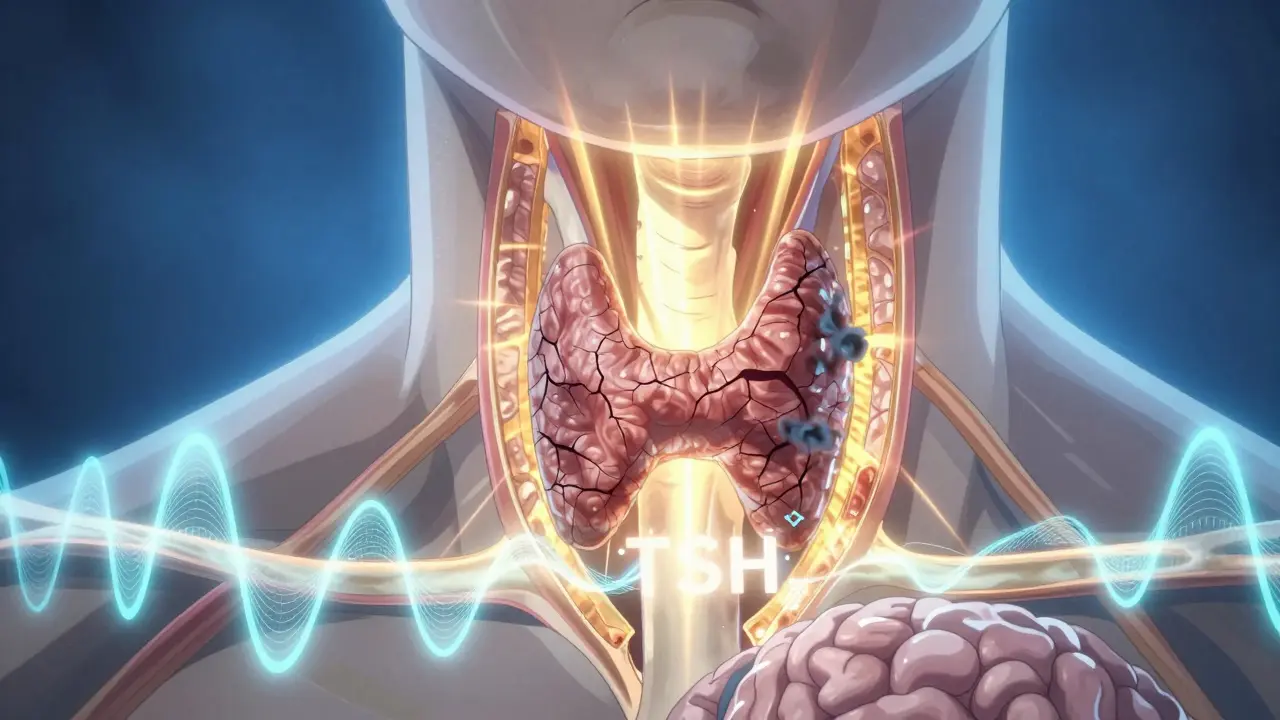
To understand Hashimoto’s, you first need to understand the thyroid. Think of your thyroid as a small butterfly-shaped gland at the base of your neck. Its job is to produce hormones-primarily thyroxine (T4) and triiodothyronine (T3)-that act like the thermostat for your body’s metabolism. These hormones control everything from your heart rate and body temperature to your digestion and mood.
In a healthy body, the brain sends signals via TSH to tell the thyroid how much hormone to make. But in Hashimoto’s, the immune system mistakenly identifies the thyroid tissue as a threat. It launches an attack, causing chronic inflammation and gradual destruction of the gland. Over time, the thyroid can’t keep up with demand, leading to hypothyroidism, a condition where the thyroid doesn't produce enough hormones.
This isn’t a sudden crash; it’s a slow decline. Many people live with subclinical hypothyroidism for years before symptoms become severe enough to seek help. The diagnostic hallmark involves two key markers:
- TSH Levels: When the thyroid slows down, the pituitary gland screams louder to get it moving, causing TSH levels to rise.
- TPO Antibodies: Elevated thyroid peroxidase antibodies (typically >35 IU/mL) confirm the autoimmune nature of the attack.
If your TSH is above 4.5 mIU/L and your free T4 is low or low-normal, combined with positive antibodies, the diagnosis is usually clear. Once diagnosed, the focus shifts entirely to management and monitoring.
Why TSH Is the Gold Standard for Monitoring
You might wonder why doctors don’t just test for T4 or T3 levels regularly. The answer lies in sensitivity. TSH is exponentially more sensitive to changes in thyroid function than T4 or T3. A tiny drop in thyroid hormone production causes a massive spike in TSH. Because of this, major health organizations, including the American Thyroid Association (ATA) and the American Association of Clinical Endocrinologists (AACE), agree that serum TSH is the single most reliable marker for monitoring treatment efficacy in primary hypothyroidism.
For most adults, the goal is to bring TSH into the normal reference range of 0.4-4.0 mIU/L. However, "normal" isn’t one-size-fits-all. Age plays a significant role. According to data from NHANES III, the median TSH for individuals aged 30-39 is around 1.2 mIU/mL. For patients over 65, slightly higher TSH levels (up to 6.0 mIU/L) may be appropriate and safer, reducing the risk of heart strain associated with aggressive replacement therapy.
| Patient Group | Target TSH Range (mIU/L) | Clinical Note |
|---|---|---|
| Adults (Under 65) | 0.4 - 4.0 | Standard target for most patients |
| Elderly (65+) | 4.0 - 6.0 | Higher limits reduce cardiac risk |
| Pregnant (1st Trimester) | 0.1 - 2.5 | Critical for fetal brain development |
| Symptomatic Despite Normal TSH | 0.4 - 2.5 | Some experts recommend lower targeting |
It is crucial to note that once your TSH is stable, you generally do not need to monitor antibody levels anymore. The ATA explicitly states that repeating thyroid antibody tests is unnecessary for treatment management. The antibodies tell you *why* you have the condition, but TSH tells you if your treatment is working.
The Levothyroxine Dosing Journey
The standard treatment for Hashimoto’s is levothyroxine, a synthetic form of thyroid hormone T4. It replaces what your thyroid can no longer produce. While brands like Synthroid dominate the market, generic versions are widely available and effective, provided they meet strict FDA manufacturing standards established in 2018 to minimize potency variations between batches.
Finding the right dose is rarely a straight line. It is a process of titration. Doctors typically start with a dose based on your weight-roughly 1.4-1.8 mcg per kilogram of body weight for those with preserved endogenous function, or a conservative 25-50 mcg/day for subclinical cases. From there, adjustments happen in small increments of 12.5-25 mcg.
Here is where patience becomes your best friend. You cannot adjust your dose every week. Levothyroxine has a long half-life of about seven days. It takes approximately 6-8 weeks for the drug to reach a steady state in your blood and for your pituitary gland to recalibrate its TSH output. Testing sooner than this window provides useless data because your body hasn’t had time to respond to the change.
Navigating the 6-8 Week Waiting Period
Waiting six to eight weeks for a blood test while feeling terrible is one of the most common complaints among patients. Online communities, such as the r/Hashimotos subreddit, are filled with frustrations about these intervals. Patients often report that waiting feels "archaic" when they are experiencing anxiety, palpitations, or crushing fatigue.
However, medical consensus remains firm: testing more frequently does not improve outcomes. The biological feedback loop simply doesn’t work that fast. During this waiting period, you must rely on symptom tracking. Keep a journal. Note changes in your energy levels, weight fluctuations, bowel habits, and mood. This data is invaluable when you finally see your doctor, as it helps distinguish between true under-replacement and other lifestyle factors.
If your TSH is suppressed (too low), you may experience symptoms of hyperthyroidism: insomnia, jitteriness, rapid heartbeat, and unexplained weight loss. If your TSH is elevated (too high), you’ll likely feel sluggish, cold-intolerant, constipated, and depressed. Recognizing these signs helps you communicate effectively with your healthcare provider during follow-ups.

Factors That Disrupt TSH Stability
Even if you find the perfect dose, external factors can throw your TSH off balance. Understanding these triggers can save you months of confusion and unnecessary dose adjustments.
- Medication Interactions: Iron supplements, calcium, proton pump inhibitors (for acid reflux), and estrogen-containing contraceptives can all interfere with levothyroxine absorption. Always take your thyroid medication on an empty stomach, at least 30-60 minutes before food or other drugs.
- Weight Changes: Since dosing is weight-based, gaining or losing more than 10% of your body weight will likely require a dose adjustment.
- Pregnancy: Pregnancy dramatically increases the demand for thyroid hormone. The ATA recommends monthly TSH testing until 20 weeks gestation for women with positive TPO antibodies. Untreated hypothyroidism during pregnancy significantly raises the risk of preterm birth and miscarriage.
- Dietary Consistency: While specific diets don’t cure Hashimoto’s, drastic changes in iodine intake or soy consumption can affect thyroid function. Consistency is key.
Interestingly, recent research suggests genetics play a role too. A 2023 study in JAMA Internal Medicine found that patients with specific DIO2 gene polymorphisms responded better to TSH targets in the lower half of the normal range (0.4-2.0 mIU/L). As personalized medicine evolves, genetic testing may eventually help tailor TSH goals more precisely, though currently, clinical trial and error remains the standard.
When TSH Isn’t Enough: The Symptom Gap
A frustrating reality for some Hashimoto’s patients is having a "perfect" TSH but still feeling sick. This phenomenon, sometimes called the "symptom gap," occurs in a subset of patients who do not fully convert T4 to the active T3 hormone. While the 2022 Cochrane Review concluded there is insufficient evidence to support routine combination T4/T3 therapy, some endocrinologists may consider adding liothyronine (synthetic T3) for patients who remain symptomatic despite optimal TSH levels.
Before jumping to combination therapy, rule out other causes. Iron deficiency anemia, vitamin B12 deficiency, and sleep apnea are common comorbidities in Hashimoto’s patients that mimic hypothyroid symptoms. Addressing these underlying issues often resolves the lingering fatigue without changing thyroid medication.
How often should I get my TSH checked after starting medication?
You should have your TSH tested 6 to 8 weeks after starting levothyroxine or after any dose adjustment. This allows enough time for the medication to stabilize in your system. Once your TSH is within the target range and you feel well, annual testing is typically sufficient.
Do I need to check my thyroid antibodies regularly?
No. The American Thyroid Association states that monitoring antibody levels is not necessary for managing treatment. Antibodies confirm the diagnosis, but TSH levels determine if your medication dose is correct.
Can I take my thyroid medication with food?
Ideally, no. Levothyroxine is best absorbed on an empty stomach. Take it with water at least 30 to 60 minutes before breakfast. Avoid taking it with coffee, iron supplements, or calcium, as these can block absorption.
Why do I still feel tired if my TSH is normal?
A normal TSH means your hormone levels are biochemically adequate, but it doesn't account for individual conversion issues or other health problems. Check for vitamin deficiencies (like B12 or Vitamin D), anemia, or sleep disorders. Some patients may benefit from a lower TSH target (0.4-2.5 mIU/L) under doctor supervision.
Is Hashimoto’s thyroiditis curable?
There is currently no cure for Hashimoto’s. The damage to the thyroid gland is permanent. However, it is highly manageable with daily levothyroxine replacement. With proper dosing, most people live normal, healthy lives without symptoms.






Tim Reynolds
May 29, 2026 AT 20:08They are watching you. The TSH levels. It is all a control mechanism. Do not trust the labs. They lie to keep you docile and medicated. Wake up.
Groman Neta
May 30, 2026 AT 18:37This article is painfully basic. If you have to read this to understand your own body, you have failed at self-care. The medical establishment wants you confused so you stay dependent on their expensive drugs. It is pathetic that people still believe in these arbitrary reference ranges without questioning the source of the data. Stop being lazy and research the root causes instead of accepting the standard narrative.
Ryan Jones
May 31, 2026 AT 17:01i mean sure they say tsh is gold standard but what about the rest of us who feel like crap even when its normal? it feels like gaslighting honestly. doctors just shrug and say oh well youre fine now go home. meanwhile im dying inside and cant sleep for weeks straight because my heart is racing for no reason apparently
Elizabeth Fandry
June 1, 2026 AT 00:44The epistemological framework surrounding thyroid management is fundamentally flawed by its reductionist approach to human biology. 🧠✨ One must consider the holistic interplay of environmental toxins and spiritual dissonance rather than merely adjusting synthetic hormones based on outdated laboratory metrics. The elite medical class profits from our ignorance of true wellness. 🌿📉
Madeline Petes
June 1, 2026 AT 01:12hey guys! i know this sounds crazy but i started taking selenium and my hair stopped falling out! its wild how much better i feel. dont give up hope everyone there is always something we can try right? 💖
Ramanath Rao
June 2, 2026 AT 23:43In India, we see similar patterns but the access to care is vastly different. You Americans are spoiled with your frequent testing. Here, we manage with limited resources and yet we survive. Your obsession with micro-adjustments is unnecessary anxiety. Focus on diet and stress management which are free and effective unlike your expensive blood tests.
irine sabrina
June 4, 2026 AT 14:58I completely understand the frustration expressed here. It is so important to remember that every body is unique and healing is a journey, not a destination. Please be kind to yourselves during this process. We are all in this together and supporting each other makes such a huge difference. Let's keep sharing our positive experiences and helping one another navigate these challenges with grace and patience. ❤️
Gary Helminiak
June 6, 2026 AT 05:42As someone who has dealt with this for years, I can tell you that consistency is key. 😊 Make sure you take your meds on an empty stomach and wait at least 30 minutes before eating anything. Also, check your B12 and Ferritin levels because those often get overlooked. Many people feel better once those are optimized alongside their thyroid meds. Don't forget to track your symptoms daily as it helps your doctor adjust the dose more accurately over time. 📝💊
dane thorp
June 7, 2026 AT 13:18Please stop giving medical advice online. This is not a substitute for professional care.