
Cyclosporine Interaction Risk Estimator
Select the type of medication or supplement you are taking alongside Cyclosporine to see potential clinical outcomes.
Select a drug category to view interaction risk analysis.
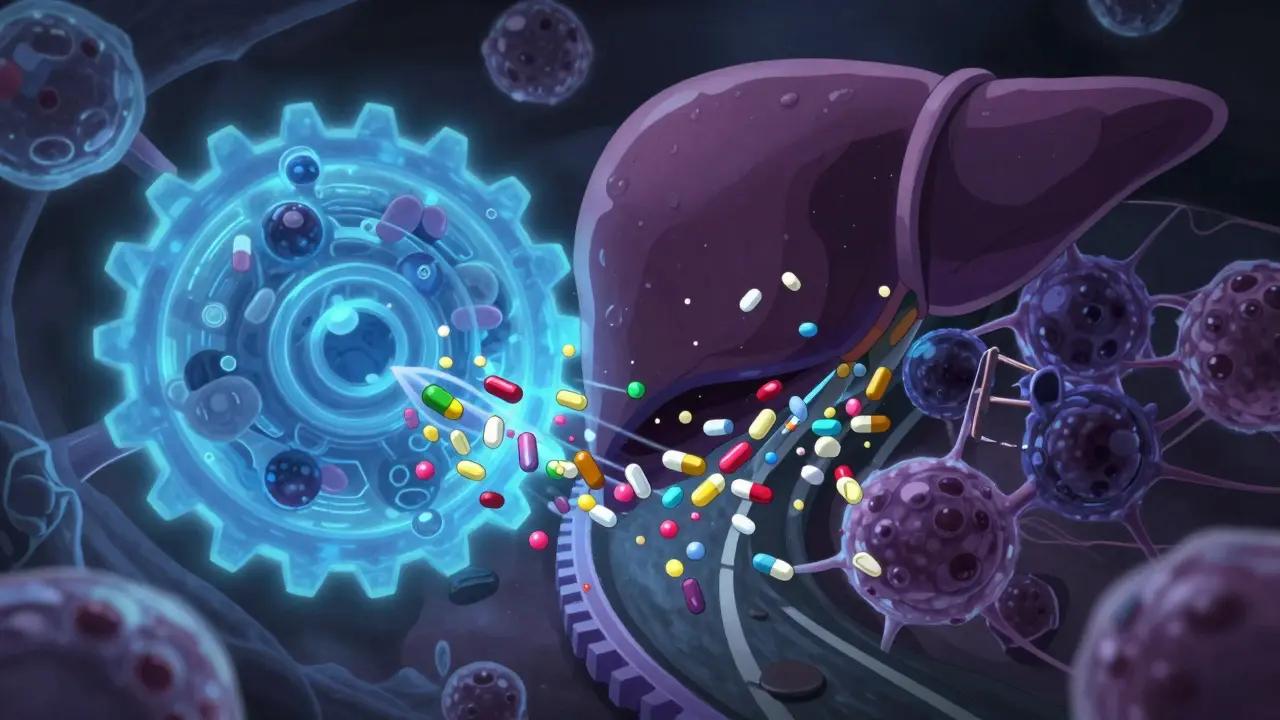
Imagine taking a life-saving medication that works by blocking your body’s natural cleanup crew. That is essentially what happens when you take Cyclosporine, a powerful immunosuppressive drug used to prevent organ rejection in transplant patients. It doesn’t just suppress the immune system; it jams the gears of the enzyme responsible for breaking down about 60% of all prescription drugs. This creates a dangerous bottleneck where other medications can build up to toxic levels, or conversely, get flushed out too quickly if mixed with the wrong substances.
This isn't just theoretical chemistry. For the thousands of people on Cyclosporine every day, understanding this interaction is the difference between keeping their new heart or kidney and ending up in the hospital with acute toxicity. The core issue lies with an enzyme called CYP3A4, which is the most abundant cytochrome P450 enzyme in the human liver and intestine. When Cyclosporine inhibits CYP3A4, it changes how your body processes almost everything else you swallow.
How Cyclosporine Blocks the CYP3A4 Enzyme
To understand why these interactions are so volatile, we have to look at how the enzyme works. Think of CYP3A4 as a busy highway toll booth. Drugs (substrates) line up to be processed and cleared from your body. Cyclosporine acts like a roadblock. It doesn't just stand in line; it physically occupies the space, preventing other cars from getting through.
Research shows that Cyclosporine operates through multiple mechanisms. It is primarily a competitive inhibitor, meaning it fights for the same active site on the enzyme as other drugs. But it also exhibits time-dependent inhibition characteristics. This means the longer you take it, or the higher the dose, the more effectively it shuts down the enzyme's activity. Unlike some antibiotics that permanently destroy the enzyme (mechanism-based inhibition), Cyclosporine’s effect is reversible but potent. Once you stop taking it, the enzyme function returns, but while you are on it, the clearance rate for other drugs drops significantly.
This dual action is complicated by the fact that Cyclosporine also inhibits P-glycoprotein, a transporter protein that pumps drugs out of cells. So, not only is the metabolic breakdown slowed, but the physical removal of drugs from tissues is also hindered. This double whammy leads to much higher blood concentrations of co-administered drugs than expected.
The Danger Zone: Substrates vs. Inhibitors
Not all drugs react the same way. To manage this risk, pharmacists categorize drugs based on their relationship with CYP3A4. You need to know which category your other medications fall into.
| Drug Category | Effect on Body | Risk Level |
|---|---|---|
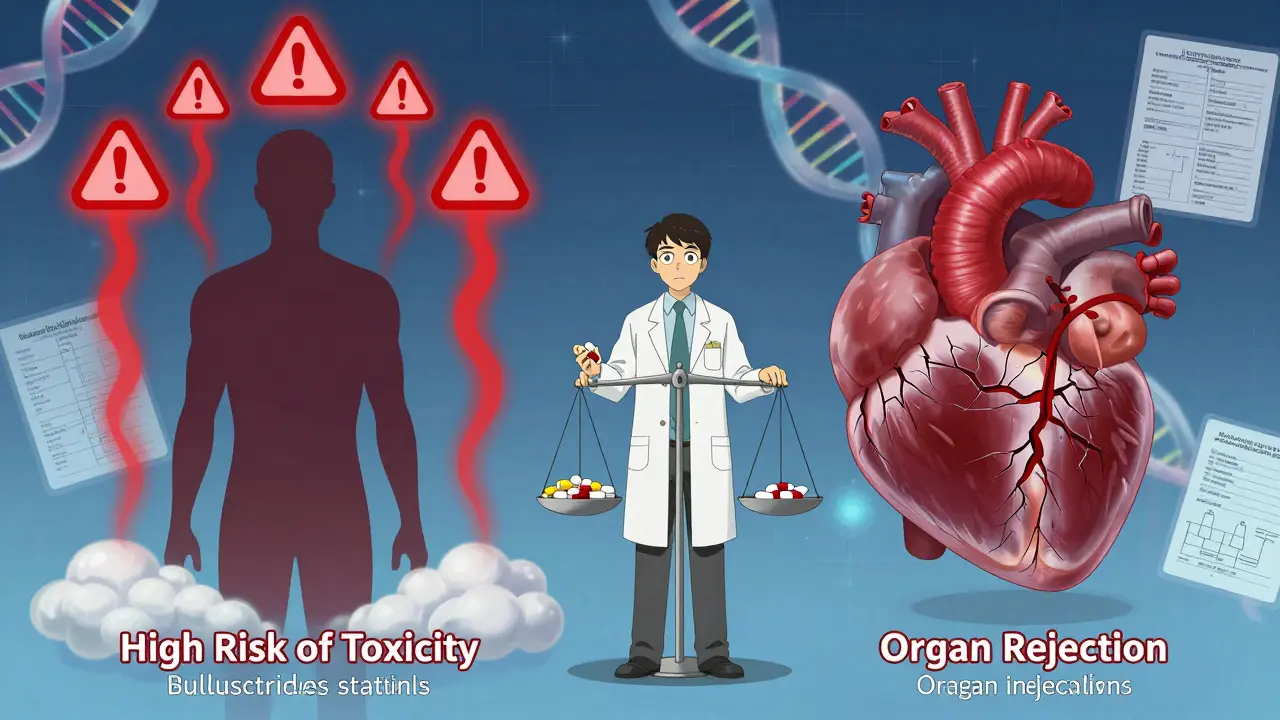
| CYP3A4 Substrates (e.g., Statins, Calcium Channel Blockers) |
Levels increase because they aren't broken down fast enough. | High Risk of Toxicity |
| CYP3A4 Inducers (e.g., Rifampin, St. John's Wort) |
Cyclosporine levels drop drastically as the enzyme works overtime. | High Risk of Organ Rejection |
| Other Immunosuppressants (e.g., Sirolimus, Tacrolimus) |
Complex bidirectional effects requiring precise dosing. | Requires Therapeutic Drug Monitoring |
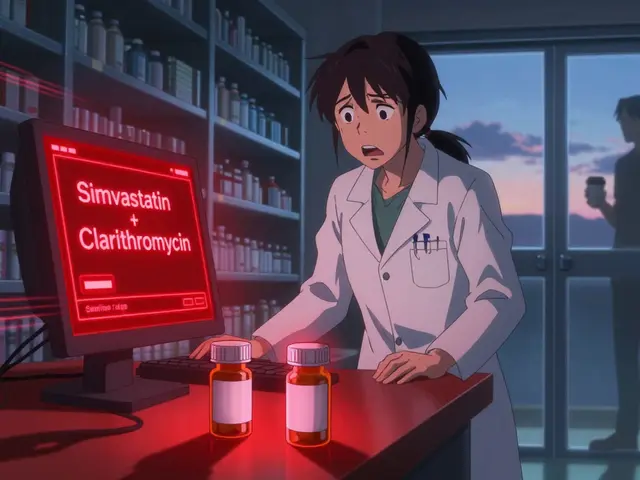
If you are taking a substrate-like simvastatin for cholesterol or diltiazem for blood pressure-adding Cyclosporine can cause those drug levels to skyrocket. A standard dose of statin might become a toxic overdose, leading to muscle damage (rhabdomyolysis). Conversely, if you start an inducer like rifampin for an infection, it supercharges the CYP3A4 enzyme. Suddenly, your body burns through Cyclosporine twice as fast, causing your blood levels to plummet. In transplant patients, this drop can trigger acute rejection, where the body attacks the new organ.
Genetics Play a Surprising Role
Here is where it gets personal. Not everyone metabolizes Cyclosporine the same way. Your DNA matters. Studies, including recent work from Wenzhou Medical University, highlight that genetic polymorphisms in the CYP3A4 gene significantly alter how the enzyme functions. Some people have variants that make their CYP3A4 enzyme 40% less efficient than others.
If you have a naturally slower CYP3A4 variant, adding Cyclosporine’s inhibition on top of that can lead to dangerously high drug levels even at standard doses. On the flip side, rapid metabolizers might clear the drug too quickly, risking under-immunosuppression. This is why Therapeutic Drug Monitoring (TDM), which involves regular blood tests to measure drug concentrations, is non-negotiable for Cyclosporine users. It allows doctors to adjust doses based on your actual biology, not just textbook averages.
Common Culprits: What to Avoid or Adjust
You don't need to memorize every drug on the market, but you should know the common offenders. These are the medications that frequently clash with Cyclosporine:
- Antibiotics: Clarithromycin and erythromycin are strong CYP3A4 inhibitors. Taking them with Cyclosporine can spike Cyclosporine levels by 50-100%. Doctors often switch patients to azithromycin, which has minimal interaction, or drastically reduce the Cyclosporine dose temporarily.
- Fungals Agents: Ketoconazole and fluconazole are also potent inhibitors. They are sometimes intentionally used to boost Cyclosporine levels, but only under strict supervision.
- Calcium Channel Blockers: Nimodipine and verapamil inhibit both CYP3A4 and P-glycoprotein. This dual inhibition requires careful dose reduction of Cyclosporine to avoid nephrotoxicity (kidney damage).
- Herbal Supplements: St. John’s Wort is a notorious inducer. Many patients take it for mood support, unaware that it can lower Cyclosporine levels by up to 80%, potentially leading to transplant failure. Always check supplements with your pharmacist.
Managing the Interaction: Practical Steps
Living with Cyclosporine doesn't mean avoiding all other medicines. It means managing them strategically. Here is how clinical teams typically handle these complex scenarios:
- Baseline Assessment: Before starting any new medication, your care team reviews your entire regimen. They identify all CYP3A4 substrates, inhibitors, and inducers currently in your system.
- Dose Adjustment: If a moderate inhibitor is added, guidelines often recommend reducing the Cyclosporine dose by 25-50%. If a strong inhibitor is necessary, the reduction might be 50-75%. These are not guesses; they are calculated estimates based on pharmacokinetic data.
- Frequent Monitoring: During the initiation or discontinuation of interacting drugs, blood trough levels of Cyclosporine are checked daily or every few days until stable. The target range is narrow-typically 100-400 ng/mL depending on the type of transplant and time since surgery.
- Patient Education: Patients are taught to recognize signs of toxicity (headache, tremors, high blood pressure, gum swelling) and signs of rejection (fever, pain at transplant site, decreased urine output). Early reporting saves organs.
Technology is helping here too. Electronic health records now include automated alerts for major CYP3A4 interactions. However, these alerts can be overwhelming. The key is having a knowledgeable pharmacist review these flags to determine if the interaction is clinically significant or manageable with minor adjustments.

Why Cyclosporine Still Matters
You might wonder, given these complexities, why we still use Cyclosporine. Newer drugs like Tacrolimus, another calcineurin inhibitor used in transplantation, are often preferred because they are primarily substrates rather than inhibitors, making their interaction profile slightly more predictable. However, Cyclosporine remains a cornerstone therapy. It is particularly effective for certain autoimmune conditions and specific pediatric cases. Its long track record means doctors understand its quirks intimately.
The global market for Cyclosporine continues to grow, driven by increasing transplant volumes and expanding indications. But with that growth comes responsibility. The FDA explicitly lists Cyclosporine as a CYP3A4 inhibitor in its guidance documents, emphasizing the need for rigorous drug interaction studies for any new compound that might touch this pathway.
Frequently Asked Questions
Can I take grapefruit juice while on Cyclosporine?
No, you should strictly avoid grapefruit juice. Grapefruit contains furanocoumarins, which are potent inhibitors of CYP3A4 in the intestine. Drinking grapefruit juice can increase Cyclosporine absorption by 2-3 times, leading to unpredictable and potentially toxic blood levels. Even small amounts can have a significant effect, so it is best to eliminate it entirely from your diet.
How long does it take for Cyclosporine levels to stabilize after changing another medication?
It typically takes 3 to 5 half-lives of the affected drug to reach a new steady state. For Cyclosporine itself, this can be several days. However, if you start a strong inhibitor or inducer, changes in blood levels can begin within 24-48 hours. This is why frequent blood testing is crucial during the first week of any medication change.
What are the signs of Cyclosporine toxicity?
Common signs include neurological symptoms like headaches, tremors, or confusion; renal issues such as increased creatinine levels or reduced urine output; and gastrointestinal problems like nausea or vomiting. Hypertension (high blood pressure) and hyperkalemia (high potassium) are also frequent indicators that levels are too high. If you experience these, contact your healthcare provider immediately.
Does age affect how Cyclosporine interacts with other drugs?
Yes, age plays a role. Older adults often have reduced liver and kidney function, which can slow down drug metabolism and excretion. This makes them more susceptible to drug accumulation and toxicity. Pediatric patients may metabolize drugs faster due to higher metabolic rates. Dosing and monitoring must be tailored to the individual’s physiological status, not just their weight.
Can I take over-the-counter pain relievers with Cyclosporine?
You should be cautious. Non-steroidal anti-inflammatory drugs (NSAIDs) like ibuprofen or naproxen can increase the risk of kidney damage when combined with Cyclosporine, as both stress the kidneys. Acetaminophen (paracetamol) is generally safer for pain relief but should still be discussed with your doctor to ensure it does not interact with other medications you are taking. Never self-medicate without professional advice.





Angela Niculescu
May 23, 2026 AT 03:28I mean, sure, CYP3A4 is important, but let's not act like Cyclosporine is the only drug that messes with your liver. It’s basically just one of many chemical roadblocks in a body that is already a chaotic mess of biological reactions. People overreact to every little interaction chart they see online.
Victoria Mangiapane
May 23, 2026 AT 06:53Oh my god, this is literally terrifying!! I had no idea grapefruit juice could actually kill you or something?? Like, I drink it every morning and now I feel like I'm walking around with a time bomb in my stomach 😱 Why isn't anyone warning us about this sooner?? It feels like a total conspiracy by the food industry to keep us sick!
Nivetha Narayanan
May 24, 2026 AT 15:01hey guys! dont worry too much abt it lol. its just science stuff. i think its cool how our bodies work though! everyone is different so maybe ur fine? stay positive and drink water! 🌿✨
Tim Reynolds
May 24, 2026 AT 20:02The FDA knows exactly what they are doing. They want you dependent on their monitoring protocols. The 'toxicity' is often a cover for profit-driven blood tests. Wake up. The enzyme inhibition is real, but the fear-mongering is manufactured. Check your own levels at home if you dare. They don't want you to know the truth about natural metabolism. Stop trusting the labs. Trust your gut. It always lies anyway. Ha.
Frank Arlyss
May 25, 2026 AT 06:03I had a kidney transplant ten years ago and my doctor never once mentioned St. John's Wort. I took it for depression for two months before he found out. My levels dropped so fast I almost lost the kidney. He was furious. I felt terrible. I still feel terrible. Every time I take a pill now I wonder if it's going to interact with something else. It's exhausting. You have to be paranoid just to survive. I check every supplement label twice. It ruins my peace of mind completely. I wish people would just listen to their doctors instead of reading random posts online. It saves lives. Really. It does.
Groman Neta
May 26, 2026 AT 10:24This article is painfully obvious to anyone with a basic pharmacology degree. The concept of competitive inhibition is undergraduate level material. It is insulting to suggest that patients need such a simplified explanation involving 'toll booths'. If you cannot understand enzyme kinetics without a cartoon analogy, perhaps medicine is not the field for you. The genetic polymorphism section is also trivialized. Polymorphisms are complex and require genomic sequencing, not just 'knowing your DNA matters'. This content is designed for laypeople who lack critical thinking skills. It promotes a false sense of security through oversimplification. True understanding requires rigorous study of pharmacokinetics and pharmacodynamics. Do not rely on internet summaries for life-or-death medical decisions. Consult a professional. Or better yet, read the primary literature yourself.
Ryan Jones
May 27, 2026 AT 08:50i dont buy it. big pharma wants us scared. they say cyclosporine is dangerous but tacrolimus is just as bad they just market it differently. i think the whole cyp3a4 thing is exaggerated to sell more blood tests. my uncle took it and he was fine until he stopped taking it then he got sick. correlation is not causation. trust me. i know things. they dont tell you about the side effects because they want you hooked on the monitoring. its a trap. a beautiful trap. but a trap nonetheless. dont fall for it. or do. whatever. im tired of fighting the system. it fights back harder. always. sigh.
Lisa Russo
May 28, 2026 AT 07:55You're all missing the point. Grapefruit juice is banned but orange juice is fine? No it's not. Everything interacts. Your body is a war zone. Just stop eating anything that isn't white bread and water if you want to be safe. But you won't. You'll eat salad and then die. So why bother reading this? Just accept that modern medicine is a gamble. Cyclosporine is old news. Everyone should switch to newer drugs immediately. But they don't. Because insurance. Typical.
Anthony Padilla
May 29, 2026 AT 01:31As someone who works in a pharmacy, i see this confusion everyday. Its not just about grapefruit. Its about consistency. Take your meds at the same time. Dont start new supplements without asking. The genetics part is huge btw. Some people metabolize super fast some super slow. Its not one size fits all. We try to help but patients often hide what they take. Please be honest with your care team. It helps us adjust doses properly. Its not about control its about keeping your organ working. Hope this helps someone out there. Let us know if u have questions.
Elizabeth Fandry
May 29, 2026 AT 15:39One must consider the existential burden placed upon the patient by such biochemical volatility. 🧬🍊 The very essence of being is compromised when one’s metabolic fate hangs upon the whims of an enzyme. To ingest a substance that alters the fundamental processing of reality-other drugs-is to invite chaos into the ordered universe of the self. The ‘toll booth’ metaphor is quaint, yet insufficient to capture the profound dissonance experienced by those who walk this narrow path between rejection and toxicity. We are but vessels for these molecular negotiations. And yet, we persist. With grace. And frequent blood draws. 💉✨