
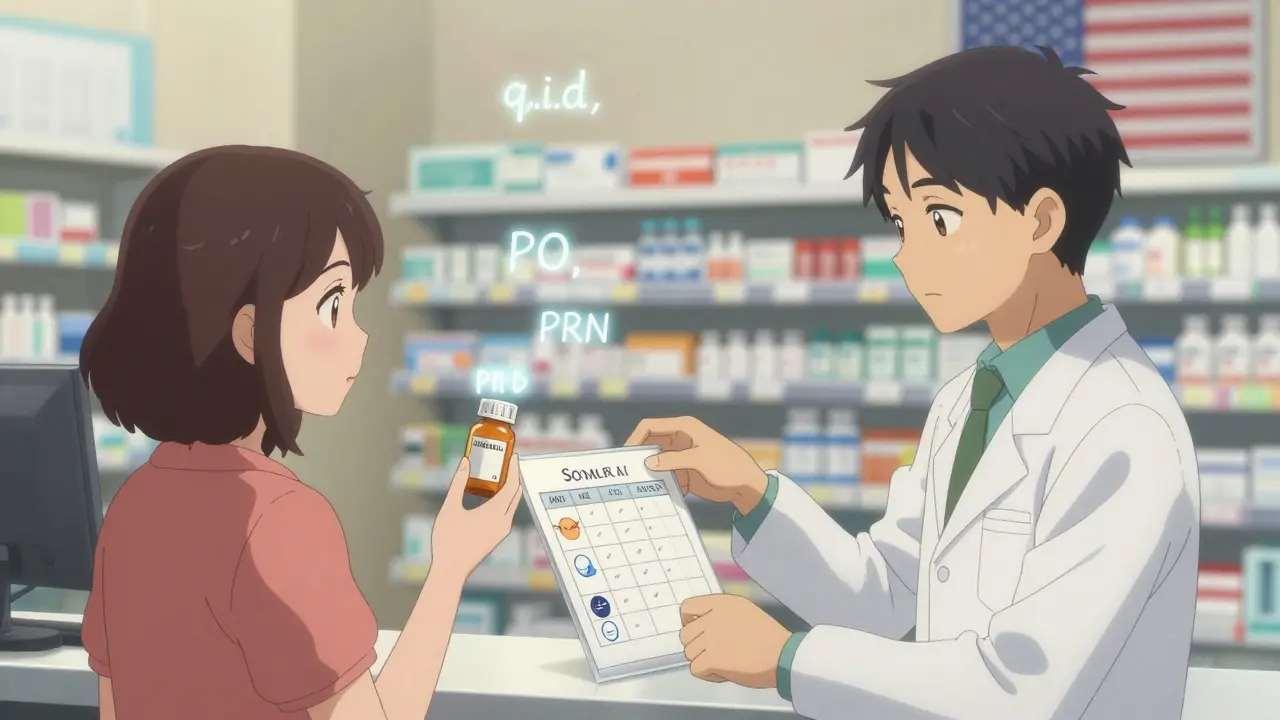
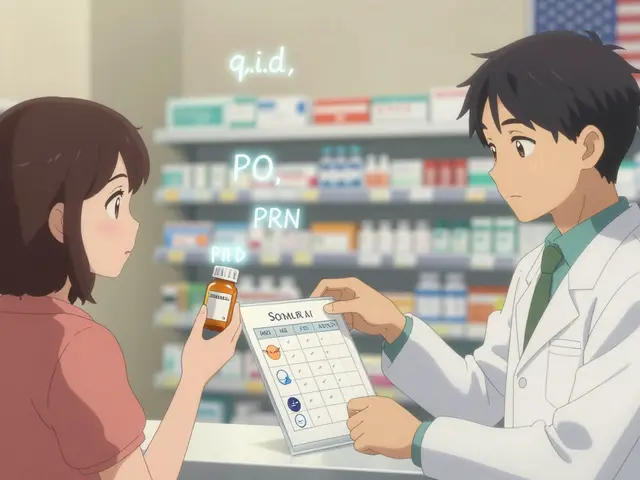
Getting a prescription filled shouldn’t feel like solving a puzzle in a language you don’t speak. Yet every day, people leave the pharmacy with a small paper slip full of medical terms they don’t recognize-take q.i.d., PO, PRN-and no clear idea what it means. If you’ve ever stared at your pill bottle wondering, When exactly do I take this?, you’re not alone. And you’re not wrong to ask for better.
Why Written Instructions Matter
Medication errors are one of the leading causes of preventable harm in healthcare. According to the Institute for Safe Medication Practices, nearly two-thirds of these errors happen because patients didn’t understand their instructions. That’s not just a statistic-it’s someone forgetting to take their blood pressure pill because they thought “twice daily” meant morning and night, not every 12 hours. Or someone skipping a dose because the label said “take with food,” but they didn’t know what counted as food. The good news? You have rights. And those rights aren’t just words on a poster in a waiting room. They’re tools you can use-right now-to get instructions you can actually follow.Your Rights Are Real
You don’t have to beg. You don’t have to wait until you feel brave enough to speak up. You have the right to understand your medications. This isn’t a favor. It’s a standard. The American Medical Association says you have the right to ask questions and get answers you understand. The federal government says you have the right to accurate, clear information under the Patient Bill of Rights. Many state pharmacy boards, including Tennessee and California, explicitly require that instructions be given in a way you can understand. If you’re not fluent in English, federal law requires the pharmacy to provide translation services at no cost. You don’t have to be a U.S. citizen. You don’t have to have insurance. If you’re getting a prescription, you’re entitled to clear instructions.What “Understandable” Actually Means
“Understandable” doesn’t mean “printed in big letters.” It means:- Uses plain language: “Take one pill every 12 hours,” not “q12h.”
- Explains why: “This helps lower your blood sugar,” not just “Metformin 500mg.”
- Includes timing: “Take with breakfast,” not “Take with food.”
- Shows what to do if you miss a dose.
- Lists common side effects in everyday words: “You might feel dizzy” instead of “Possible orthostatic hypotension.”
- Uses visuals: Icons for morning, night, or meals. A simple chart showing days of the week.
How to Ask-Without Being Pushy
Asking for better instructions doesn’t mean arguing. It means being specific. Here’s how:- Ask to speak to the pharmacist. Not the technician. Pharmacists are trained to explain meds. Technicians often just scan and bag.
- Use exact phrases. Say: “I need written instructions I can understand. I have the right under the AMA Code of Medical Ethics to receive information I can understand.” This works. Studies show patients who say this get better help 3.7 times more often.
- Ask for a visual schedule. “Can you make me a simple chart? Like a grid with days and times?” People who get these are 42% more likely to take their meds right.
- Ask for a read-back. After they explain, say: “Let me repeat it back to make sure I got it.” Then say it in your own words. If you stumble, they’ll fix it. This cuts errors by 63%.
- Ask for a copy. Say: “I’m keeping this for my medical records.” Pharmacies are 58% more likely to give you something written if you say this.
Timing Is Everything
Don’t wait until your refill. The best time to ask is when you get a new prescription. Pharmacists have more time then. They’re not rushing between 20 other refills. They’re setting up your care. If you’re picking up a refill and the instructions still look confusing, ask again. You’re not being annoying. You’re protecting your health.What If They Say No?
Sometimes, they’ll say: “We don’t have those.” Or: “That’s not our policy.” Here’s what to do:- Ask if they can print something from their computer. Many pharmacies use digital tools like Medi-Simplify or Meds 2.0 that generate plain-language guides on the spot.
- Ask if they can email or text you a link to a simple guide. Most chains offer this now.
- If they still refuse, ask for the pharmacy manager. Say: “I’m asking because I’m concerned about safety. I’d like to file a comment with your corporate office.” Most will comply after that.
- If it’s a chain pharmacy, call their customer service line. Say: “I was denied clear written instructions for my prescription. I’d like to report this.” They track these complaints.
What’s Changing-and What’s Coming
The system is slowly improving. The FDA is pushing for standardized icons on all prescription labels. By 2027, the American Pharmacists Association wants every pharmacy to use health-literate instructions. Walgreens is rolling out QR codes that link to video instructions in 20 languages. CVS is testing pictogram guides for complex regimens. But until those changes are everywhere, you’re still the most powerful tool you have.Real Examples: What Worked
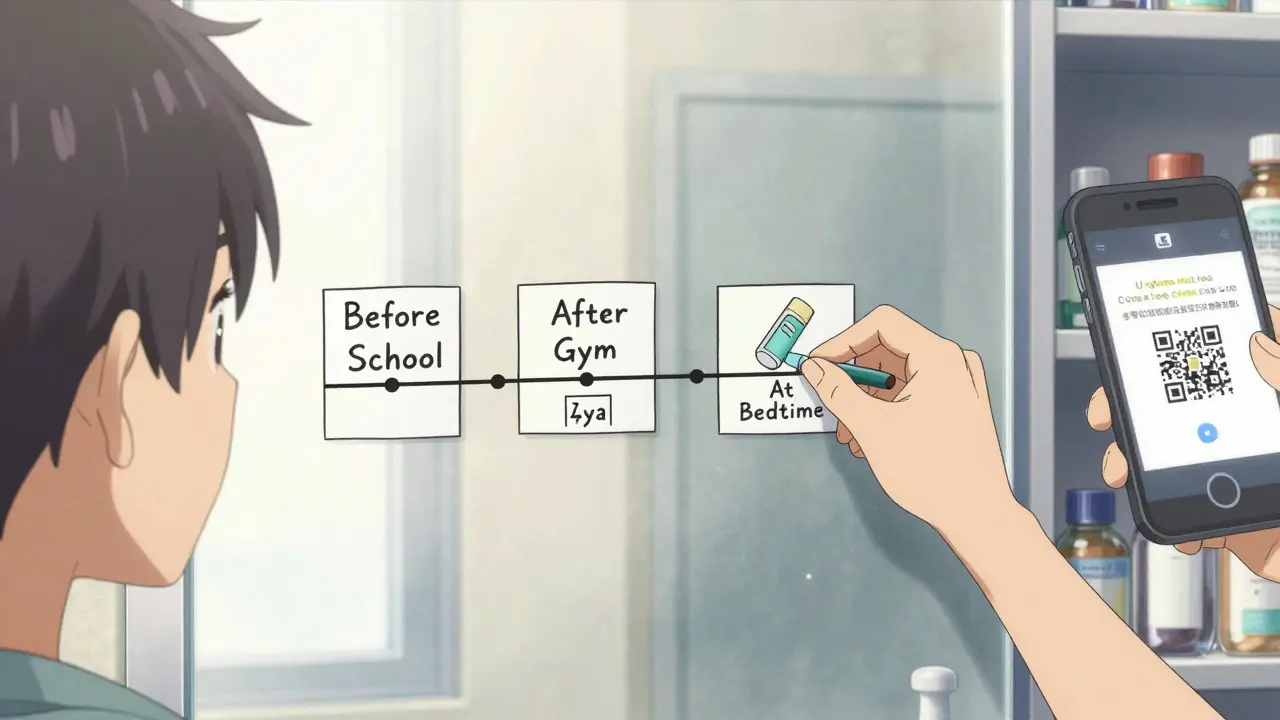
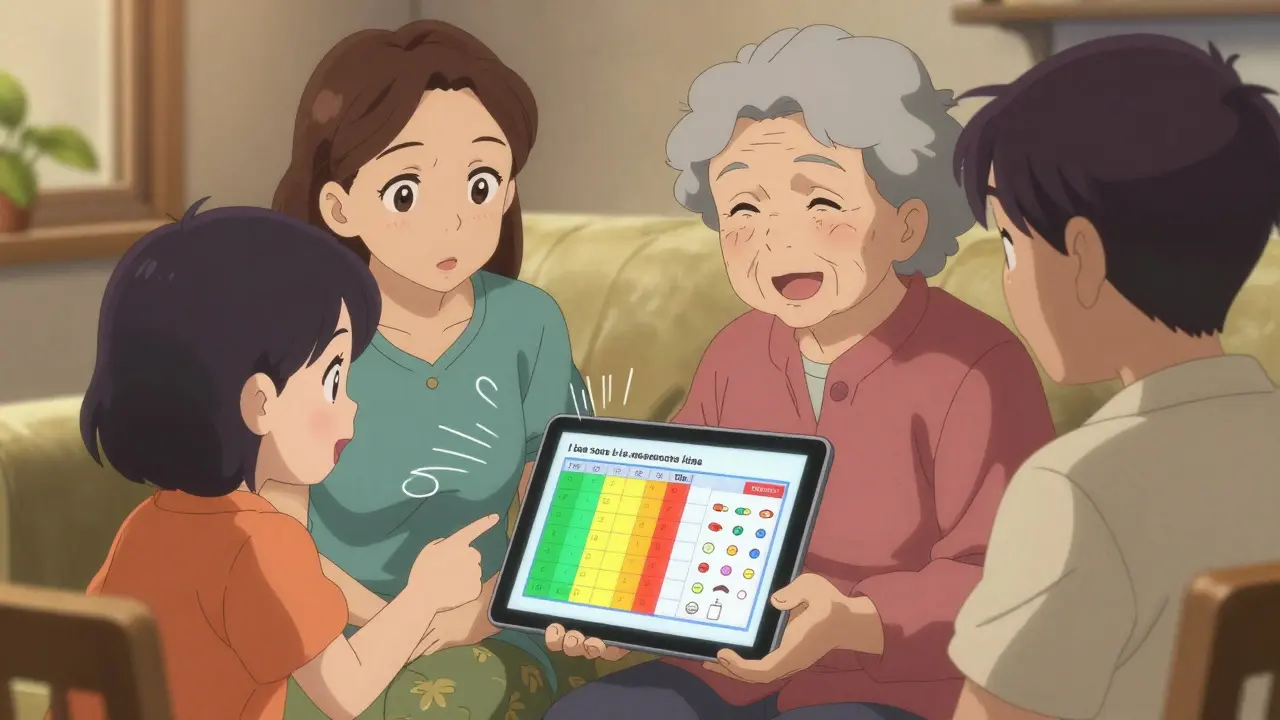
One woman in Ohio asked for her diabetes meds to be explained with pictures. The pharmacist made her a color-coded chart: green for morning, yellow for afternoon, red for night. She sent a photo to her daughter, who was out of state. Her daughter said: “Mom, I finally get it.” A man in Texas asked for instructions in Spanish. The pharmacist didn’t have printed ones, but pulled up a translation on their tablet and read it aloud with him. He left with a printed copy and a smile. A teenager with asthma asked for a simple list of when to use his inhaler. The pharmacist drew a timeline: “Before school,” “After gym,” “At bedtime.” He taped it to his mirror. These aren’t miracles. They’re just people asking clearly-and being heard.Don’t Let Confusion Cost You Your Health
Medications save lives. But only if you take them right. And you can’t take them right if you don’t understand them. You don’t need to be loud. You don’t need to be aggressive. You just need to be clear. Say what you need. Cite your rights. Ask for the format that works for you. And if they don’t give it to you, ask again. Your health isn’t a guessing game. It’s your right to know.Can I ask for medication instructions in a language other than English?
Yes. Under Title VI of the Civil Rights Act, pharmacies that receive federal funding (which includes nearly all pharmacies in the U.S.) must provide language assistance at no cost. Just say: “I need my medication instructions in [language] per federal law.” Most pharmacies will either print a translated sheet, show you a digital version on a tablet, or call a translation line right then.
What if the pharmacy gives me a 2-page booklet full of jargon?
That’s not acceptable. You can say: “I appreciate the detail, but I need a one-page summary in plain English. Can you help me make one?” Many pharmacists will rewrite it for you on the spot. If they don’t, ask for the manager or request a digital version through their app or website-most now offer simplified guides online.
Do I have to pay for clearer instructions?
No. Clear medication instructions are part of your care-not an extra service. You should never be charged for plain-language guides, visual schedules, or translation help. If someone tries to charge you, ask to speak to the manager or contact your insurance provider or the pharmacy’s corporate office.
Can I ask for instructions for all my meds at once?
Yes. Especially if you take multiple medications, ask for a “medication schedule” or “pill planner.” Pharmacists can create a single sheet showing all your drugs, times, and purposes. This is especially helpful for older adults or people managing chronic conditions. Bring your pill bottles or a list to your appointment to make it easier.
What if I’m not sure if I understood correctly?
Say: “Let me repeat it back to you.” Then explain the instructions in your own words. If you say, “So I take this pill when I feel dizzy,” and they say, “No, you take it every day whether you feel dizzy or not,” you’ve just prevented a mistake. This technique, called “teach-back,” is proven to reduce errors and is used in hospitals across the country.
Are there apps or tools that can help me understand my meds?
Yes. Apps like Medisafe, MyTherapy, and even the CVS or Walgreens apps now offer simplified medication guides. Some link to videos in multiple languages. You can also ask your pharmacist for a QR code that takes you to a plain-language page about your drug. Many are FDA-approved and updated regularly.
What should I do if I still can’t get clear instructions?
Contact your doctor’s office. Ask them to send a written note to the pharmacy: “Please provide the patient with clear, plain-language instructions for these medications.” If that doesn’t work, call your state’s pharmacy board or file a complaint with the Centers for Medicare & Medicaid Services (CMS) if you’re on Medicare. Your voice matters-and it changes systems.




Glendon Cone
December 30, 2025 AT 23:04Just got my new blood pressure med today and asked for a visual chart. The pharmacist pulled up a color-coded grid on their tablet - green for morning, red for night. I took a screenshot and set it as my lock screen. 🙌 No more guessing. This stuff works.
Colin L
December 31, 2025 AT 21:28You know what’s wild? This whole system is built on the assumption that patients are somehow responsible for decoding medical hieroglyphics like they’re archaeologists digging up a tablet from ancient Sumer. We’re told to ‘ask questions’ like it’s a casual coffee chat, but try asking a pharmacist why ‘q.i.d.’ isn’t just written as ‘four times a day’ and suddenly you’re the problem. The real issue isn’t patient literacy - it’s institutional laziness wrapped in a white coat. And don’t even get me started on how ‘understandable’ is defined by someone who’s never had to read a label while juggling three kids, a full-time job, and a side hustle cleaning toilets. This isn’t empowerment. It’s a Band-Aid on a hemorrhage.
Hayley Ash
January 2, 2026 AT 21:08Wow amazing advice oh my god you told people to ASK for stuff wow what a revolutionary concept
Aayush Khandelwal
January 4, 2026 AT 20:08Man, this hits different in India where pharmacists hand you a scribble on a napkin and say 'take one, two, three, or maybe four, depends on moon phase'. I once got a script for metformin with '1 tab bid' - no translation, no context. I had to Google it while standing in line at a chai stall. The real win? When the pharmacist actually *smiles* and says 'let me show you on my phone'. That’s the gold standard. We need more of that, not just in the US but everywhere. Pharma tech ain't just for rich countries.
Sandeep Mishra
January 5, 2026 AT 02:15There’s something deeply human about this. We treat medicine like a puzzle to be solved by the patient, but it’s not a puzzle - it’s a lifeline. And every time someone has to Google what ‘PRN’ means, we’re saying their dignity is optional. The fact that you can ask for a visual schedule and get it? That’s not a perk. That’s basic respect. I’ve seen grandparents forget their meds because the label looked like a math test. A simple chart? A few icons? That’s not ‘extra service’ - it’s love in action. We don’t need more rules. We need more empathy.
Joseph Corry
January 6, 2026 AT 18:11It’s ironic how we romanticize ‘patient empowerment’ while the entire pharmaceutical infrastructure is designed to obscure meaning. The AMA’s ‘right to understand’ is a rhetorical flourish - a PR maneuver disguised as ethics. Real systemic change would involve eliminating Latin abbreviations entirely, not teaching patients to recite corporate talking points like ‘I have the right under the AMA Code of Medical Ethics’ - which, by the way, is not a legally binding statute. This is performative advocacy wrapped in the language of liberation. We’re not empowering patients; we’re training them to navigate a broken system with better scripts.
kelly tracy
January 7, 2026 AT 18:15Oh please. You think asking nicely is going to fix this? I asked for plain language at Walgreens and the pharmacist rolled her eyes and said ‘we don’t do that here.’ Then I called corporate and filed a complaint. Guess what? Two days later I got a handwritten note from the district manager apologizing and a laminated chart in the mail. This isn’t about being polite. It’s about being relentless. If you’re not screaming, you’re being ignored.
srishti Jain
January 8, 2026 AT 14:35they still use qid in 2025 lmao
Cheyenne Sims
January 9, 2026 AT 11:04It is imperative to note that the utilization of colloquialisms and emoticons in the context of medical communication undermines the gravitas of the subject matter. The integrity of patient care is not contingent upon the adoption of informal vernacular or digital iconography. Clarity must be achieved through standardized, professional, and linguistically precise documentation - not through color-coded charts or emoji-based schedules. This trend toward infantilization of medical instruction is both unprofessional and potentially hazardous.
Shae Chapman
January 10, 2026 AT 09:15I cried when my grandma got her pill schedule. She’s 82, doesn’t read well, and was terrified of taking the wrong pill. The pharmacist drew a little sun for morning, moon for night, and a plate for ‘with food.’ She hugged him. I hugged her. I hugged the pharmacist. We all cried. This isn’t just about medicine - it’s about dignity. Thank you for writing this. I’m sharing it with everyone I know.
henry mateo
January 11, 2026 AT 06:12just got my new med and asked for a chart and the girl at the counter said she'd email it... i waited 3 days and nothing. then i went back and asked again and she said 'oh i forgot' and printed it out. i think people just forget. it's not malice. it's chaos. but still... you gotta keep asking. even if it's awkward. even if you feel dumb. it's worth it.
Kunal Karakoti
January 11, 2026 AT 07:27There’s a philosophical tension here: the individual’s right to understanding versus the systemic inertia of institutional efficiency. We demand clarity, yet the system rewards speed over comprehension. The pharmacy is not a classroom - it’s a transactional node in a vast, profit-driven network. To ask for a visual schedule is to interrupt the flow. And yet - isn’t the purpose of medicine to heal, not to optimize throughput? Perhaps the real revolution isn’t in the chart or the emoji - but in our collective willingness to pause, to listen, and to treat the body as more than a data point.
Kelly Gerrard
January 11, 2026 AT 11:42Clear instructions are not a luxury they are a fundamental component of ethical medical practice and any deviation from this standard is unacceptable and should be reported immediately to regulatory authorities without delay