
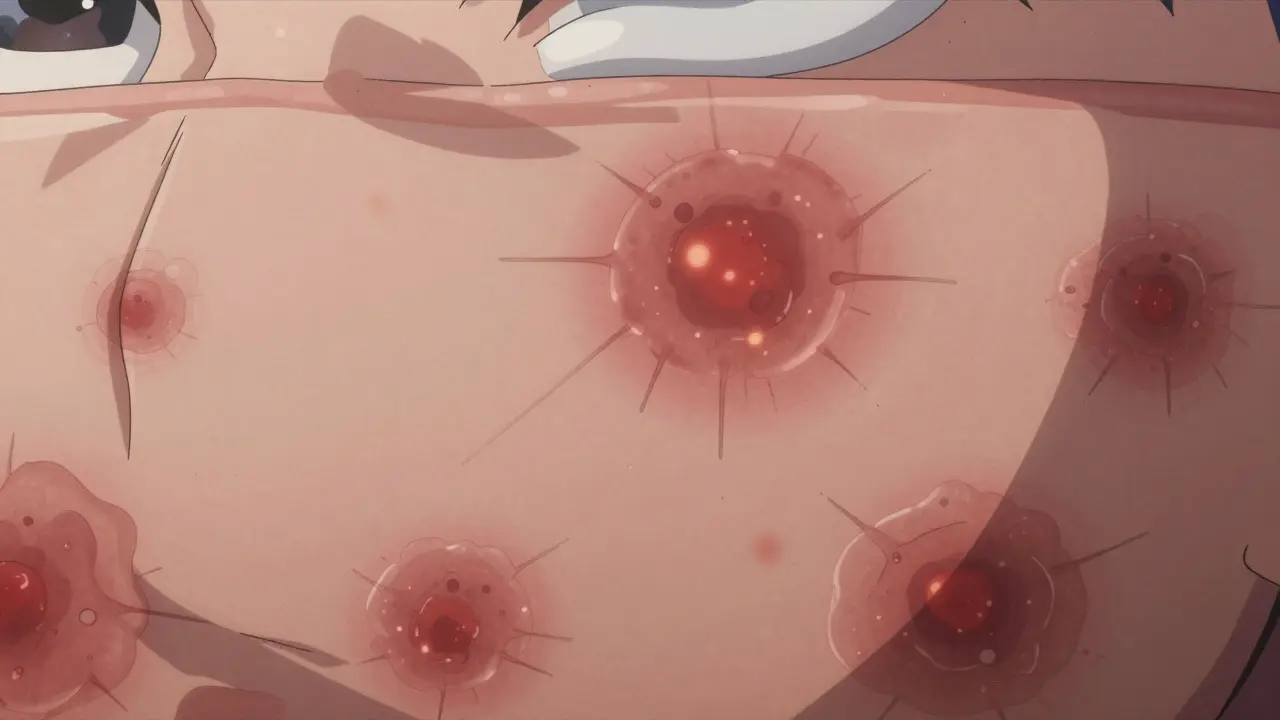
That relentless itch on your foot, the red ring spreading on your arm, or the burning rash in a skin fold-these are the tell-tale signs of a fungal skin infection. You aren't alone in this struggle. According to the American Academy of Dermatology Association, about 20-25% of people globally are dealing with some form of fungal skin infection right now. It’s a common, often embarrassing, and sometimes stubborn problem that many try to treat with home remedies before realizing they need a specific medical approach. Whether you are dealing with ringworm or a Candida outbreak, understanding what you are fighting is the first step to clearing it up for good.
Quick Summary: What You Need to Know
- Two Main Culprits: Most fungal skin infections are caused by either dermatophytes (ringworm) or yeast (Candida).
- Spotting the Difference: Ringworm usually forms a ring with a clear center, while Candida looks like a beefy red, moist patch often with small satellite spots.
- Treatment Varies: Simple cases need topical creams for 2-4 weeks, but nail infections or resistant cases often require oral medication.
- Diagnosis Matters: A simple potassium hydroxide (KOH) test can confirm the infection, preventing misdiagnosis as eczema or psoriasis.
- Prevention is Key: Keeping skin dry, changing clothes after sweating, and not sharing personal items drastically reduces recurrence.
What Are Fungal Skin Infections?
When people hear the word "fungus," they often think of mushrooms growing in a forest. In reality, fungi are microscopic organisms that live everywhere, including on your skin. Fungal Skin Infections are dermatological conditions caused by pathogenic fungi that invade the outer layers of the skin, hair, or nails. These organisms feed on keratin, a protein found in your skin cells. While many fungi are harmless, certain types become aggressive under the right conditions, leading to infection.
There are two primary categories you need to know about. First, you have dermatophytoses, commonly known as ringworm or tinea. These are caused by molds that specifically need keratin to survive. Second, you have candidiasis, which is caused by yeast. This distinction matters because the treatment protocols differ slightly based on the organism type. The Merck Manual’s 2023 edition highlights that while the term "ringworm" suggests a parasite, it contains no worms at all; the name comes from the ring-shaped lesions it creates.
Ringworm (Tinea): The Mold That Loves Keratin
Ringworm is the most recognizable fungal infection. It’s not one single disease but a group of infections named after where they appear on the body. Ringworm is a fungal infection caused by dermatophytes that creates circular, scaly patches on the skin. The fungi responsible belong to three main genera: Trichophyton, Microsporum, and Epidermophyton. A 2021 review in NCBI StatPearls notes that Trichophyton is responsible for 80-90% of these infections.
The infection changes its name based on location. If it’s on your feet, it’s Tinea Pedis (athlete’s foot). On the scalp, it’s Tinea Capitis. In the groin, it’s Tinea Cruris (jock itch). On the body, it’s Tinea Corporis. The classic presentation is an annular, erythematous, scaly plaque. This means you see a red, ring-shaped patch with a raised border and a center that is clearing up. This "central clearing" is the hallmark sign that helps doctors distinguish it from other rashes.
Epidemiologically, this infection hits different groups hard. A 2023 Pediatrics In Review study found that tinea capitis and corporis make up 65-75% of fungal infections in children before puberty. Adults, however, are more likely to suffer from tinea pedis, affecting about 15% of the global population, with rates climbing to 25-30% in those over 60. Transmission is often person-to-person in adults, but in children, 20-30% of cases come from pets like cats and dogs, a detail many parents overlook.
Candida: The Yeast That Thrives in Moisture
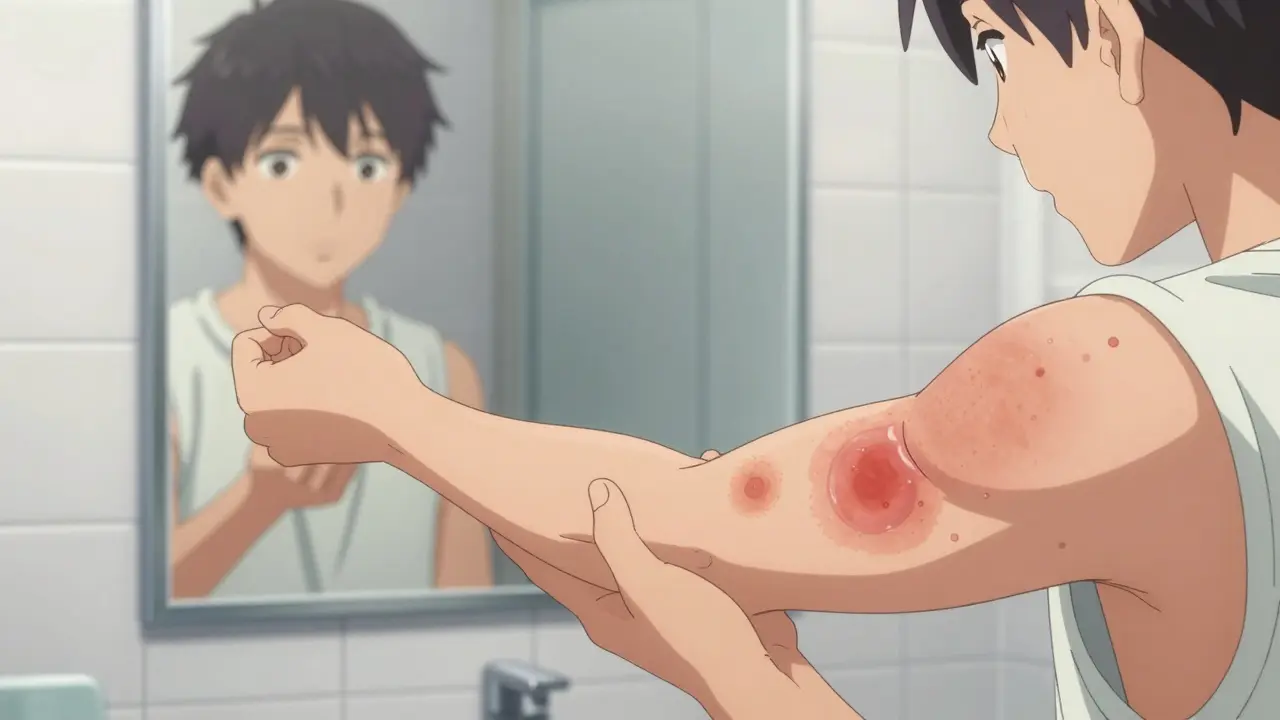
While ringworm loves dry, keratin-rich areas, Candida prefers the warm and wet. Candida is a yeast-type fungus that thrives in warm, moist environments, causing infections in skin folds and mucous membranes. The most common species is Candida albicans. Unlike the ring-shaped lesions of dermatophytes, Candida infections often look different. As Linda Stein Gold, MD, described in a 2022 WebMD feature, these lesions are often beefy red, moist, and macerated, frequently featuring small satellite pustules around the main rash.
This type of infection accounts for about 15-20% of all fungal skin infections. It is particularly common in skin folds where moisture gets trapped, such as under the breasts, in the armpits, or in the groin. It is also the primary cause of diaper dermatitis, affecting 7-25% of infants in their first year of life. In adults, risk factors include obesity, diabetes, and wearing tight clothing that restricts airflow. Interestingly, a 2022 meta-analysis in the Journal of Fungi found that people with diabetes mellitus are 2.5 times more susceptible to these infections due to higher sugar levels in the skin which feed the yeast.
There is also an emerging concern regarding Candida auris. Dr. Adam Friedman noted in a 2023 JAMA Dermatology editorial that this species represents a growing threat, particularly in healthcare settings, due to its multidrug-resistant nature. While rare in the general community, it highlights the importance of proper diagnosis and not overusing antifungals unnecessarily.
Diagnosis: Don't Guess, Test
One of the biggest challenges with fungal infections is that they often look like eczema or psoriasis. In a June 2023 Dermatology Times reader poll, 42% of users reported being initially misdiagnosed. This leads to using steroid creams, which can actually make a fungal infection worse by suppressing the immune response in the skin. The gold standard for diagnosis is the potassium hydroxide (KOH) preparation examination. A doctor scrapes a small amount of skin and mixes it with KOH solution to dissolve human cells, leaving the fungal structures visible under a microscope. This test is positive in 70-80% of cases and gives an immediate result.
If the KOH test is negative but suspicion remains high, a fungal culture might be ordered. However, this takes 2-4 weeks to grow, which is often too slow for immediate treatment decisions. Molecular testing is becoming more available since 2020, offering faster identification. Dr. Ruth Ann Vleugels of Harvard Medical School advocates for routine culture confirmation, while Dr. Mark Lebwohl supports clinical diagnosis with treatment initiation for classic presentations. For most people, if the rash looks classic, starting treatment is reasonable, but if it doesn't clear up, testing is essential.
Treatment Options: Topical vs. Oral
Once diagnosed, the treatment depends on the severity and location. For most skin infections, topical antifungals are the first line of defense. Terbinafine and Clotrimazole are two of the most common options available over the counter. Terbinafine is an allylamine, while Clotrimazole is an azole. A 2023 Cochrane Review documented that topical allylamines achieve cure rates of 70-90% for tinea corporis when applied twice daily for 1-2 weeks. Azoles typically require a longer course, around 2-4 weeks, to be equally effective.
| Medication | Type | Typical Duration | Best For | Cure Rate |
|---|---|---|---|---|
| Terbinafine | Allylamine | 1-2 Weeks | Tinea Corporis, Pedis | 70-90% |
| Clotrimazole | Azole | 2-4 Weeks | Candida, Tinea | 60-80% |
| Fluconazole | Oral Azole | 1-3 Months | Nail Infections, Severe Candida | 80-90% |
| Nystatin | Topical Polyene | 1-2 Weeks | Candida Only | High |
For nail infections (tinea unguium), topical creams rarely penetrate the nail plate effectively. The Infectious Diseases Society of America's 2023 guidelines emphasize that topical antifungals only achieve 40-60% cure rates for nails. Systemic therapy, such as oral Fluconazole or oral Terbinafine, is usually necessary. Oral Terbinafine typically requires 2-6 weeks for skin and up to 3 months for nails. However, these oral medications require monitoring because they can affect liver function in 1-2% of patients. Dr. Boni Elewski highlighted in a 2022 interview that resistance to Terbinafine is emerging, with 5-7% of Trichophyton rubrum isolates showing reduced susceptibility in North America.
For Candida infections, especially in the groin or diaper area, keeping the area dry is just as important as the medication. Nystatin is often preferred for Candida, while Terbinafine is more effective against dermatophytes. Misusing the wrong cream can prolong the infection. For example, using a steroid-antifungal combination cream without a doctor's advice can lead to tinea incognito, where the rash changes appearance and becomes harder to treat.
Prevention and Recurrence
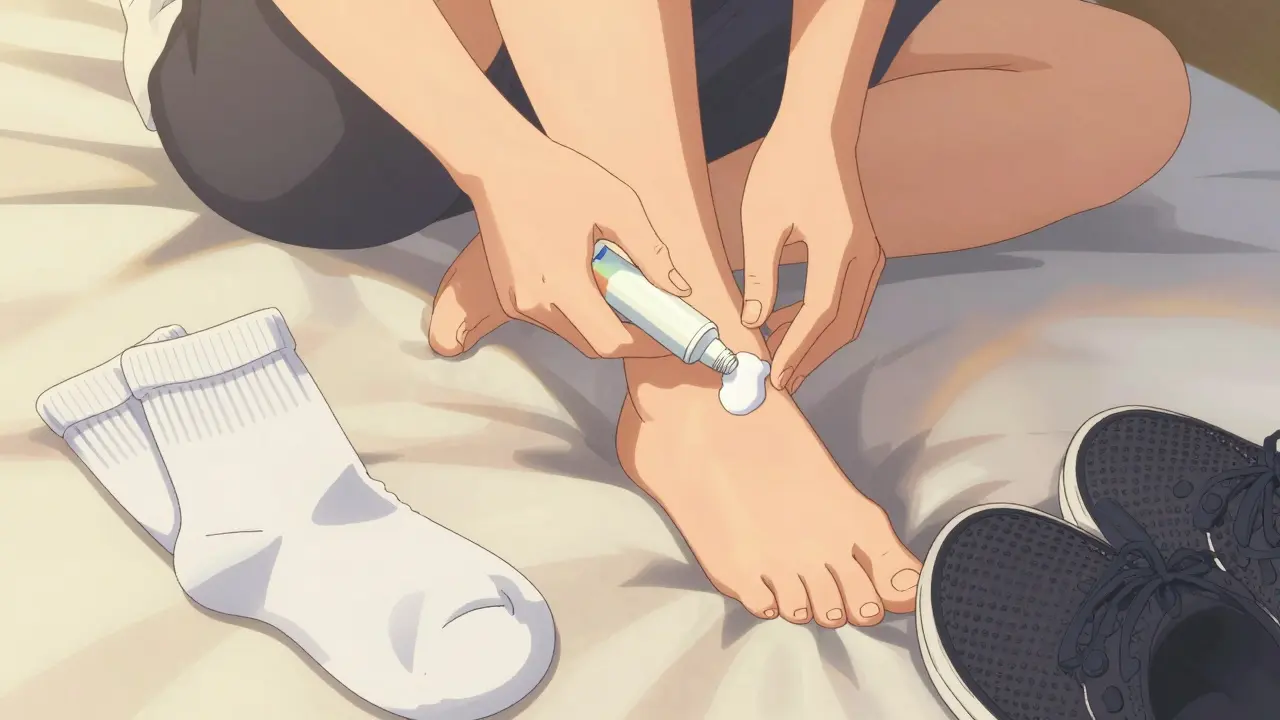
Why do these infections keep coming back? A July 2023 survey on Healthgrades found that 35% of users reported recurrence. Fungi are resilient and can survive in shoes, socks, and towels for long periods. To prevent reinfection, you need to address your environment. Wash towels and bedding in hot water. Dry your feet thoroughly after showering, paying attention to the spaces between toes. If you have athlete's foot, change your socks daily and rotate shoes to let them dry completely.
For Candida, managing moisture is critical. Wear breathable fabrics like cotton. If you are prone to vaginal yeast infections, some users have found success with probiotics. A June 2023 Instagram poll of 850 respondents noted that 65% experienced reduced recurrence when combining antifungals with Lactobacillus probiotics. While more research is needed, restoring the natural microbiome seems to help keep yeast populations in check.
Immunocompromised individuals face a 3-5 times higher risk of severe or recurrent infections. If you have diabetes or are on immunosuppressive medication, be extra vigilant about skin hygiene. The CDC's 2022 fungal disease resource center provides updated treatment algorithms for high-risk groups. Remember, treating the infection is only half the battle; changing habits ensures it stays away.
Frequently Asked Questions
Can I cure fungal skin infections with home remedies?
While some home remedies like tea tree oil or vinegar have mild antifungal properties, they are rarely strong enough to cure an established infection. Medical-grade antifungals like Terbinafine or Clotrimazole have proven cure rates of 70-90%, whereas home remedies often delay proper treatment, allowing the infection to spread.
How long does it take for ringworm to go away?
For most skin infections, you should see improvement within 1-2 weeks of starting topical treatment. However, you must continue applying the cream for at least one week after the rash disappears to prevent recurrence. Nail infections can take 3-6 months to fully clear because nails grow slowly.
Is ringworm contagious to pets?
Yes, many ringworm infections are zoophilic, meaning they spread between humans and animals. Cats and dogs are common carriers. If you have a persistent infection, check your pets for bald patches or scaly skin and consult a veterinarian.
Why does my fungal infection keep coming back?
Recurrence often happens because the fungus survives in your environment, such as in old shoes or towels, or because treatment was stopped too early. Additionally, underlying conditions like diabetes or a weakened immune system can make you more susceptible to reinfection.
Do I need a prescription for antifungal medication?
Many effective antifungals like Clotrimazole and Terbinafine are available over the counter. However, if you have a nail infection, a widespread rash, or if the infection doesn't respond to OTC treatments after 2 weeks, you will likely need a prescription for oral medication.
Can steroids make fungal infections worse?
Yes, using corticosteroid creams on a fungal infection can suppress the local immune response, allowing the fungus to grow unchecked. This condition is known as tinea incognito and makes the infection harder to diagnose and treat.
Next Steps and Troubleshooting
If you suspect you have a fungal infection, start by examining the rash closely. Does it have a raised border? Is it in a moist fold? If you are unsure, visit a primary care physician or dermatologist for a KOH test. Do not rely on Google diagnoses alone, as misdiagnosis is common. If you are using over-the-counter cream, stick to the full course. If there is no improvement in 2 weeks, stop and see a doctor. For those with recurrent issues, consider a deep clean of your home environment and discuss probiotic options with your healthcare provider. With the right diagnosis and consistent treatment, these infections are manageable and curable.




Caroline Bonner
March 26, 2026 AT 12:35It is truly fascinating how the body reacts to these microscopic invaders. I have spent years researching dermatological conditions and the data is overwhelming. You really need to understand the keratin connection. It is not just about surface level issues. The moisture factor plays a huge role in everything. Many people ignore the humidity aspect completely. They just rub cream on and expect miracles. But the environment matters just as much as the medication. You must dry your feet thoroughly every single time. If you skip that step the fungus returns. It is a cycle that breaks only with discipline. I recommend washing towels in hot water always. Do not share items with others ever. Prevention is better than cure in this case. The statistics are quite alarming actually. We need to talk about this more openly!
peter vencken
March 26, 2026 AT 13:07hey i used terbinafine for my toes and it worked great but make sure you keep it dry and dont share socks
Chris Crosson
March 26, 2026 AT 22:57good info here though i think people should get tested before buying stuff
Linda Foster
March 27, 2026 AT 21:21The information provided is accurate and should be followed with diligence regarding medical advice.
Chris Farley
March 28, 2026 AT 08:09this is nonsense we need stronger measures against foreign diseases not creams
Katie Putbrese
March 29, 2026 AT 17:14you should be ashamed if you let this spread to your family members it is unhygienic
Jacob Hessler
March 30, 2026 AT 12:20its simple just clean your feet and dont be lazy about it
Amber Gray
March 30, 2026 AT 21:01yeast is everywhere lol 🦠🛑
J. Murphy
March 31, 2026 AT 02:32meh its just another blog post about skin stuff
Jesse Hall
March 31, 2026 AT 21:15hang in there everyone you can beat this with patience 😊
Donna Fogelsong
April 2, 2026 AT 10:51they want you to believe the meds work but the pharma industry hides the truth about natural cures and immune suppression
Sean Bechtelheimer
April 2, 2026 AT 11:59big pharma wants you sick so they sell more pills 🤥
Seth Eugenne
April 3, 2026 AT 19:32please take care of your health and listen to the doctors 🩺
Jefferson Moratin
April 4, 2026 AT 03:53The philosophical implication of skin as a boundary between self and other is profound.
Caroline Bonner
April 4, 2026 AT 16:23I agree with the philosophical point about boundaries but practical hygiene is still the priority for health.