

You walk into the pharmacy to pick up a prescription for your mother. She’s on eight different pills. The pharmacist smiles and bags them up. But have you ever stopped to ask if she actually needs all of them? It is a question that rarely gets asked in a rushed doctor’s appointment, yet it might be the most important health decision you make this year.
Here is a startling reality: polypharmacy-taking five or more medications daily-is no longer rare among older adults. In the United States alone, the number of seniors taking five or more drugs tripled between 1994 and 2014. This isn't just about convenience; it's a safety hazard. As we age, our bodies process drugs differently, and what worked at 50 can cause falls, confusion, or hospitalization at 80. This is where Deprescribing comes in. It is not about abandoning treatment. It is the systematic process of identifying and discontinuing medications where the harms now outweigh the benefits.
What Is Deprescribing Really About?
Many people hear "stop taking medicine" and panic. They think their doctor is giving up. That is a myth. Deprescribing is an active, clinical intervention. Think of it like pruning a rose bush. You aren't killing the plant; you are cutting back dead wood so the healthy parts can thrive. Formally defined by researchers like Michael Woodward and later Scott et al., deprescribing involves evaluating whether a drug’s potential harms exceed its benefits, considering the patient’s actual life expectancy, functional status, and personal goals.
This concept gained formal traction around 2015, but the urgency has skyrocketed since. Why? Because guidelines often tell doctors how to start a therapy, but they rarely explain when to stop one. A medication prescribed for acute pain after a hip surgery three years ago might still be on the list today, even though the pain is gone. Or consider a cholesterol statin started in middle age; for a frail 85-year-old with limited life expectancy, the benefit of preventing a heart attack ten years from now may not justify the risk of muscle weakness today.
The Red Flags: When to Consider Stopping
How do you know if a medication review is overdue? Experts from the American Geriatrics Society and other bodies point to specific scenarios where deprescribing should be a priority. If any of these sound familiar, it is time to talk to a healthcare provider.
- New Symptoms Appear: Did your parent suddenly become dizzy, confused, or fall frequently? These are classic signs of adverse drug reactions, not necessarily new diseases.
- Advanced Illness or Frailty: If someone has severe dementia, end-stage disease, or requires full assistance with daily activities, preventive meds (like those for long-term cancer prevention) may no longer align with care goals.
- High-Risk Combinations: Taking certain blood thinners alongside anti-inflammatories increases bleeding risks significantly. Complex regimens are harder to manage and more prone to errors.
- No Clear Short-Term Benefit: Some drugs take years to show results. For a senior with limited time, waiting years for a benefit that never arrives is a poor trade-off.
A common pitfall is assuming that because a drug is safe for younger people, it is safe for seniors. It isn't. The kidneys and liver slow down, meaning drugs stay in the system longer, building up to toxic levels. This is why a medication review isn't optional-it's essential maintenance.
Tools of the Trade: Beers and STOPP Criteria
Clinicians don't guess which drugs to drop. They use validated tools. Two of the most respected are the Beers Criteria and the STOPP Criteria. The Beers Criteria, maintained by the American Geriatrics Society, lists potentially inappropriate medications for older adults. It flags drugs like anticholinergics (found in some allergy meds and bladder control drugs) that can worsen memory loss or cause constipation and dry mouth.
The STOPP criteria (Screening Tool of Older Persons' Potentially Inappropriate Prescriptions) takes a broader view, looking at interactions and conditions. For example, prescribing a beta-blocker for hypertension without checking if the patient also has asthma could trigger a breathing crisis. Using these tools helps pharmacists and doctors spot red flags that might be missed in a quick five-minute visit.
| Medication Class | Common Use | Why Review It? | Potential Harm in Seniors |
|---|---|---|---|
| Proton Pump Inhibitors (PPIs) | Acid reflux, ulcers | Often used indefinitely without need | Increased risk of fractures, kidney issues, infections |
| Benzodiazepines | Anxiety, sleep aids | Tolerance builds quickly | Falls, confusion, cognitive decline |
| Statins | Cholesterol lowering | Preventive vs. immediate benefit | Muscle pain, fatigue, negligible benefit in very old/frail |
| Anticholinergics | Allergies, bladder control | High burden on aging brain | Dementia risk, dry mouth, constipation, urinary retention |

The Process: How to Start a Medication Review
You cannot just throw pills in the trash. Abruptly stopping certain medications, like steroids or blood pressure drugs, can cause withdrawal symptoms or rebound effects. A proper deprescribing plan follows a structured path. First, identify the goal. Does the patient want to live as long as possible, or do they prioritize quality of life and comfort? Second, choose one drug to tackle at a time. Changing multiple variables makes it impossible to know which change helped or hurt.
Next, taper the dose gradually. For a benzodiazepine, this might mean reducing the dose by 10% every few weeks. Then, monitor closely. Keep a diary of symptoms. Did the dizziness go away? Did the anxiety return? This feedback loop is critical. Research shows that pharmacist-led reviews can reduce inappropriate medication use substantially. In fact, studies indicate that appropriate deprescribing can cut adverse drug events by 17-30% and lower hospital readmissions by up to 25%.
It is also vital to involve the whole care team. The general practitioner, the specialist, and the pharmacist need to be on the same page. Fragmented care is where mistakes happen. If a cardiologist starts a new pill and the geriatrician doesn't know about it, conflicts arise. Bring a complete list of everything being taken-including over-the-counter supplements-to every appointment.
Overcoming the Fear of Change
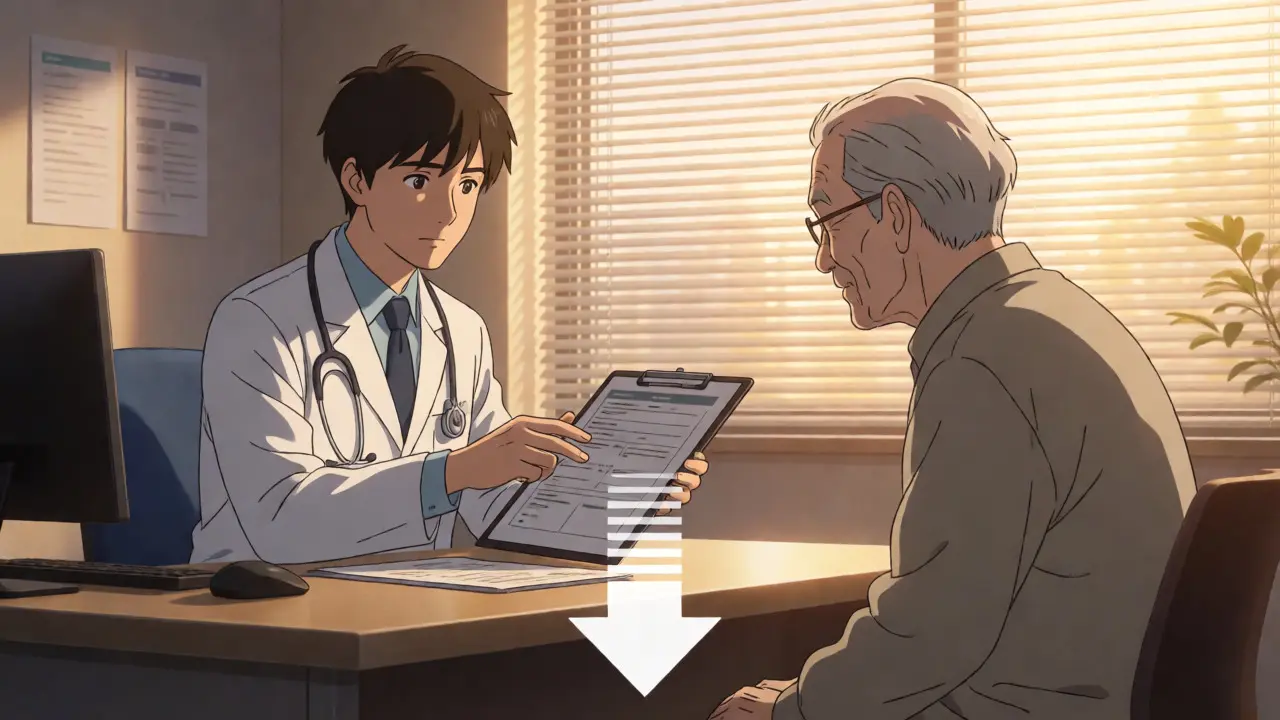
Both patients and doctors resist deprescribing. Doctors fear being sued or accused of neglecting care. Patients fear losing protection against disease. To overcome this, reframe the conversation. Ask your doctor: "Is this medication still helping me meet my current health goals?" or "What are the risks of continuing this versus stopping it?"
Resources like Deprescribing.org provide evidence-based guidelines for specific drug classes, including patient pamphlets and decision-support algorithms. These tools help translate complex medical data into plain language. Remember, less is often more. Simplifying a regimen reduces the chance of missing doses, lowers costs, and frees up mental energy for things that actually matter, like enjoying family or hobbies.
Frequently Asked Questions
Is deprescribing dangerous?
No, when done correctly. It is a planned, gradual reduction supervised by a healthcare professional. The danger lies in abrupt cessation or stopping medications without monitoring. Studies show that structured deprescribing improves safety and quality of life.
Can I stop my blood pressure medication on my own?
You should never stop blood pressure medication without consulting your doctor. Sudden changes can lead to dangerous spikes in blood pressure. Your doctor will likely taper the dose slowly while monitoring your readings.
Who should perform a medication review?
A primary care physician, a geriatrician, or a clinical pharmacist are best suited. Pharmacists are particularly skilled at spotting interactions and simplifying regimens, often working alongside doctors to implement changes.
Does deprescribing apply to vitamins and supplements?
Yes. Supplements are not always harmless. High doses of Vitamin E or K, for instance, can interact with blood thinners. A comprehensive review includes all substances ingested, not just prescription drugs.
How often should seniors have a medication review?
At least once a year, or whenever there is a significant change in health status, such as a hospitalization, a new diagnosis, or a noticeable decline in function.
Next Steps for Caregivers and Seniors
If you suspect too many medications are cluttering the medicine cabinet, start small. Create a complete inventory of every pill, patch, and liquid. Note the dosage and the reason for taking it. Take this list to the next doctor's appointment and explicitly ask for a medication review. Be open to trying a "drug holiday" or a tapered reduction for low-value prescriptions. The goal is not to eliminate medicine entirely, but to ensure every single pill earns its place in the daily routine.