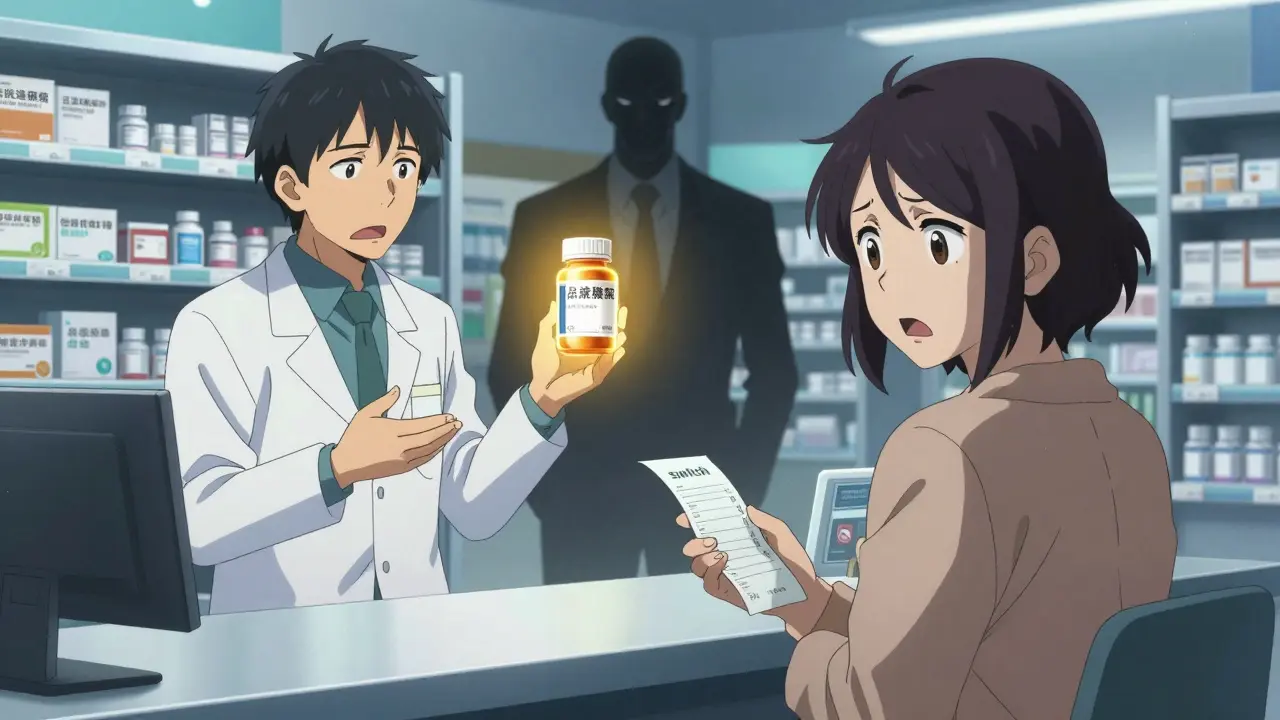
Imagine your doctor prescribes a medication you’ve taken for years. You walk into the pharmacy, expecting to pay the standard low price for the generic version. Instead, the pharmacist tells you the old generic is no longer available. The brand-name company has quietly pulled the original drug from shelves and replaced it with a slightly tweaked new version that requires a fresh prescription. Suddenly, your monthly bill triples. This isn’t a glitch in the system; it’s a calculated strategy known as product hopping, and it sits at the heart of today’s most contentious antitrust battles in healthcare.
For decades, state laws have allowed pharmacists to automatically substitute cheaper generic drugs for brand-name prescriptions, provided they are bioequivalent. These laws were designed to save consumers money and keep healthcare costs down. But since the 1984 Hatch-Waxman Act established the modern framework for generic drug approval, brand-name manufacturers have found ways to exploit loopholes. They don’t just rely on patents anymore; they manipulate the very mechanics of substitution to delay competition. The result? Billions of dollars wasted by taxpayers and patients, and a legal landscape where regulators are finally pushing back.
The Mechanics of Blocking Generic Entry
To understand why this is an antitrust issue, we first need to look at how generic substitution works. Under normal circumstances, when a brand-name drug’s patent expires, generic manufacturers can enter the market. State laws permit pharmacists to swap the brand for the generic without calling the doctor. This automatic substitution is powerful because it relies on inertia; most patients stick with what the pharmacist hands them. Generics typically capture 80% to 90% of the market within months of launch because they are significantly cheaper.
Brand-name companies realized that if they could break this chain of substitution, they could maintain their monopoly pricing long after their patents expired. The primary tactic used to achieve this is called "hard switching" or product hopping. Here is how it plays out in practice:
- Product Modification: The manufacturer introduces a new formulation of the drug. This might be an extended-release version instead of immediate-release, a different dosage strength, or a change in delivery method (like a patch instead of a pill).
- Withdrawal of Original: Crucially, the company stops selling or distributing the original formulation entirely before the generic version hits the shelves.
- Prescription Reset: Because the original drug is gone, pharmacists cannot substitute the generic. Patients must see their doctors again to get a new prescription for the new formulation. This creates high transaction costs for patients and breaks the momentum of generic adoption.
The Federal Trade Commission (FTC) documented these issues extensively in its October 2022 report, noting that such tactics impede competition between the original and reformulated drugs. By eliminating the prescription base for the original product before generics even have a chance to be substituted, brands effectively lock out competition. It is not about offering a better drug; it is about making the cheaper alternative inaccessible.
Legal Precedents: When Courts Say "Enough"
The legality of these maneuvers has been tested in courtrooms across the United States, leading to mixed but increasingly strict rulings. The landmark case that changed the game was New York v. Actavis in 2016. Actavis, now Allergan, manufactured Namenda, a drug used to treat Alzheimer’s disease. As the patent for the immediate-release version (Namenda IR) neared expiration, Actavis introduced Namenda XR (extended-release) and withdrew Namenda IR from the market just 30 days before generic entry.
The Second Circuit Court of Appeals ruled that this conduct was anticompetitive. The court recognized that state substitution laws were the "only cost-efficient means of competing available to generic manufacturers." By withdrawing the original drug, Actavis prevented generics from leveraging these laws. The court issued an injunction requiring Actavis to continue selling the older drug for 30 days following generic entry. This decision sent a clear signal: you cannot use product withdrawal as a shield against generic competition.
However, not all courts agree. In the 2009 In re Nexium Antitrust Litigation, the court dismissed claims against AstraZeneca for switching patients from Prilosec to Nexium. The key distinction was availability. In the Nexium case, AstraZeneca kept Prilosec on the market alongside the new drug. Courts generally view adding new products as procompetitive innovation. But when the original product is completely withdrawn, as in the Actavis case, the scale tips toward anticompetitive behavior. This split in judicial interpretation has created uncertainty, prompting the FTC to step in with clearer guidelines.

Beyond Product Hopping: REMS Abuse and Patent Thickets
Product hopping is just one tool in the arsenal. Another sophisticated tactic involves manipulating Risk Evaluation and Mitigation Strategies (REMS). REMS are FDA-mandated safety programs designed to ensure that the benefits of certain risky drugs outweigh their risks. To prove that a generic is bioequivalent, manufacturers often need samples of the brand-name drug for testing.
Brand-name companies have exploited this requirement by creating restrictive REMS programs that deny generic competitors access to necessary samples. According to Michael A. Carrier’s analysis in the Cornell Law Review, more than 100 generic firms have complained about being blocked from accessing samples. A study of 40 drugs subject to these restricted access programs showed that generics’ inability to enter cost the U.S. economy more than $5 billion annually. This is a textbook case of monopolization, where the conduct makes no economic sense other than harming competitors.
Patent thickets also play a role. Companies file dozens of minor patents covering everything from packaging to slight chemical modifications. Even if one patent expires, others remain, creating a maze that deters generic entry. For example, Teva Pharmaceuticals switched Copaxone, a treatment for multiple sclerosis, to a new formulation. Before the new patent was eventually invalidated, this strategy resulted in an estimated $4.3 to $6.5 billion in excess costs to consumers over two and a half years.
The Financial Stakes: Who Pays the Price?
The impact of these antitrust violations is not abstract; it is measured in billions of dollars paid by patients, insurers, and government programs like Medicare and Medicaid. The FTC’s 2022 report highlighted staggering figures. Revlimid, a cancer drug, saw its price increase from $6,000 to $24,000 per month over 20 years due to delayed generic entry. An estimated $167 billion was wasted on just three drugs-Humira, Keytruda, and Revlimid-because generics entered the U.S. market much later than in the European Union.
| Tactic | Description | Key Case/Example | Estimated Cost Impact |
|---|---|---|---|
| Hard Switching | Withdrawing original drug before generic entry | Namenda (Actavis) | High (Market share drop from 80-90% to 10-20%) |
| REMS Abuse | Denying sample access for bioequivalence testing | Various REMS-restricted drugs | $5 billion+ annually across 40 drugs |
| Disparagement Campaigns | Spreading false safety concerns about generics | Suboxone (Reckitt Benckiser) | Significant delay in generic uptake |
| Patent Thickets | Filing numerous minor patents to block entry | Copaxone (Teva) | $4.3 - $6.5 billion over 2.5 years |
When automatic substitution is possible, generics capture the vast majority of the market quickly. But when product hopping occurs, generic penetration can plummet to single digits. This loss of competition forces payers to absorb higher costs, which translates to higher premiums for everyone. The financial burden falls disproportionately on vulnerable populations who rely on fixed incomes or underfunded public health plans.
Enforcement Actions and Regulatory Shifts
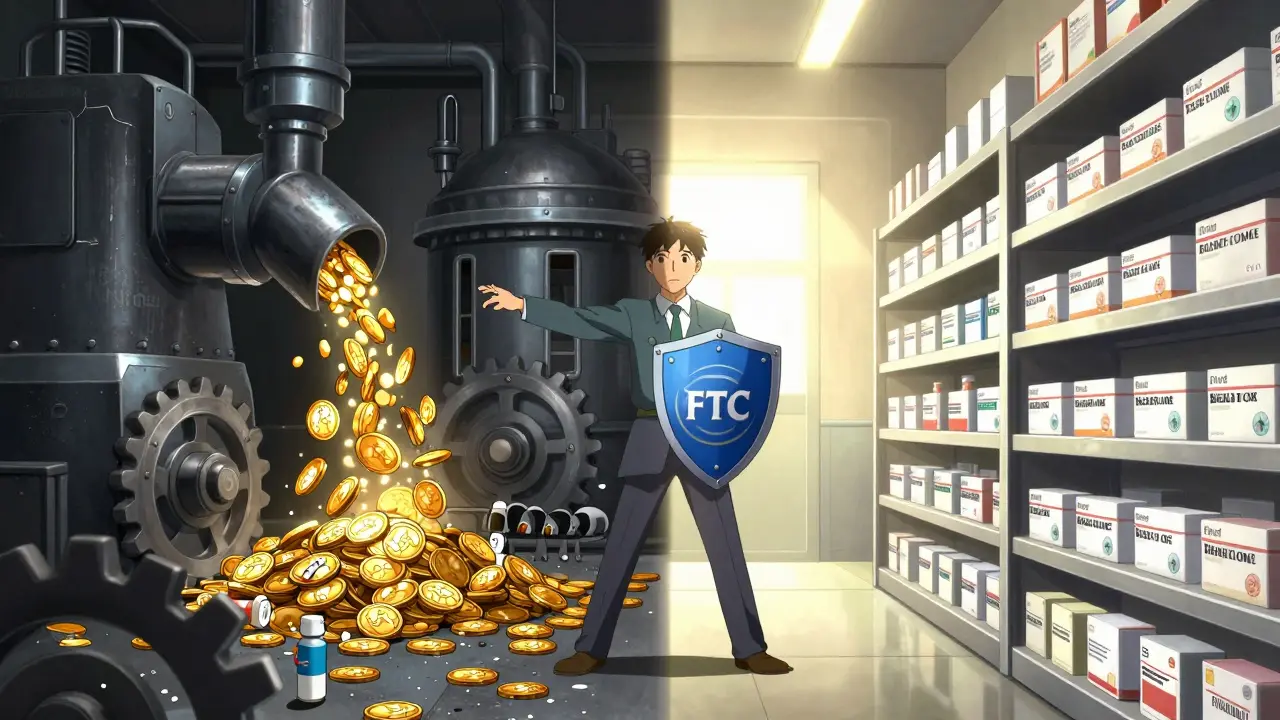
Regulators are no longer passive observers. The FTC has intensified its scrutiny of pharmaceutical mergers and marketing practices. In the Suboxone case, the FTC secured settlements from Reckitt Benckiser and its subsidiary Indivior in 2019 and 2020. The court found that Reckitt’s disparagement of Suboxone tablets, combined with threats to remove them from the market, coerced patients and doctors to switch to the film version. This was deemed a coercive measure that prevented real consumer choice.
The Department of Justice (DOJ) has also pursued criminal antitrust charges against generic manufacturers for price-fixing, sending a message that collusion will not be tolerated regardless of the player. Teva paid a $225 million criminal penalty-the largest to date for a domestic antitrust cartel-in 2023. Glenmark followed with a $30 million settlement. These actions demonstrate a broader crackdown on any behavior that distorts market competition.
State attorneys general remain active allies in this fight. The New York Attorney General’s early action against Actavis set a precedent for state-level intervention. Currently, there is growing momentum for legislative reforms to clarify the antitrust boundaries of product hopping. Experts predict increased scrutiny of REMS abuse and hard-switching tactics, with potential changes to federal law to explicitly prohibit the withdrawal of original formulations solely to block generic substitution.
What This Means for Patients and Providers
If you are a patient, provider, or policymaker, understanding these dynamics is crucial. For patients, awareness is the first line of defense. If your prescription suddenly changes and the price spikes, ask your pharmacist if a generic equivalent exists. Contact your doctor to request the specific generic name rather than accepting a new brand formulation without question.
For pharmacists, staying informed about state substitution laws and current litigation trends helps navigate these shifts. Many states are strengthening their laws to prevent manufacturers from exploiting loopholes. Advocacy groups are pushing for regulations that require brands to keep original formulations available for a reasonable period after generic entry.
The battle over generic substitution is not just a legal technicality; it is a fight for affordable healthcare. As regulators tighten the screws on anticompetitive practices, the hope is that the balance will shift back toward competition, driving prices down and ensuring that life-saving medications remain accessible to all.
What is product hopping in the pharmaceutical industry?
Product hopping is a strategy where brand-name drug manufacturers introduce a slightly modified version of a drug (such as a new dosage or delivery method) and withdraw the original formulation from the market just before generic competition arrives. This prevents pharmacists from substituting the cheaper generic version, forcing patients to switch to the new, more expensive brand formulation.
Why is hard switching considered an antitrust violation?
Hard switching is considered anticompetitive because it exploits state laws that allow automatic generic substitution. By removing the original drug, brands eliminate the only cost-efficient way for generics to compete. Courts, such as in the New York v. Actavis case, have ruled that this conduct excludes competition not on merit but through artificial barriers, maintaining monopoly pricing illegally.
How do REMS programs block generic drug entry?
Risk Evaluation and Mitigation Strategies (REMS) are FDA safety programs. Brand-name companies sometimes create overly restrictive REMS protocols that deny generic manufacturers access to samples of the brand drug needed for bioequivalence testing. Without these samples, generics cannot complete the FDA approval process, delaying their market entry and keeping prices high.
What was the outcome of the New York v. Actavis case?
The Second Circuit Court of Appeals ruled that Actavis’s withdrawal of Namenda IR before generic entry was anticompetitive. The court issued an injunction requiring Actavis to continue selling the older drug for 30 days after generic launch. This landmark decision established that preventing generic substitution through product withdrawal violates antitrust laws.
How much does delayed generic entry cost consumers?
Delayed generic entry costs consumers and taxpayers billions annually. For example, an estimated $167 billion was wasted on just three drugs (Humira, Keytruda, and Revlimid) due to late generic entry in the U.S. compared to Europe. Specific tactics like product hopping on Copaxone cost an estimated $4.3 to $6.5 billion over two and a half years.
Can patients do anything to avoid paying for hopped products?
Yes. Patients should actively check if a generic version of their medication exists. If a pharmacist says the generic is unavailable due to a formulation change, contact your doctor to specifically request the generic ingredient name. Pharmacists and doctors can often work together to bypass brand-name restrictions and secure lower-cost alternatives.