

Imagine waking up with a stinging, red eye that feels like it’s filled with sand. You assume it’s just a minor irritation from sleeping in your contacts or rubbing your eyes too hard. But what if that small scratch is actually an open sore on the surface of your eye? That is a corneal ulcer, an open sore on the cornea caused by infection-driven tissue loss that can lead to permanent vision impairment if untreated. For the over 85 million people worldwide who wear contact lenses, this isn’t just a theoretical risk-it’s a serious medical emergency that requires immediate attention.
The difference between a simple scratch and a sight-threatening ulcer is often invisible to the naked eye until it’s too late. While a corneal abrasion is a superficial scratch that usually heals on its own, an ulcer involves actual tissue death. If you are a contact lens wearer, understanding the specific risks and knowing exactly when to rush to urgent care can save your vision. This guide breaks down the mechanics of how lenses cause these sores, the symptoms that signal danger, and the precise steps you need to take when things go wrong.
How Contact Lenses Create the Perfect Storm for Infection
Contact lenses are generally safe when used correctly, but they change the environment around your eye in ways that favor bacteria. The primary mechanism is oxygen deprivation. Your cornea doesn’t have blood vessels; it gets oxygen directly from the air and tears. When you wear a lens, especially one that stays in overnight, you block that airflow. This hypoxic state weakens the cornea’s natural defenses, making it easier for pathogens to invade.
Bacteria don’t just appear out of thin air. They are often transferred from your fingers during insertion or from non-sterile cleaning solutions. Once under the lens, these microbes get trapped against the corneal surface. According to data from the Cleveland Clinic, a contact lens wearer is about 10 times more likely to develop a corneal ulcer than someone who doesn’t wear contacts. The risk skyrockets if you sleep in your lenses, increasing the likelihood by approximately 100 times. This statistic alone should make anyone think twice before falling asleep with their contacts in.
Other factors contribute to this risk profile. Scratched lenses can create micro-abrasions on the cornea, providing a direct entry point for infection. Trapped dirt particles, dry eye disorders, and conditions like blepharitis (inflammation of the eyelids) also elevate the danger. Even steroid eye drops, if used improperly without medical supervision, can suppress the local immune response and allow infections to flourish unchecked.
Spotting the Warning Signs: Symptoms vs. Normal Irritation
It is easy to dismiss early signs of a corneal ulcer as typical "lens fatigue." However, certain symptoms indicate that something more serious is happening. You should not ignore a combination of the following:
- Severe pain: Not just discomfort, but a sharp, persistent ache that doesn’t improve after removing the lens.
- Vision changes: Blurry or hazy vision that persists even after taking the lenses out.
- Light sensitivity (photophobia): Squinting in normal indoor lighting because bright lights hurt.
- Redness and discharge: An eye that looks significantly bloodshot, often accompanied by pus-like or watery discharge.
- White patch: A visible white spot on the colored part of the eye, which is a hallmark sign of an ulcer.
If you experience severe eye pain, sudden vision changes, or intense light sensitivity, do not wait for it to pass. These are red flags that require professional evaluation immediately. Dr. Audrey Tai, DO, MS of Athena Eye Care, notes that using newer diagnostic systems allows for earlier detection, but patient awareness remains the first line of defense.
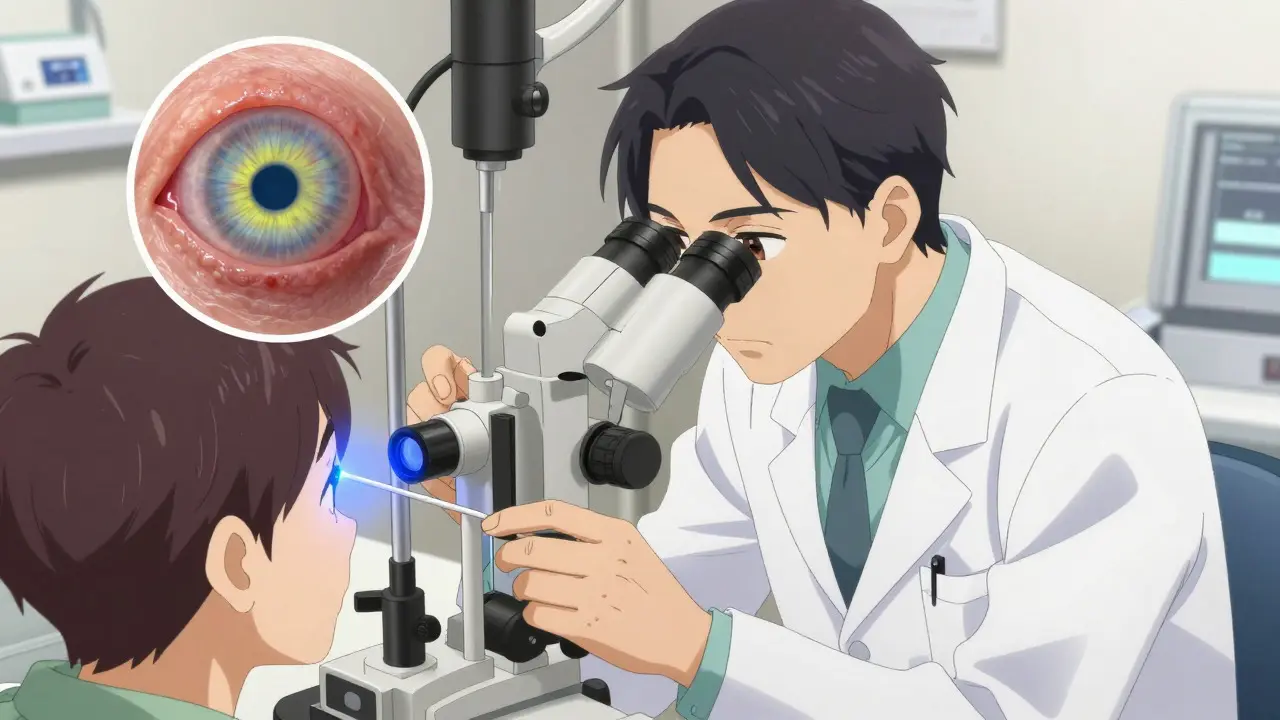
Diagnosis: What Happens at the Eye Doctor
When you visit an ophthalmologist or optometrist with suspected ulcers, the diagnosis process is thorough. The doctor will use a slit-lamp examination, a microscope with a bright light, to view the cornea in high magnification. They may apply fluorescein dye, a fluorescent yellow-green stain that highlights damaged areas of the cornea. Under blue light, the ulcer will glow, revealing its size and depth.
In many cases, the doctor will perform a corneal scraping. This involves gently swabbing the surface of the ulcer to collect samples for culture analysis. This step is critical because it identifies the specific pathogen-bacterial, viral, or fungal. Knowing the exact culprit allows for targeted treatment rather than guessing. Other tests might include keratometry to measure corneal curvature and visual acuity testing to assess how much vision has been affected.
| Feature | Corneal Abrasion | Corneal Ulcer |
|---|---|---|
| Nature | Superficial scratch | Open sore with tissue loss |
| Cause | Physical trauma (e.g., dust, lens edge) | Infection (bacteria, virus, fungus) |
| Healing Time | Usually 1-3 days | Weeks to months; may leave scars |
| Treatment | Lubricating drops, time | Antibiotics, antivirals, or antifungals |
| Risk of Vision Loss | Low if treated | High if untreated |
Treatment Protocols: Speed Is Critical
Time is the most important factor in treating a corneal ulcer. Treatment must start as soon as possible to prevent scarring, which can permanently distort the shape of the cornea and blur vision. For ulcers that are not immediately sight-threatening, doctors often prescribe broad-spectrum fluoroquinolone antibiotic drops. These cover a wide range of common bacteria while waiting for culture results.
If the ulcer is large (greater than 2 mm), close to the center of the pupil (less than 3 mm from the visual axis), or worsening after 48 hours, it is considered sight-threatening. In these cases, immediate culture analysis is mandatory. The treatment then shifts based on the pathogen:
- Bacterial: Fluoroquinolones remain the standard, sometimes combined with other antibiotics.
- Viral: Antiviral medications like acyclovir are used, particularly for herpes simplex virus.
- Fungal: Specialized antifungal drops or oral medications are required, as these are harder to treat.
In severe cases where significant scarring occurs, a corneal transplant may be necessary to restore clarity. This underscores why early intervention is vital. Corticosteroid eye drops are sometimes used to reduce inflammation, but only under strict medical supervision, as improper use can worsen the infection.
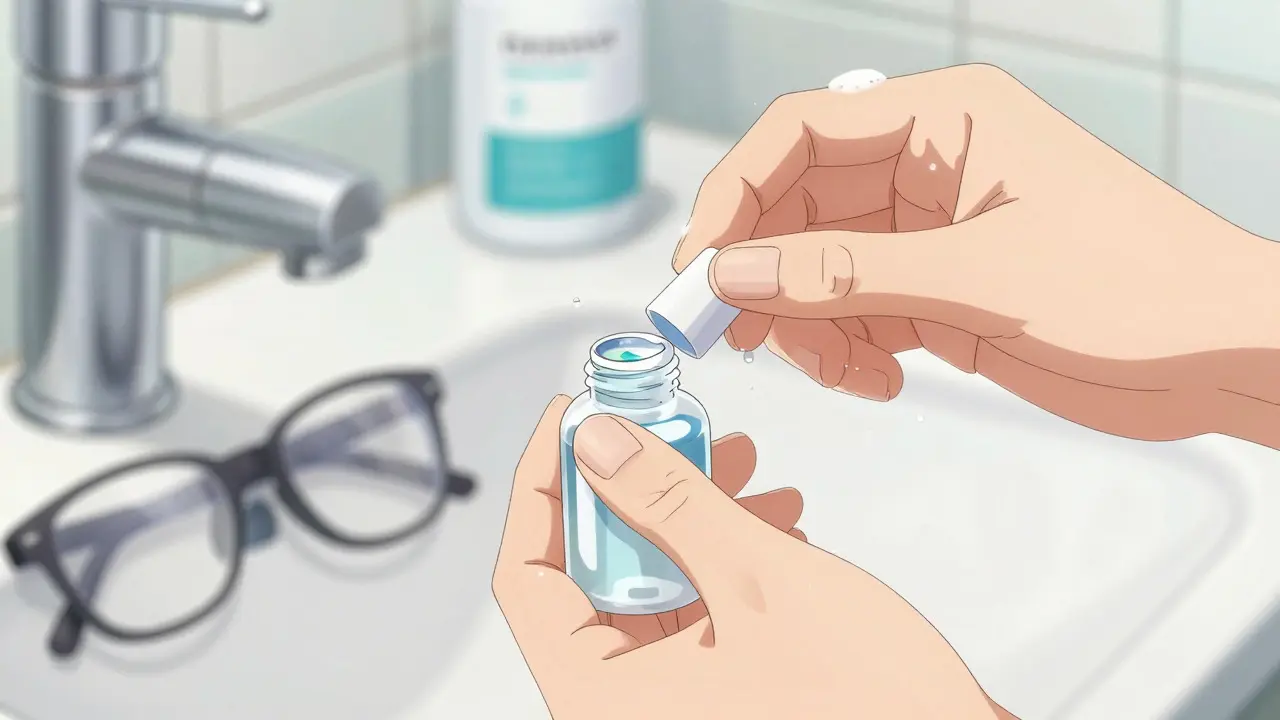
Prevention: Breaking the Cycle of Risk
Most contact lens-related corneal ulcers are preventable. The cornerstone of prevention is rigorous hygiene and adherence to wear schedules. Here are the non-negotiable rules for keeping your eyes safe:
- Never sleep in soft lenses unless specifically prescribed as extended-wear lenses by your doctor. Even then, follow the recommended wear time strictly.
- Wash hands thoroughly with soap and water before handling lenses. Rinse them well to remove any soap residue.
- Use fresh solution every day. Do not reuse old solution, and do not top off the case with new solution instead of emptying it completely.
- Avoid water exposure. Never swim, shower, or bathe while wearing soft lenses. Water contains organisms like Acanthamoeba, which can cause devastating keratitis.
- Replace lenses on schedule. Whether daily, bi-weekly, or monthly, sticking to the replacement timeline prevents protein buildup and bacterial colonization.
- Give your eyes a break. Wear glasses for a few days each month to let your corneas breathe and recover.
The FDA explicitly warns that some serious hazards of wearing contact lenses include corneal ulcers, eye infections, and even blindness. By treating your lens care routine with the same seriousness as brushing your teeth, you drastically reduce your risk.
Urgent Care: When to Stop Everything
If you suspect a corneal ulcer, the most important thing you can do is stop wearing your contact lenses immediately. Keep them in their case in case the doctor wants to examine them for scratches or debris. Then, seek professional care without delay. Do not try to "wait it out" or use leftover antibiotic drops from a previous infection, as the wrong medication can mask symptoms or promote resistance.
Go to an eye specialist or urgent care clinic equipped with a slit lamp. Mention that you are a contact lens wearer and describe your symptoms clearly. Early diagnosis and treatment significantly improve the prognosis, potentially saving you from long-term vision problems. Remember, the consequences of improper lens use can be severe and vision-threatening, but with prompt action, most cases resolve successfully.
Can I wear contact lenses if I have a mild eye irritation?
Generally, no. If your eye is red, painful, or sensitive to light, remove your lenses and switch to glasses. Wearing lenses over an irritated eye can trap bacteria and turn a minor issue into a corneal ulcer. Wait until the irritation fully resolves and consult your eye doctor before resuming wear.
What is the difference between keratitis and a corneal ulcer?
Keratitis is inflammation of the cornea, which can be caused by various factors including contact lens wear. A corneal ulcer is a specific type of keratitis where the inflammation leads to an open sore or tissue loss. Essentially, all corneal ulcers involve keratitis, but not all keratitis progresses to an ulcer.
How long does it take to heal a corneal ulcer?
Healing time varies depending on the severity and cause. Mild bacterial ulcers may heal in a few weeks with proper antibiotic treatment. More severe or fungal ulcers can take months. During this time, regular follow-up appointments are essential to monitor progress and adjust treatment.
Are daily disposable lenses safer than reusable ones?
Yes, daily disposables are generally considered safer because they eliminate the need for cleaning and storage, reducing the risk of contamination from solutions or cases. However, they still require good hand hygiene during insertion and removal, and you should never sleep in them unless prescribed.
Can a corneal ulcer scar my vision permanently?
Yes, if left untreated or if the ulcer is deep and central, it can leave a scar on the cornea. This scar can distort light entering the eye, leading to permanent blurriness or astigmatism. In severe cases, a corneal transplant may be needed to restore clear vision.




joyce Hogewoning
August 30, 2026 AT 00:37omg i actually almost did this last week and thought it was just dry eyes because my contacts were in for like 18 hours straight which is crazy right?? the fact that you can lose your vision from just sleeping with them in is so terrifying honestly i never knew it was that bad until now but its good to know the signs so we dont all end up blind
Thhomas Fox
August 30, 2026 AT 15:46Good breakdown. The oxygen deprivation point is key. Your cornea is avascular, it breathes through tears. Block that, invite bacteria. Simple physics, brutal consequence.
Kaylyn Mello
August 31, 2026 AT 05:44i totally agree with the hygiene part i used to rinse my lenses with tap water thinking it was fine but my eye doctor told me that is literally how you get acanthamoeba which sounds like a nightmare creature from a horror movie but is real and scary so wash hands use fresh solution always
Owen John
August 31, 2026 AT 07:09One wonders if the 'fresh solution' mandate is merely a vector for pharmaceutical profit rather than genuine safety. The statistics cited are convenient for those selling disposables. Yet, the hypoxic state is undeniable, a biological vulnerability exploited by commerce. One must remain vigilant against the subtle erosion of autonomy via medicalized compliance. The lens is a cage for the cornea's freedom.
Maneesh kv
August 31, 2026 AT 09:23Great info!! 📚 But let us be clear: prevention is better than cure. If you ignore the pain, you pay with your sight. Do not be lazy with your eyes. They are windows to the soul, keep them clean! 💪👁️
John Park
September 2, 2026 AT 00:18The narrative here is flawed. It presents a binary choice between risk and comfort, ignoring the socioeconomic reality that daily disposables are expensive. For many, reusing lenses is not negligence, it is survival. The 'urgent care' advice is luxury medicine. Most people will just rub their eyes and hope for the best. The system fails the poor first. Also, typo alert: 'hypoxic' is pronounced wrong in most media.
Kathleen McGrath
September 3, 2026 AT 01:48This is really helpful! I wear glasses now but I miss my contacts. Good to know the warning signs like the white spot. Thanks for sharing!
Lemuel Gomez
September 4, 2026 AT 16:47Well... this is certainly informative, though one might argue that the fear-mongering regarding overnight wear is somewhat exaggerated for modern silicone hydrogel lenses; however, the general principle of avoiding water exposure remains sound, as Acanthamoeba is indeed a persistent threat in non-sterile environments...
Emmanuel Umana
September 5, 2026 AT 09:40In our culture, eye health is often neglected due to cost. This guide is vital. Prevention saves lives. We must share this knowledge widely. The cornea is delicate. Respect it.
Lilian Binda
September 6, 2026 AT 11:49stop being such babies about your eyes you think you are special? everyone has red eyes sometimes it is just allergies stop running to doctors for every little thing and learn some basic hygiene before you blame the lenses on your own dirty fingers and lack of common sense