Interpreter Rights Scenario Simulator
Select a scenario below to see how federal and state laws protect your right to clear medication instructions.
The "Helpful" Family Member
Family interpretation requestThe Cost Concern
Billing for servicesThe Rare Language
Remote interpretationPrivacy Worries
Confidentiality rulesThe Refusal
When they say noWhy Your Language Matters at the Pharmacy Counter
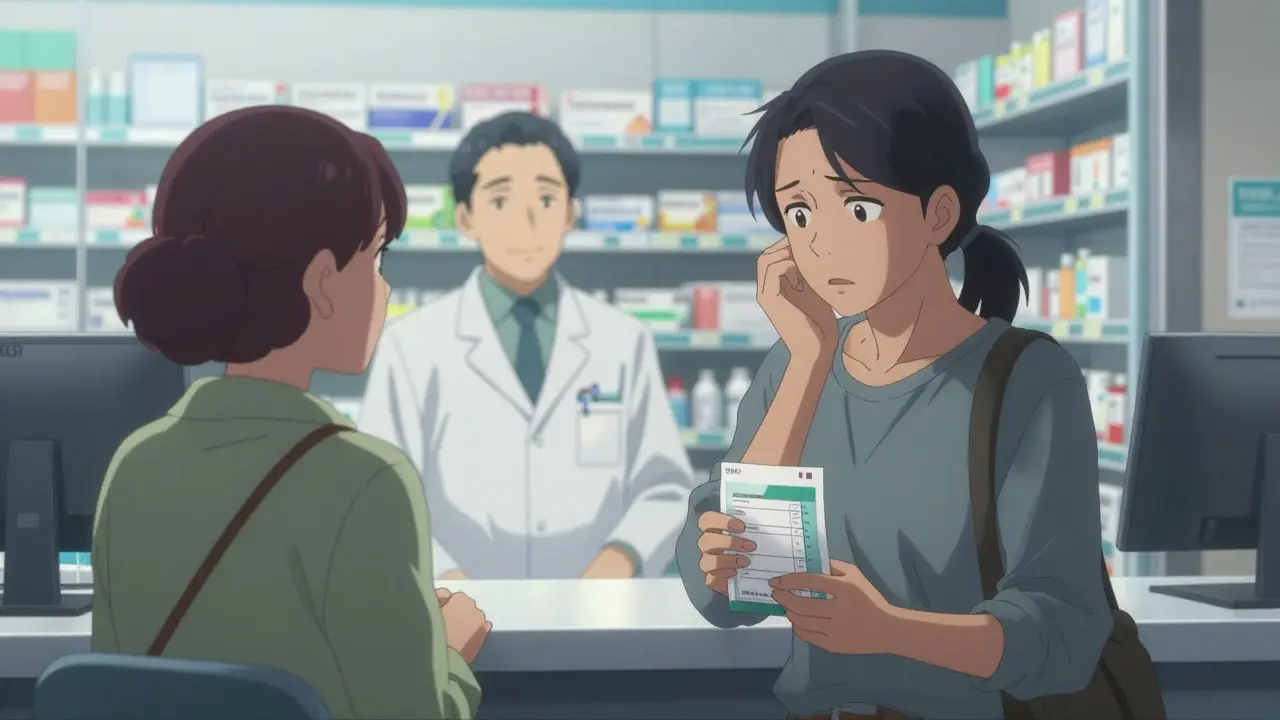
You pick up your prescription. The pharmacist hands you a bag with a label full of medical jargon. You nod, smile, and walk out. But inside, you’re confused. Do you take this pill with food? What if you miss a dose? Is that headache a side effect or something else?
If English isn’t your first language, this scenario is terrifyingly common. It’s also dangerous. Misunderstanding medication instructions leads to overdoses, missed doses, and preventable hospital visits. That’s why interpreter rights exist. They aren’t just bureaucratic rules; they are a critical part of your safety plan.
In the United States, about 8.5% of the population-roughly 25 million people-are considered Limited English Proficient (LEP). For these individuals, the right to clear communication isn't a luxury. It’s a legal mandate designed to keep you alive and healthy. Let’s break down what those rights are, who enforces them, and how you can use them today.
The Legal Backbone: ACA Section 1557 and State Laws
Where do these rights come from? The foundation is federal law, specifically Section 1557 of the Affordable Care Act (ACA). Originally passed in 2010, this section was significantly strengthened with new enforcement provisions that went into effect on July 5, 2024.
Section 1557 requires any healthcare provider receiving federal funding-which includes almost all hospitals and many pharmacies-to provide "meaningful access" to LEP patients. This means you have the right to receive accurate pharmaceutical information in your preferred language. Crucially, the updated rules now explicitly prohibit providers from forcing you to bring a family member or friend to interpret for you, unless you specifically ask for it. Family members often lack medical terminology knowledge or may feel too embarrassed to advocate for you clearly.
Federal law sets the floor, but some states build higher walls. New York State, for example, has some of the strictest regulations in the country through its SafeRx program (Education Law § 6829). If you live in New York, pharmacies must:
- Provide free oral interpretation services immediately upon request.
- Translate prescription labels and warning stickers (like "May cause drowsiness") into specific languages.
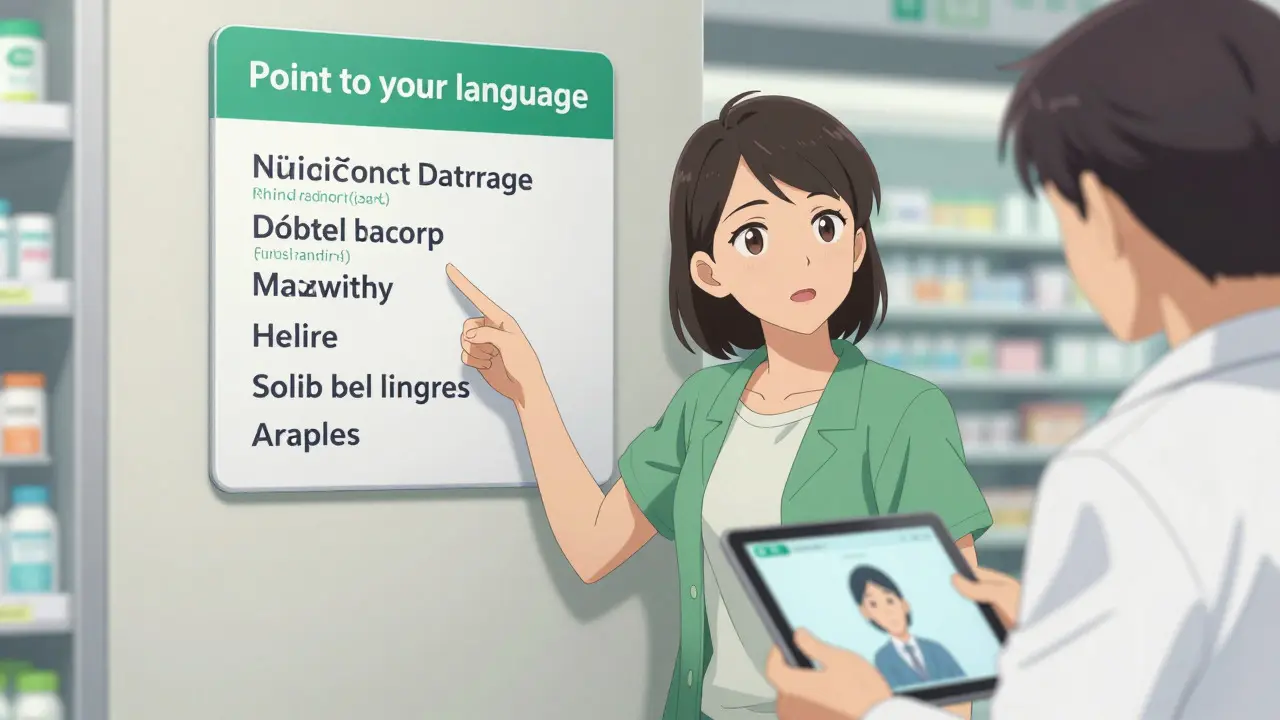
- Post conspicuous signs saying "Point to your language" near the counter.
California has similarly detailed requirements. Other states like Texas and Florida focus more on hospitals than community pharmacies, leaving gaps in care for outpatient medication management. Knowing which laws apply to your location is the first step in claiming your rights.
Who Counts as a "Qualified Interpreter"?
A common misconception is that anyone who speaks two languages can interpret. In healthcare, this is risky. A neighbor might know the word for "pain," but do they know the difference between "take with food" and "take on an empty stomach"? One wrong translation can ruin a treatment plan.
Under ACA Section 1557 and state regulations like New York’s, a "qualified interpreter" must demonstrate proficiency in both English and the target language. More importantly, they must understand specialized medical and pharmaceutical terminology.
This usually means using professional services rather than relying on bilingual staff off-the-clock or family members. Professional interpreters undergo training in medical ethics, confidentiality, and precise terminology. Studies show that when professional interpretation services are used, medication errors among LEP patients drop by 67%. That is a massive improvement in patient safety.
However, "qualified" doesn't always mean "physically present." Regulations allow for telephone or video interpretation services. In fact, many pharmacies use remote interpretation lines to handle less common languages instantly. If a pharmacist puts you on hold to call an interpreter, that is not a delay-it is compliance. They are securing a qualified professional to ensure you get the right advice.

Your Rights in Action: What to Expect
When you walk into a pharmacy that complies with modern language access standards, here is what should happen:
- Identification: Staff should ask about your language preference during intake or when you pick up a new script. This is often done via a simple questionnaire.
- Signage: You should see multilingual notices. In places like New York, look for the "Point to your language" sign. It’s a visual cue that help is available without you having to struggle to explain your need.
- Immediate Access: Interpretation should be provided immediately. If there is no bilingual staff member, the pharmacist should activate a phone or video interpreter service.
- Translated Materials: For common languages, your prescription label and auxiliary warnings should already be translated. If your language is rare, the verbal counseling via interpreter takes precedence.
Dr. Lisa M. Weiss, whose research highlights the risks of language barriers, notes that misunderstood instructions lead to serious health risks including drug interactions and skipping essential meds due to fear. Your right to an interpreter prevents these outcomes.
Challenges and Gaps in the System
While the laws are strong, implementation isn't perfect. Small, independent pharmacies often struggle with the cost and logistics of maintaining 24/7 access to interpretation services. A 2023 analysis found that while 92% of chain pharmacies are compliant, only 67% of independent pharmacies have fully implemented these systems.
Patient experiences vary. Some users praise the "Point to your language" signs for making them feel confident. Others report frustration when staff don't know how to activate the interpreter service during busy hours. If you encounter resistance, remember: you are not asking for a favor. You are exercising a civil right protected by federal and often state law.
Additionally, demographic shifts sometimes outpace regulations. New York limits required translations to seven languages per region based on Census data. Critics argue this leaves emerging communities without adequate support. However, the availability of phone/video interpreters helps bridge this gap for less common languages.
How to Advocate for Yourself
If you or a loved one faces language barriers at the pharmacy, here is a practical checklist:
- Speak Up Early: Tell the staff your preferred language before they start counseling you. Don’t wait until you’re confused.
- Ask for a Professional: If offered a family member, politely decline if you want a neutral, trained interpreter. Say, "I would like a qualified interpreter, please."
- Check the Label: Ensure the written instructions match what the interpreter told you. If they differ, ask for clarification immediately.
- Document Issues: If a pharmacy consistently fails to provide services, note the date and time. You can report violations to your state’s Department of Health or the U.S. Department of Health and Human Services Office for Civil Rights.
Remember, the goal is safe medication use. An interpreter ensures you understand dosage, timing, side effects, and storage. This clarity improves adherence and reduces adverse drug events.
The Future of Language Access
Technology is changing the landscape. AI-powered translation tools are being integrated into pharmacy workflows. While promising, current regulations still require human verification for medication instructions to ensure accuracy. The FDA is also exploring standardized pictograms on labels to supplement text, which could help visually convey instructions across language barriers.
By 2026, Medicare and Medicaid providers are required to achieve full language access compliance. This push is driven by data showing that proper language services save money and lives. The Congressional Budget Office estimates these regulations could prevent 14,000 adverse drug events annually among LEP patients.
Language access is not just about courtesy. It is a fundamental component of patient safety. Whether you are in New York, California, or anywhere else in the U.S., knowing your interpreter rights empowers you to take control of your health. Next time you pick up a prescription, don’t hesitate to ask for the help you deserve.
Do I have to pay for an interpreter at the pharmacy?
No. Under federal law (ACA Section 1557) and most state regulations, healthcare providers must provide interpretation services free of charge to the patient. The cost is borne by the pharmacy or healthcare system.
Can my child interpret for me at the pharmacy?
It is generally discouraged and prohibited under strengthened ACA rules unless you specifically request it. Children may lack medical vocabulary or feel uncomfortable discussing adult health issues. Professional interpreters ensure accuracy and confidentiality.
What if the pharmacy says they don't offer interpretation services?
This may be a violation of federal or state law, especially if they receive federal funds. Ask them to contact a remote interpretation service (like LanguageLine). If they refuse, you can file a complaint with your state’s Department of Health or the HHS Office for Civil Rights.
Are my conversations with the interpreter private?
Yes. Qualified interpreters are bound by HIPAA privacy rules and professional codes of ethics. Your medical information shared during interpretation is confidential, just like any other conversation with your pharmacist.
Which languages are commonly available at pharmacies?
Common languages include Spanish, Mandarin, Cantonese, Bengali, Russian, and Arabic, depending on local demographics. Remote interpretation services can provide access to over 200 languages, even if a bilingual staff member isn't present.