
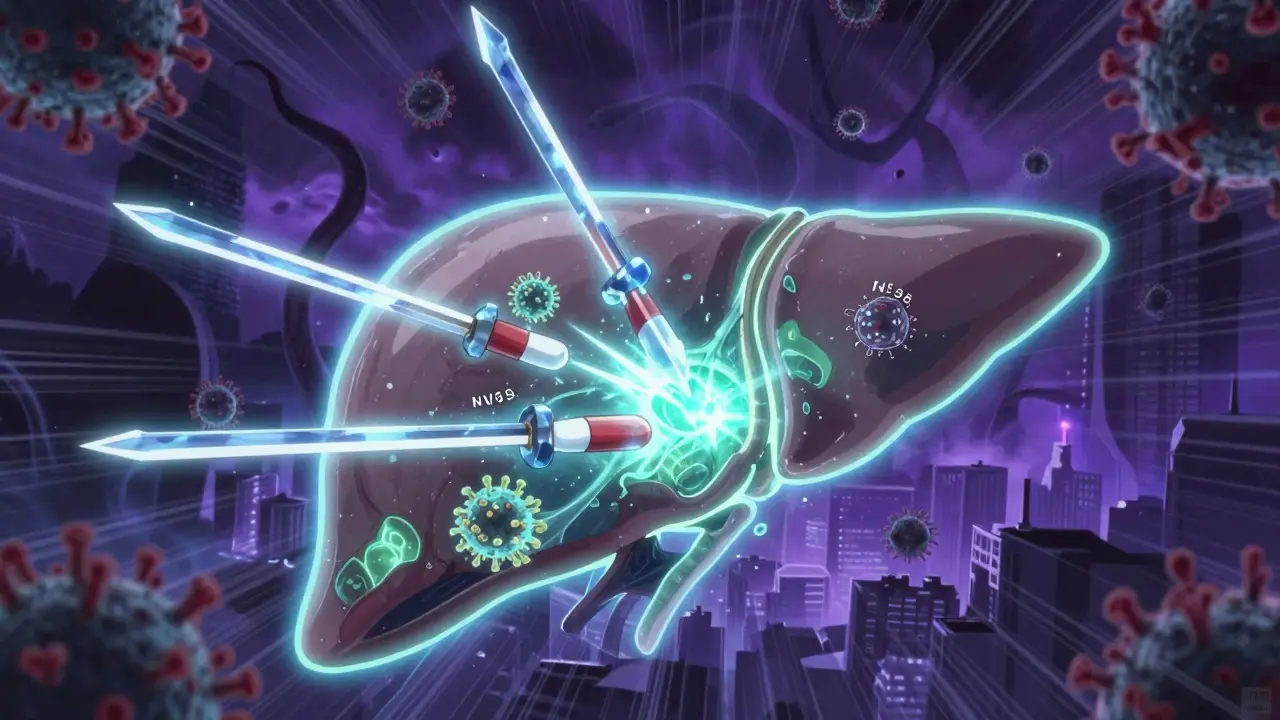
For decades, chronic hepatitis C was a slow-moving crisis. People lived with it for years, sometimes decades, without knowing. The virus crept into the liver, causing damage quietly. Many didn’t feel sick until it was too late - cirrhosis, liver failure, or cancer had already taken hold. Then, around 2014, everything changed. Today, chronic hepatitis C is no longer a life sentence. It’s a curable condition - and the science behind it is simpler than most people realize.
What Chronic Hepatitis C Really Does to Your Liver
Hepatitis C isn’t just a virus. It’s a stealthy invader that targets liver cells and replicates endlessly. Left untreated, it triggers inflammation. Over time, that inflammation turns into scar tissue - fibrosis. As fibrosis builds, the liver stiffens. It can’t filter toxins, produce proteins, or store energy like it should. Eventually, it becomes cirrhotic. And cirrhosis? That’s the gateway to liver cancer and death.
Before direct-acting antivirals (DAAs), doctors had one real option: interferon and ribavirin. Those treatments lasted up to a year. Side effects? Severe. Flu-like symptoms, depression, anemia, even hair loss. And even then, only 40 to 80% of people were cured - depending on their genotype. Many gave up. Others couldn’t tolerate the treatment. That’s why so many people with hepatitis C never got help.
The Breakthrough: How DAAs Actually Work
Direct-acting antivirals changed everything. These aren’t vague, broad-spectrum drugs. They’re precision tools. Each one blocks a specific part of the hepatitis C virus’s life cycle.
- NS3/4A protease inhibitors - like glecaprevir and voxilaprevir - stop the virus from cutting its proteins into usable pieces. No proteins? No new virus.
- NS5A inhibitors - such as velpatasvir and pibrentasvir - disrupt how the virus assembles itself. Think of it like jamming the factory assembly line.
- NS5B polymerase inhibitors - like sofosbuvir - stop the virus from copying its RNA. No copy? No spread.
Modern treatments combine two or three of these drugs into a single pill. That’s why you only need to take one tablet a day. And because they target the virus directly, they don’t wreck your immune system like interferon did.
Cure Rates That Defy Old Expectations
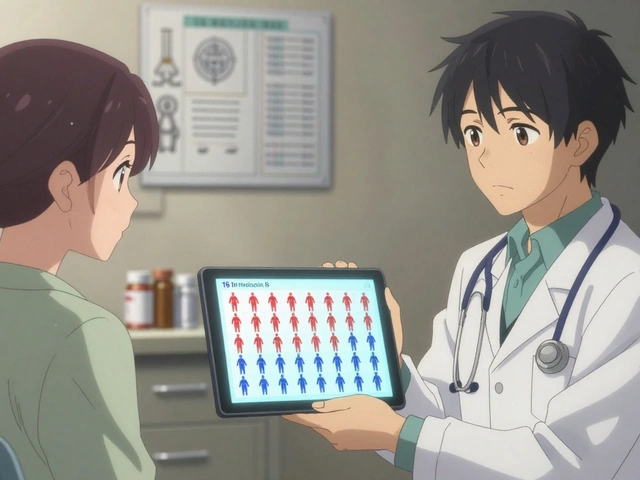
Today, over 95% of people who take a full course of DAAs are cured. That’s not a guess. That’s from real-world data from the CDC, WHO, and major medical journals. In some studies, cure rates hit 99%. Even people with cirrhosis, HIV co-infection, or prior treatment failure are seeing success rates above 90%.
Here’s what that means in practice:
- Epclusa (sofosbuvir/velpatasvir) - approved in 2016 - cures all six genotypes in 12 weeks.
- Mavyret (glecaprevir/pibrentasvir) - approved in 2017 - works in as little as 8 weeks for people without cirrhosis.
- Vosevi (sofosbuvir/velpatasvir/voxilaprevir) - for those who failed earlier DAA treatments.
And here’s the kicker: you don’t even need to know your genotype anymore. Pan-genotypic regimens work on all strains. That’s why primary care doctors can now treat hepatitis C - no specialist needed. One study found clinicians could prescribe correctly after just four hours of training.

How Liver Protection Happens - Naturally
When the virus is gone, the liver doesn’t just stop getting worse. It starts healing. Studies from Mayo Clinic show that 95% of patients stop fibrosis progression after treatment. In 70% of cases, scar tissue actually reverses over five years.
Think about that. A liver that was stiffening, struggling, failing - begins to repair itself. It’s not magic. It’s biology. Remove the virus, and the liver’s natural healing kicks in. No drugs needed. No surgery. Just time.
Patients report life-changing outcomes. One man on Reddit said, “Cured in 12 weeks with Epclusa - only side effect was mild fatigue first week.” Another shared, “I finally felt like I could marry and have kids.” These aren’t anecdotes. They’re backed by data. A Gilead survey of 5,000 patients found 97% would recommend treatment. And 89% said it didn’t interfere with their daily life.
Cost, Access, and the Real Barriers
Yes, the drugs are expensive. In the U.S., a 12-week course of Mavyret or Epclusa cost about $74,700 in 2023. That’s down from $94,500 for Sovaldi in 2013. But here’s the truth: the cost isn’t the biggest problem. The real issue is access.
Only 20% of people with hepatitis C worldwide even know they’re infected. In low-income countries, just 15% of diagnosed patients get treatment. In the U.S., insurance denials still block 28% of patients. Many need to go through prior authorization appeals - a bureaucratic nightmare.
But progress is happening. Generic versions are now available for as little as $50 per course in qualifying countries. Gilead and other manufacturers have programs covering 70% of uninsured patients. The Veterans Health Administration treats 95% of diagnosed patients. Community clinics? They’re at 65%. The gap isn’t the drug. It’s the system.

Who Still Struggles - And What’s Next
Not everyone is cured on the first try. About 1-5% of patients develop resistance after multiple failed treatments. For them, retreatment is complex. New regimens are being tested, but options are limited.
Reinfection is another challenge. Among people who inject drugs, 5-10% get hepatitis C again after being cured. That’s why harm reduction - clean needles, testing, counseling - is just as important as the pills.
And children? In 2022, the WHO expanded treatment to kids as young as 3. That’s huge. It means we can stop transmission before it becomes a lifelong burden.
What You Need to Do Right Now
If you’ve ever had a blood transfusion before 1992, used injection drugs, gotten a tattoo in an unregulated setting, or were born between 1945 and 1965 - get tested. One blood test. That’s it. No needles. No fasting. Just a simple HCV RNA test.
If you test positive, don’t wait. The cure is here. It’s simple. It’s fast. It’s safe. You don’t need to be an expert. You don’t need to travel. Your local doctor can prescribe it. And if insurance denies it? Fight it. Patient assistance programs exist. They’re real. They work.
The goal isn’t just to treat. It’s to eliminate. The WHO wants to cut chronic hepatitis C cases by 90% by 2030. That’s possible - if we stop seeing it as someone else’s problem. It’s not. It’s yours. It’s mine. It’s everyone’s.



Brad Ralph
February 14, 2026 AT 06:14Love it. The liver heals itself if you just stop stabbing it with a virus. Biology is low-key the MVP here.
Sophia Nelson
February 15, 2026 AT 00:54steve sunio
February 16, 2026 AT 18:40Neha Motiwala
February 18, 2026 AT 06:04athmaja biju
February 19, 2026 AT 11:57Robert Petersen
February 20, 2026 AT 01:52Craig Staszak
February 21, 2026 AT 07:30It doesn't ask for thanks
Just stop poisoning it
And it rebuilds everything
Simple
Brilliant
Human
alex clo
February 21, 2026 AT 15:14Alyssa Williams
February 23, 2026 AT 00:41Ernie Simsek
February 24, 2026 AT 12:29Joanne Tan
February 24, 2026 AT 19:02