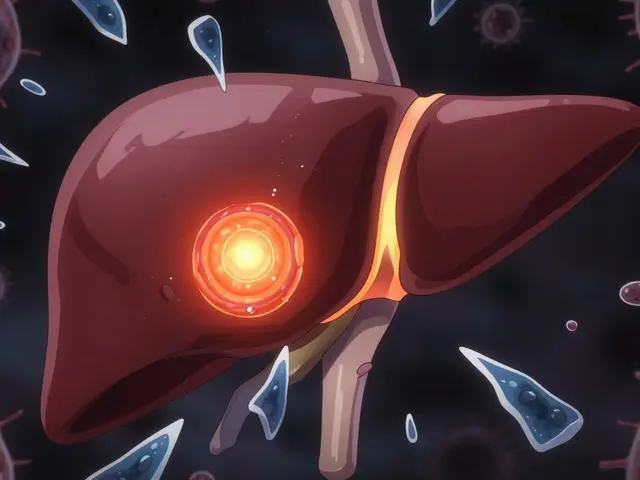
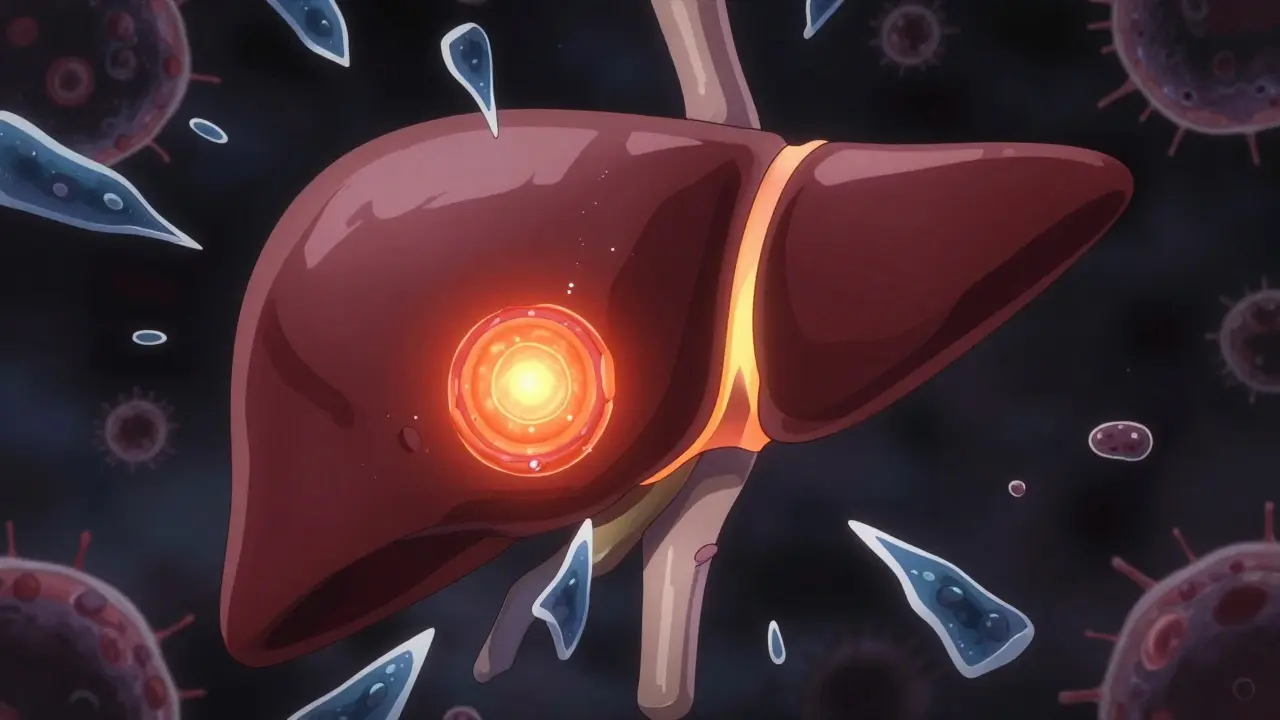
Your liver is a powerhouse. It filters toxins, processes nutrients, and keeps your blood clean. But for some people, the body’s own defense system turns against it. This isn’t an infection or a virus. It is autoimmune hepatitis, a condition where the immune system mistakenly attacks healthy liver cells. The result is chronic inflammation that can lead to serious damage if left unchecked.
You might not feel sick at first. Many people discover they have this condition only after routine blood tests show abnormal liver enzymes. Others experience sudden fatigue, joint pain, or yellowing of the skin. Understanding what is happening inside your body is the first step toward managing it effectively.
What Is Autoimmune Hepatitis?
Autoimmune hepatitis (AIH) is a chronic liver disease characterized by progressive inflammation caused by the immune system attacking hepatocytes-the main functional cells of the liver. Unlike viral hepatitis, which is caused by external pathogens like hepatitis B or C, AIH is driven by internal immune dysregulation.
The condition was first clearly identified in the 1950s when researchers noticed that certain patients with chronic liver issues responded well to corticosteroids, distinguishing their cases from viral infections. Today, we know that AIH affects approximately 17 out of every 100,000 people in North America and Europe, according to a 2019 systematic review published in the *Journal of Hepatology*. New cases occur at a rate of 1-2 per 100,000 people annually.
This disease does not discriminate by age, but it has clear demographic patterns. Women are significantly more likely to develop AIH than men. For Type 1 AIH, the female-to-male ratio is about 3.6 to 1. For Type 2 AIH, the disparity is even starker, with an 8 to 1 ratio favoring women. These statistics come from the American Association for the Study of Liver Diseases (AASLD) 2022 clinical guidelines.
Types of Autoimmune Hepatitis
Doctors classify autoimmune hepatitis into two main types based on the specific antibodies present in the blood and the patient's age group. Knowing which type you have helps guide treatment and monitoring strategies.
| Feature | Type 1 AIH | Type 2 AIH |
|---|---|---|
| Prevalence | 80-90% of all cases | 10-20% of all cases |
| Typical Age Group | Adolescents and young adults; also older adults | Children aged 2-14 years |
| Key Antibodies | Antinuclear antibodies (ANA) and/or anti-smooth muscle antibodies (ASMA) | Anti-liver kidney microsomal type 1 (LKM-1) and/or anti-liver cytosol type 1 (LC-1) |
| Gender Ratio | Female-to-male 3.6:1 | Female-to-male 8:1 |
| Progression Speed | Variable; often insidious onset | Can be more acute and severe in children |
Type 1 is the most common form. It accounts for the vast majority of cases in adults. You might see elevated levels of ANA or ASMA in your blood work. Type 2 is rarer and primarily affects children. If your child is diagnosed, doctors will look for LKM-1 or LC-1 antibodies. Both types require similar treatment approaches, but Type 2 can sometimes progress faster if not caught early.
Symptoms: What to Look For
One of the trickiest parts of autoimmune hepatitis is its unpredictability. Some people feel perfectly fine until advanced scarring occurs. Others crash suddenly with flu-like symptoms. According to data from UCSF Surgical Oncology, about 25-35% of patients present with acute symptoms that mimic viral hepatitis. Another 40-50% experience a slow, creeping onset of chronic symptoms. Then there are the 15-20% who are asymptomatic, finding out about their condition only through routine lab screenings.
If symptoms do appear, they often include:
- Persistent fatigue: This is the most reported symptom. On the American Liver Foundation’s patient forum, 78% of respondents cited fatigue as their biggest hurdle.
- Joint pain: Arthralgia affects many patients, with 63% reporting it impacts daily activities.
- Skin changes: Jaundice (yellowing of the skin and eyes) indicates that bilirubin is building up because the liver cannot process it properly.
- Abdominal discomfort: Pain or swelling in the upper right abdomen where the liver sits.
- Rash or itching: Pruritus can occur due to bile salt accumulation.
- Loss of appetite and nausea: Common early signs that may be mistaken for stomach bugs.
If you notice these signs lingering for weeks, do not ignore them. Early detection prevents irreversible damage.

Diagnosis: How Doctors Confirm AIH
Diagnosing autoimmune hepatitis is not straightforward. There is no single test that says "yes" or "no." Instead, doctors use a combination of blood tests, imaging, and sometimes a liver biopsy to rule out other causes like viral hepatitis, alcohol-related liver disease, or drug-induced liver injury (DILI).
Blood tests reveal specific markers. You will likely see elevated transaminases (ALT and AST), often 5 to 10 times higher than normal. High levels of immunoglobulin G (IgG)-specifically more than 1.5 times the normal range-are a strong indicator of AIH. As mentioned earlier, antibody tests check for ANA, ASMA, LKM-1, or LC-1.
Imaging studies like ultrasound or CT scans help visualize the liver’s structure and check for cirrhosis or tumors. However, the gold standard for diagnosis often involves a liver biopsy. During this procedure, a small sample of liver tissue is examined under a microscope. Pathologists look for interface hepatitis (also known as piecemeal necrosis), lymphoplasmacytic infiltrate, and rosette formation of hepatocytes. Fibrosis is staged from F0 (no fibrosis) to F4 (cirrhosis) using the METAVIR scoring system.
The Revised International AIH Group Scoring System, updated in 2022, provides standardized criteria. When used by experienced hepatologists, this system has a sensitivity of 92% and specificity of 97%. Misdiagnosis happens-studies show 15-20% of AIH cases are initially mistaken for DILI. So, if your doctor suspects AIH, expect a thorough investigation.
Treatment Options and Management
Good news: autoimmune hepatitis is treatable. With proper medication, most people achieve remission and live near-normal lives. The goal is to suppress the immune system enough to stop the attack on the liver without compromising your overall health.
The standard first-line therapy involves immunosuppressive drugs. Typically, this means a combination of prednisone (a corticosteroid) and azathioprine (an immunosuppressant). Prednisone works quickly to reduce inflammation, while azathioprine helps maintain long-term control with fewer side effects. Doctors usually start with prednisone at 0.5-1 mg/kg/day (max 60 mg) plus azathioprine 50 mg/day. Over 6-12 months, they taper the prednisone dose as your liver enzymes improve.
About 65-80% of patients achieve remission with this regimen, according to 10-year follow-up data from the International Autoimmune Hepatitis Group registry. Remission is defined as normalized transaminases and IgG levels for at least two years. Once stable, many patients stay on low-dose maintenance therapy indefinitely.
Not everyone tolerates azathioprine. Side effects like nausea, hair loss, or bone marrow suppression can occur. In these cases, doctors may switch to mycophenolate mofetil, which is effective in 70-80% of azathioprine-intolerant patients, per NewYork-Presbyterian data from 2023.

Living with Autoimmune Hepatitis
Managing AIH is a marathon, not a sprint. You will need regular blood tests every 3 months to monitor liver function and IgG levels. During the initial treatment phase, testing might be more frequent-every 2-4 weeks.
Side effects of long-term steroid use are real. Weight gain, insomnia, mood swings, and increased risk of infections are common complaints. On Reddit’s r/liverdisease community, 82% of patients on prednisone reported weight gain, and 67% struggled with sleep. To mitigate bone loss, doctors recommend calcium and vitamin D supplements, as advised by the National Osteoporosis Foundation.
Lifestyle matters too. Avoid alcohol completely, as it adds stress to an already inflamed liver. Eat a balanced diet rich in fruits, vegetables, and lean proteins. Stay active, but listen to your body-if fatigue hits, rest. Mental health support is crucial; 71% of AIH patients report significant anxiety about disease progression, according to the Liver Foundation’s 2022 survey.
Prognosis and Outlook
The outlook for autoimmune hepatitis has improved dramatically since the 1950s. Without treatment, the 10-year survival rate drops to just 10%. With appropriate therapy, it jumps to 94%, as demonstrated in longitudinal studies cited by the Mayo Clinic. Dr. Thomas D. Schiano of Mount Sinai Hospital noted that treated patients achieve near-normal life expectancy.
However, challenges remain. About 10% of patients are treatment-refractory, meaning standard drugs don’t work. They may progress to end-stage liver disease and require a transplant. The United Network for Organ Sharing (UNOS) lists AIH as the fourth leading indication for adult liver transplantation, accounting for 6.2% of cases in 2022.
Future treatments look promising. Clinical trials are exploring biologics like rituximab and vedolizumab. Personalized medicine approaches using genetic profiling (such as HLA-DRB1 alleles) could soon allow for precision dosing, potentially increasing remission rates to 85-90% within the next five to seven years.
Is autoimmune hepatitis contagious?
No, autoimmune hepatitis is not contagious. It is an internal immune disorder, not caused by a virus or bacteria. You cannot catch it from someone else, nor can you spread it to others through contact, blood, or bodily fluids.
Can autoimmune hepatitis go away on its own?
Rarely. While spontaneous remission can occur, it is uncommon. Most cases require lifelong management with immunosuppressive medications to prevent liver damage. Stopping treatment abruptly can lead to flare-ups and rapid disease progression.
What foods should I avoid with autoimmune hepatitis?
You should avoid alcohol entirely, as it stresses the liver. Limit processed foods, excess sugar, and high-sodium items, which can contribute to inflammation and fluid retention. Focus on a nutrient-rich diet with plenty of fiber, lean proteins, and healthy fats to support liver healing.
How long does it take to see results from treatment?
Most patients see improvements in liver enzyme levels within 3-6 months of starting therapy. Complete biochemical remission, where enzymes and IgG levels normalize, typically takes 18-24 months. Regular monitoring is essential to adjust doses and ensure effectiveness.
Is a liver transplant common for autoimmune hepatitis?
It is not the first line of defense. Only about 10% of patients progress to end-stage liver disease requiring a transplant. With early diagnosis and adherence to medication, the majority of people manage the disease successfully without needing surgery. However, AIH remains a significant reason for transplants among those who do not respond to medical therapy.